

ONE slashes regional HQs to speed up Asia-Pacific and Africa growth
The sixth-largest global carrier will merge East and South Asia into a single Singapore hub and centralise Africa under.
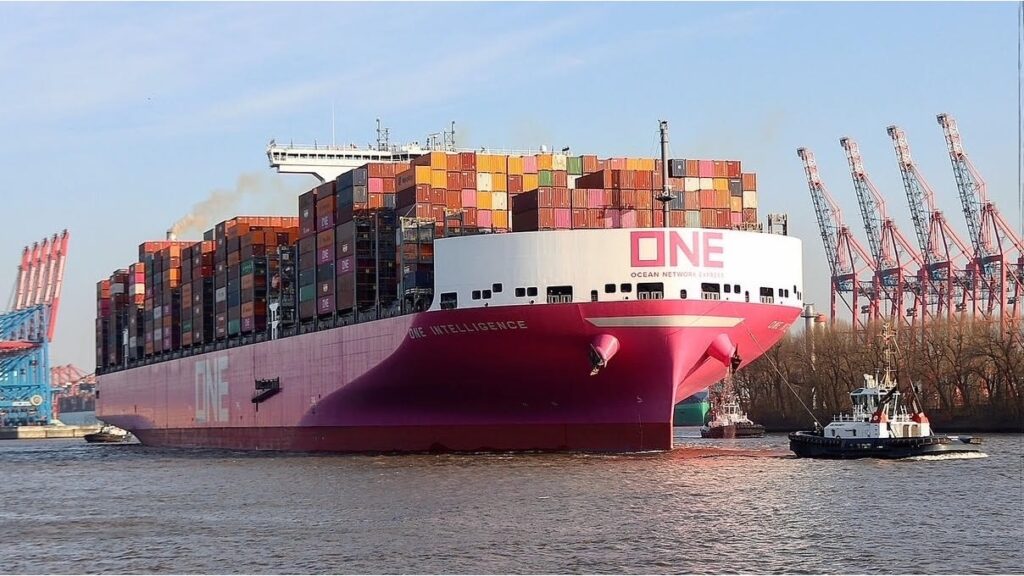
Ocean Network Express (ONE) will consolidate its regional decision-making for Asia-Pacific and Africa, bringing capacity exceeding 2.2 million TEUs under streamlined management in Singapore and Dubai from April 1, 2027. The restructuring, part of the carrier’s “ONE 2030” strategy, aims to accelerate growth in high-demand markets while maintaining existing services and contracts.
ONE, the world’s sixth-largest container shipping line, operates a fleet of more than 280 vessels serving over 120 countries. The move will merge its current East Asia and South Asia headquarters into a single Asia-Pacific hub in Singapore, led by Louis Tang as Region Head. The new structure will oversee operations in 15 markets, creating a unified team for customers moving cargo between East and South Asia.
The decision to centralise Asia-Pacific operations in Singapore reflects the city-state’s role as a global maritime hub. By combining functions currently split between Hong Kong and Singapore, ONE aims to eliminate redundancies and improve decision-making speed.
A.P. Møller-Maersk
In Africa, Dubai will take over management of East, West, and South Africa, while London retains responsibility for Europe, the Mediterranean, and North Africa. Sundeep Sibal, ONE’s Region Head for West Asia, noted that Dubai already handles much of Africa’s trade with Asia, India, and the Middle East. “Bringing African markets under one team will allow the carrier to coordinate service and capacity planning across the corridor,” Sibal said in a statement.
The restructuring is designed to bring decision-making closer to customers and markets. Till Ole Barrelet, ONE’s Chief Executive, emphasised that Asia-Pacific and Africa are key growth regions for the carrier. “The changes are designed to improve decision-making speed while maintaining ONE’s commitments to individual markets and employees,” Barrelet said. Local teams will remain the primary point of contact for customers, ensuring continuity during the transition.
Ocean Network Express (ONE) was established in 2017 as a joint venture between three of Japan’s largest shipping companies: K Line (Kawasaki Kisen Kaisha, Ltd.), MOL (Mitsui O.S.K. Lines), and NYK (Nippon Yusen Kabushiki Kaisha). The merger created a global carrier with a combined fleet capacity exceeding 2.2 million TEUs, positioning ONE as the sixth-largest container shipping line worldwide.
What shippers can expect: Continuity and long-term gains: Asia-Pacific and Africa
For shippers, the restructuring promises minimal disruption in the short term. ONE has confirmed that existing services, contracts, and daily operations will continue unchanged during the transition. The carrier’s local teams will remain in place initially, with further organisational alignment to follow in phases. This phased approach is designed to ensure that customers experience no interruptions in service, even as ONE realigns its regional management structures.
The consolidation is expected to yield long-term benefits, including more efficient capacity planning and faster responses to market demands. Louis Tang highlighted that the combined Asia-Pacific structure will provide a broader view of the region, enabling better coordination for customers moving cargo between East and South Asia.
In Africa, the centralised management in Dubai is expected to enhance service reliability and capacity utilisation across the continent. Shippers operating in these regions can anticipate improved transit times, more flexible routing options, and greater transparency in cargo tracking as ONE streamlines its operations.
ONE’s “ONE 2030” strategy underpins the restructuring, with a focus on sustainable growth and expanding its position among global container shipping lines. The carrier’s current fleet capacity of 2.2 million TEUs positions it as a major player in the industry, and the new regional structure is intended to support further investment in high-growth markets.
The strategy also includes commitments to digitalisation, with initiatives to enhance real-time cargo visibility and automate key processes for customers. Implementation will begin on April 1, 2027, with existing teams retaining their roles during the initial phase.
For businesses reliant on Asia-Pacific and African trade routes, the changes signal ONE’s commitment to strengthening its presence in these regions. Shippers are advised to monitor updates from their local ONE representatives and the carrier’s official channels, including its website and customer portals, for further details on the transition. The carrier has also indicated that it will host webinars and briefings for key stakeholders to address any questions about the restructuring and its implications for service delivery.
Implications for the shipping industry: A trend toward regional consolidation
ONE’s restructuring reflects a broader industry trend toward regional consolidation, as carriers seek to optimise their networks in response to shifting trade patterns and economic pressures. The Asia-Pacific region, in particular, has emerged as a critical hub for global trade, driven by the rapid growth of manufacturing and consumer markets in countries such as China, India, and Vietnam. By consolidating its East Asia and South Asia operations, ONE is positioning itself to capitalise on these trends while improving its competitiveness against rivals such as Maersk, MSC, and CMA CGM.
The centralisation of African operations in Dubai also underscores the growing importance of the continent as a trade partner for Asia and the Middle East. Africa’s population is projected to reach 2.5 billion by 2050, with rising demand for consumer goods, infrastructure development, and industrial inputs.
Carriers like ONE are investing in capacity and service improvements to meet this demand, with a focus on enhancing connectivity between Africa’s key ports and global trade routes. Dubai’s strategic location at the crossroads of Asia, Africa, and Europe makes it an ideal base for coordinating these efforts.
For shippers, the restructuring could lead to more competitive pricing and improved service offerings as ONE leverages its consolidated regional structure to optimise vessel deployment and route planning. However, the transition may also introduce short-term challenges, such as potential delays in decision-making as new teams align their processes. Industry analysts suggest that shippers should engage closely with their ONE representatives during the transition period to ensure that their specific needs are addressed and that any disruptions are minimised.
As ONE implements its “ONE 2030” strategy, the carrier’s ability to balance global efficiency with local responsiveness will be critical to its success. The restructuring of its Asia-Pacific and African operations is a key step in this journey, with the potential to reshape trade dynamics in these high-growth regions. Shippers and industry stakeholders will be watching closely to see how the changes unfold and what they mean for the future of container shipping.


Sign up free to ask CAMAL AI for a summary, the key points or anything else about this story.
Related stories
CAMAL AI
 Financial Ports Newsletter
The maritime economy, every morning
Ports, shipping and freight markets in one short email. Free.
Financial Ports Newsletter
The maritime economy, every morning
Ports, shipping and freight markets in one short email. Free.