

$4.2bn ZIM deal collapses: Israel demands fresh start for Hapag-Lloyd
Israel’s Government Companies Authority halts review of $4.2bn Hapag-Lloyd-ZIM merger, forcing a complete restructuring.
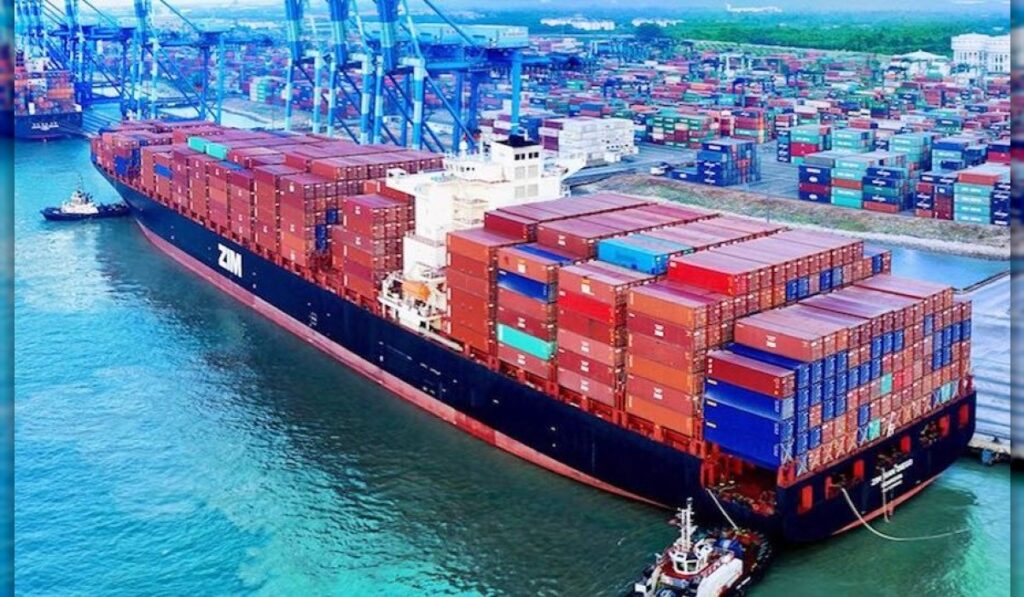
Israel has effectively sent Hapag-Lloyd’s $4.2bn takeover of ZIM back to the drawing board after its Government Companies Authority (GCA) halted review of the original transaction structure.
Both raised concerns that the proposed structure, which would leave ZIM’s Israeli operations under FIMI’s ownership but operationally dependent on Hapag-Lloyd, fails to address national security risks. The original agreement, announced in February, had envisaged Hapag-Lloyd acquiring 100% of ZIM, but mounting opposition inside Israel’s government has forced a rethink.
The GCA’s decision to end consideration of the original application means any revised transaction must now secure fresh approval from the boards of ZIM, Hapag-Lloyd, and FIMI before resubmission.
Hapag-Lloyd
Israel’s Finance Ministry’s formal recommendation against approval cited inadequate safeguards, particularly around operational independence during crises. In response, Hapag-Lloyd submitted a revised framework last week, offering ZIM Israel a direct Far East service, stronger protections around Israel’s golden share, additional Israeli seafarers, and access to Hapag-Lloyd’s global fleet.
Hapag-Lloyd’s chief executive, Rolf Habben Jansen, remains optimistic. In a statement this week, he said the carrier was prepared to make further adjustments, insisting that the revised structure addresses Israel’s concerns. “The positions presented … relate to our original proposal and do not take into account the significant improvements that have since been made to the proposed structure,” he said. “We believe the revised plan can pave the way for approval.”
The strategic stakes: Why this deal matters for global shipping: Hapag-Lloyd
If approved, the deal would create a combined fleet of more than 400 ships with a capacity of over 3 million teu, catapulting Hapag-Lloyd into the position of the world’s fifth-largest containerline. The anticipated annual synergies of $300m to $500m would further strengthen Hapag-Lloyd’s competitive edge, particularly in key trade lanes between Asia, Europe, and the Middle East.
A failed merger could embolden other mid-sized carriers to pursue their own deals, potentially accelerating further consolidation. Alternatively, it could leave ZIM vulnerable to takeover attempts by other global players, such as China’s COSCO or France’s CMA CGM, both of which have expressed interest in expanding their footprints in the Middle East and Mediterranean.
The financial implications are already being felt. ZIM’s shares surged by about 6% in early Tuesday trading following the announcement of the revised proposal, reflecting investor optimism that the deal could still proceed. However, the stock remains volatile, and analysts warn that further delays or a collapse of the transaction could lead to a sharp correction. Hapag-Lloyd’s shares, meanwhile, have remained relatively stable, suggesting that investors view the deal as a strategic opportunity rather than a financial necessity for the German carrier.
The next steps are critical. ZIM’s board must now decide whether to continue negotiating with Hapag-Lloyd and FIMI or explore alternative buyers. The late-2026 closing target remains in place, but the path to approval is far from certain. The Israeli government’s demands for greater operational independence and security guarantees will likely require further concessions, including potentially increasing the number of ships under Zim Israel’s control or enhancing its access to key trade routes.
For the global shipping industry, the outcome of this saga will be closely watched. A successful merger would signal that even mid-sized carriers can achieve scale through strategic deals, provided they navigate complex regulatory and geopolitical hurdles. A failure, on the other hand, could reinforce the dominance of the industry’s largest players, leaving smaller carriers with fewer options for growth. Either way, the stakes could not be higher, for Hapag-Lloyd, ZIM, and the future of global trade.
As the negotiations enter a new phase, one thing is clear: the $4.2bn deal is far from dead, but its fate now hinges on whether Hapag-Lloyd and FIMI can satisfy Israel’s security concerns without undermining the strategic rationale of the merger. For now, the shipping world waits.


Sign up free to ask CAMAL AI for a summary, the key points or anything else about this story.
Related stories
CAMAL AI
 Financial Ports Newsletter
The maritime economy, every morning
Ports, shipping and freight markets in one short email. Free.
Financial Ports Newsletter
The maritime economy, every morning
Ports, shipping and freight markets in one short email. Free.



