

Israel Kills Zim Deal—Hapag-Lloyd Must Start Over by October 6
Israel’s Government Companies Authority formally rejects the €3.5bn takeover of Zim by Hapag-Lloyd and FIMI.
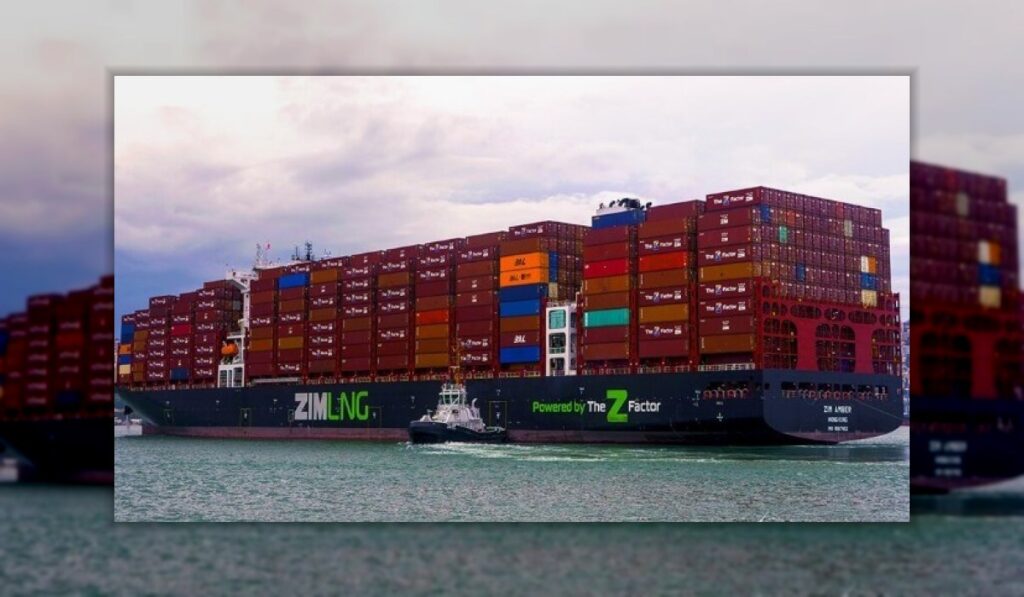
Israel has formally terminated its review of Hapag-Lloyd and FIMI’s proposed acquisition of Zim, citing national security risks and concerns over the Israeli shipping line’s future independence. The Government Companies Authority (GCA) closed the six-month process on September 29 but left the door open for a revised offer, provided it addresses the government’s objections by October 6.
The original bid, which would have seen Germany’s Hapag-Lloyd and Israeli investment fund FIMI take control of Zim, faced opposition from multiple government ministries. The Finance Ministry warned that “the material risks were not adequately addressed”, while the Defense Ministry raised alarms over Israel’s reliance on a foreign-owned carrier with ties to Qatar and Saudi Arabia.
The GCA’s decision followed a series of objections from key stakeholders. The Finance Ministry highlighted concerns over Zim’s long-term viability under the proposed structure, including the retention of older vessels and potential dependence on Hapag-Lloyd’s fleet. Meanwhile, the Prime Minister’s Office cited a “gap between the corporate structure and the operational and strategic reality”, arguing that the deal failed to guarantee Zim’s independence.
Hapag-Lloyd
The revised proposal reportedly included concessions to address these issues, such as an additional Asian trade route, expanded reefer capacity, and stronger job protections for Israeli workers. However, the changes were deemed insufficient to overcome the government’s broader concerns about foreign ownership and strategic control.
The Defense Ministry was particularly vocal in its opposition, warning that Israel needed a “strong, independent shipping company” to ensure maritime security. The presence of Qatari and Saudi investments in Hapag-Lloyd further complicated the deal, raising geopolitical red flags in Tel Aviv.
The Government Companies Authority (GCA), which oversees state-owned enterprises in Israel, plays a pivotal role in such transactions. As the entity representing the state’s “Golden Share” in Zim, the GCA’s mandate includes safeguarding Israel’s strategic interests in key industries, including shipping.
What Happens Next, and the Stakes for Hapag-Lloyd and Zim
The GCA has set a tight deadline of October 6 for Hapag-Lloyd and FIMI to submit a revised proposal. If they fail to meet this date, the entire review process will restart, potentially delaying the deal beyond its current February 2027 deadline, or even its extended June 2027 cutoff.
For Hapag-Lloyd, the stakes are high. The German carrier recently raised its full-year earnings forecast to $3.9, 4.4 billion, citing strong freight rates and robust market demand.
Zim, meanwhile, must now decide whether to pursue a revised deal, seek an alternative buyer, or abandon the sale entirely. Its future hinges on navigating the government’s strict conditions for foreign investment, which include board-level approvals and a comprehensive, detailed application outlining the operational and strategic safeguards for the new entity.
The GCA’s decision underscores the challenges of cross-border shipping mergers, particularly in politically sensitive regions. While Hapag-Lloyd remains optimistic about its financial outlook, the collapse of the Zim deal serves as a reminder that national security concerns can override even the most lucrative business transactions in the maritime sector. This dynamic is not limited to Israel; similar scrutiny has been applied to deals involving ports, logistics hubs, and shipping lines in Europe, Asia, and the Americas.
For industry observers, the next steps will be critical. If Hapag-Lloyd and FIMI can address Israel’s concerns in their revised proposal, the deal may yet proceed. The Israeli government has signalled that it is open to a restructured agreement, provided it includes concrete guarantees for Zim’s operational independence, enhanced training programmes for Israeli workers, and a clear plan for fleet modernisation. These conditions align with broader global trends, where governments increasingly demand tangible benefits for local economies as a precondition for approving foreign takeovers.
Should the deal collapse, Zim may explore alternative strategies to secure its future. These could include partnerships with other global carriers, a renewed focus on organic growth, or even a partial privatisation that retains state influence. However, any such move would require navigating the same regulatory hurdles that derailed the Hapag-Lloyd bid, making the path forward uncertain.
For Hapag-Lloyd, the failure to acquire Zim would not spell disaster, but it would represent a setback in its ambitions to expand in the Middle East. The German carrier has already made significant inroads in the region, including partnerships with ports in the UAE and Saudi Arabia, but Zim’s established network in Israel and the Mediterranean would have provided a strategic foothold. The company’s revised earnings projection of $3.9, 4.4 billion reflects its confidence in maintaining growth, but the loss of Zim could force it to revisit its long-term expansion plans.
Stakeholders in the maritime sector will be watching closely as the October 6 deadline approaches. The outcome of this deal could set a precedent for future cross-border mergers, particularly in industries where national security and economic sovereignty are paramount. For now, the ball is in the court of Hapag-Lloyd and FIMI, who must decide whether the potential rewards of acquiring Zim outweigh the risks of further delays or outright rejection.
In the meantime, Zim’s customers, employees, and investors face an uncertain future. The company’s ability to adapt to changing market conditions will be tested in the coming months, as it navigates the fallout from the collapsed deal and explores its next steps. For Israel, the episode serves as a reminder of the delicate balance between attracting foreign investment and protecting strategic assets, a challenge that will only grow more complex in an era of geopolitical fragmentation.


Sign up free to ask CAMAL AI for a summary, the key points or anything else about this story.
Related stories
CAMAL AI
 Financial Ports Newsletter
The maritime economy, every morning
Ports, shipping and freight markets in one short email. Free.
Financial Ports Newsletter
The maritime economy, every morning
Ports, shipping and freight markets in one short email. Free.



