

India’s $1.5bn War-Risk Pool Slashes Shipping Costs Amid Red Sea Crisis
India’s Bharat Maritime Insurance Pool offers $1.5 billion in sovereign-backed war-risk cover.
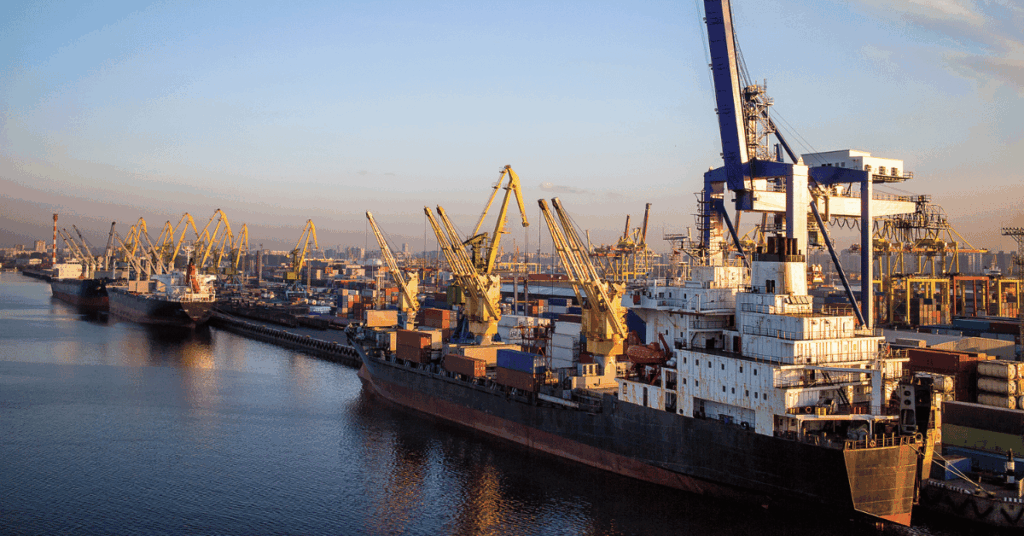
The Bharat Maritime Insurance Pool (BMIP), administered by General Insurance Corporation of India (GIC Re), offers coverage for war risks, Protection & Indemnity (P&I) liabilities, and cargo losses, areas previously dominated by foreign insurers.
India’s maritime sector, which handles 95% of the country’s trade value, has faced soaring insurance costs amid geopolitical tensions. The Red Sea crisis and instability near the Strait of Hormuz forced foreign insurers to hike premiums or withdraw coverage, squeezing domestic shipowners.
Why India’s Shipping Industry Needed a Domestic Insurance Pool: bharat maritime insurance pool
For decades, Indian shipowners relied almost entirely on the International Group of Protection and Indemnity Clubs, a London-based consortium that insures 90% of the world’s large vessels. This dependence left India vulnerable to sudden coverage withdrawals or politically driven decisions. The BMIP aims to reduce this risk by building domestic expertise in marine underwriting and claims management, a gap that previously forced India to depend on foreign hubs like London or Switzerland.
In 2025–26, the country’s 12 major and 217 non-major ports handled 1,668 million metric tonnes of cargo, a figure driven by economic growth and rising trade volumes. India’s coastline, stretching 11,098 kilometres, and its Exclusive Economic Zone (EEZ) of 2.4 million square kilometres, position the country as a critical node in global shipping.
The Indian-flag fleet has also grown by 36% in tonnage since 2015, reaching 1,609 ships and 14.33 million gross tonnes (GT) by mid-2026. With 70% of trade volume moving by sea, uninterrupted coverage is critical for energy security and supply chains. However, the lack of domestic insurance capacity had remained a bottleneck, until the introduction of BMIP.
BMIP’s structure is designed to ensure resilience. Claims up to $100 million are met from accumulated reserves and reinsurance recoveries, while a governing body and underwriting committee oversee operations. The pool has a 10-year duration, providing long-term stability for the sector.
The inclusion of Vedanta Sterlite Copper Limited and Balrampur Chini Mills Limited highlights BMIP’s role in supporting India’s industrial and agricultural sectors. Vedanta Sterlite Copper, a major player in the non-ferrous metals industry, relies on maritime routes for importing raw materials such as copper concentrate.
Similarly, Balrampur Chini Mills, one of India’s largest sugar producers, depends on sea transport for exporting sugar and importing machinery. By providing tailored insurance solutions, BMIP ensures that these critical supply chains remain resilient amid geopolitical uncertainties.
The impact on premiums has been immediate. War-risk insurance costs have fallen by 35, hasta un 40% since the peak of the Red Sea conflict, easing financial pressure on shipowners. This reduction is particularly significant for India’s energy imports, which rely heavily on maritime routes.
The Strait of Hormuz, a critical chokepoint for global oil shipments, has been a flashpoint for geopolitical tensions, making stable insurance coverage essential for India’s energy security. With BMIP in place, Indian importers can now negotiate better terms with global suppliers, reducing the risk of supply disruptions.
BMIP’s eligibility criteria are broad, covering Indian-flagged vessels, those owned or managed by Indian entities, and cargo ships destined for or departing from India. This inclusivity ensures that a wide range of stakeholders, from port workers to shipbuilders, benefit from the pool’s protections. Over 30 million livelihoods depend on India’s maritime sector, including fishers, port workers, seafarers, and shipbuilders. For these communities, the pool’s launch represents a critical step toward financial security and stability in an increasingly volatile global environment.
For shipowners and operators, BMIP’s coverage provides a clear advantage: reduced premiums without compromising on the scope of protection. The pool’s ability to underwrite policies locally also means faster claims processing and greater transparency in risk assessment. This is particularly valuable for small and medium-sized enterprises (SMEs) in the maritime sector, which often struggle to secure affordable coverage from foreign insurers. By levelling the playing field, BMIP is fostering a more competitive and resilient domestic shipping industry.
The pool’s launch marks a strategic shift in India’s maritime policy, reducing dependence on foreign insurers and enhancing financial sovereignty. As geopolitical risks persist, BMIP’s role in stabilising shipping costs and ensuring uninterrupted trade flows will be closely watched by global markets.
For stakeholders, the next steps involve monitoring the pool’s performance over the coming years, particularly its ability to handle large-scale claims and adapt to evolving geopolitical dynamics. Industry participants are encouraged to engage with the General Insurance Corporation of India (GIC Re) for updates on policy offerings and eligibility criteria.
Looking ahead, BMIP’s success could serve as a model for other emerging economies seeking to reduce their reliance on foreign insurance markets. With India’s maritime sector poised for further growth, the pool’s ability to provide stable, cost-effective coverage will be a key factor in shaping the country’s trade competitiveness in the years to come.


Sign up free to ask CAMAL AI for a summary, the key points or anything else about this story.
Related stories
CAMAL AI
 Financial Ports Newsletter
The maritime economy, every morning
Ports, shipping and freight markets in one short email. Free.
Financial Ports Newsletter
The maritime economy, every morning
Ports, shipping and freight markets in one short email. Free.