

Why AI can’t replace the human touch in shipping deals
A panel at Splash Singapore reveals why sincerity in chartering remains a uniquely human skill—even.
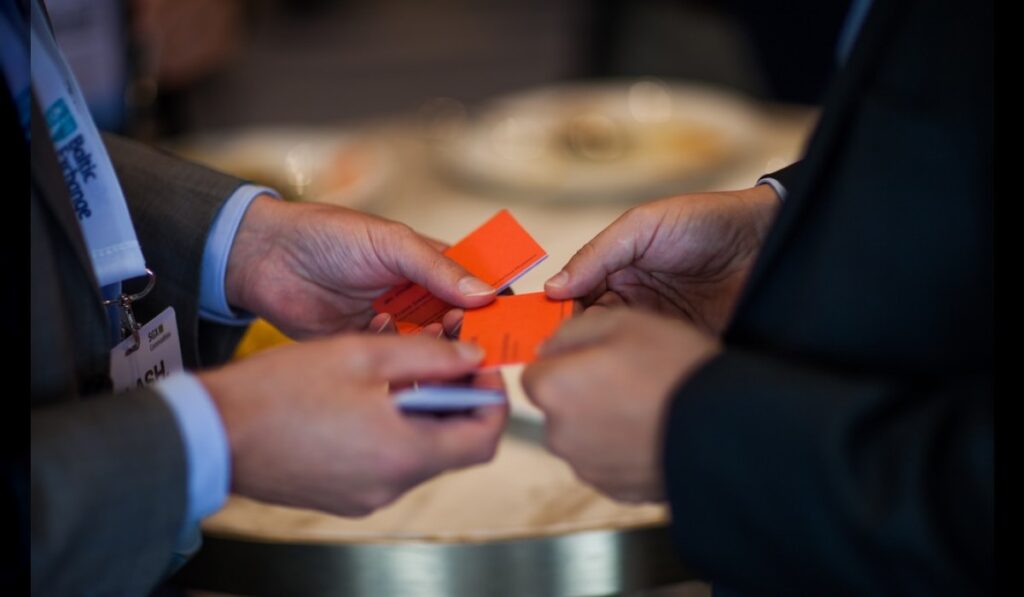
The maritime industry’s embrace of artificial intelligence has transformed the mechanics of ship chartering, but a panel at Splash Singapore last week underscored a critical limitation: AI may process data faster than any human, yet it cannot replicate the trust that underpins every deal. Willem Vermaat, representing Heidelberg Materials Trading, told the audience that while technology excels at consistency and speed, the sincerity required to navigate complex negotiations remains a uniquely human domain.
Vermaat’s reflections came after a discussion on how AI, digital platforms, and data transparency are reshaping the chartering landscape. The consensus was clear: AI is revolutionising the analytical side of chartering, but the art of reading markets, gauging trustworthiness, and making judgment calls still belongs to people.
“Data trust and AI trust are not the same thing,” he stated, framing the discussion around Julio Olalla’s six pillars of trust: sincerity, consistency, competence, reliability, credibility, and respect.
AI, Vermaat argued, can claim three of these pillars with confidence. A well-built platform delivers consistency, producing the same output under identical conditions every time. Its competence is unmatched, processing vast datasets at speeds no human team could achieve.
And its reliability is assured, it performs exactly as programmed. Yet, sincerity, the willingness to be transparent even when it comes at a cost, remains beyond its reach. “Sincerity implies intent. It implies a conscious choice to be honest when the alternative would be easier,” Vermaat said. “That is something a machine cannot do, because it has no stake in the outcome.”
The distinction is not merely philosophical. In chartering, where real-time information like vessel readiness, berth productivity, and cargo availability often travels through personal networks rather than digital platforms, human judgment remains indispensable. Vermaat illustrated this with a stark example: “When an experienced charterer shares uncomfortable information with a counterpart, a stem that isn’t ready, a vessel that underperformed, a market call that was wrong, that is sincerity in action.
It costs something. It risks the relationship in the short term to preserve it in the long term. It is a human decision made against self-interest.”
AI, by contrast, can surface data and model scenarios with unparalleled accuracy, but it cannot choose to be honest. It cannot weigh the long-term value of a relationship against short-term gains.
The art of chartering: intuition, mistakes, and the future of shipping: ai in shipping
The panel’s closing question, whether AI is replacing intuition or redefining it, elicited a nuanced response from Vermaat. “My answer was neither, quite,” he recalled. “AI has taken the science end of chartering and run with it, and the industry is better for it. But the art, reading a market a month ahead, knowing when to move and when to wait, and knowing who in your network you can trust, that still belongs to people.”
Yet, even as these tools improve transparency, the human element persists. Vermaat admitted to guarding load readiness information longer than he should, a habit born of years of navigating a business where trust is currency.
For industry professionals, the implications are clear. While AI can optimise routes, predict delays, and even suggest chartering strategies, the final decision still rests with individuals who must balance data with intuition. Vermaat’s own approach underscores this: he allows his team to make mistakes within defined limits, recognising that errors are part of building judgment.
“Recalculating is a function. An apology is a choice,” he noted, drawing a parallel with Google Maps, which recalculates routes without remorse. In shipping, where a single misstep can cost millions, the ability to apologise, and mean it, remains a human prerogative.
The panel’s conclusions offer a roadmap for the industry’s future. As AI continues to refine the science of chartering, the art of negotiation, trust-building, and market intuition will remain firmly in human hands. For stakeholders, this means investing in both technology and talent, ensuring that the next generation of charterers can interpret data while also cultivating the relationships that have always defined shipping. The question is no longer whether AI will replace humans, but how the two can coexist to create a more efficient, yet still fundamentally human, industry.
For those navigating this evolving landscape, the message is straightforward: embrace AI for its analytical prowess, but never underestimate the value of a handshake, or the sincerity behind it.


Sign up free to ask CAMAL AI for a summary, the key points or anything else about this story.
Related stories
CAMAL AI
 Financial Ports Newsletter
The maritime economy, every morning
Ports, shipping and freight markets in one short email. Free.
Financial Ports Newsletter
The maritime economy, every morning
Ports, shipping and freight markets in one short email. Free.