

Zero-emission dealer urges: start with medium trucks, not big rigs
Range Zero Emissions CEO argues Class 4-6 trucks can electrify now with existing infrastructure
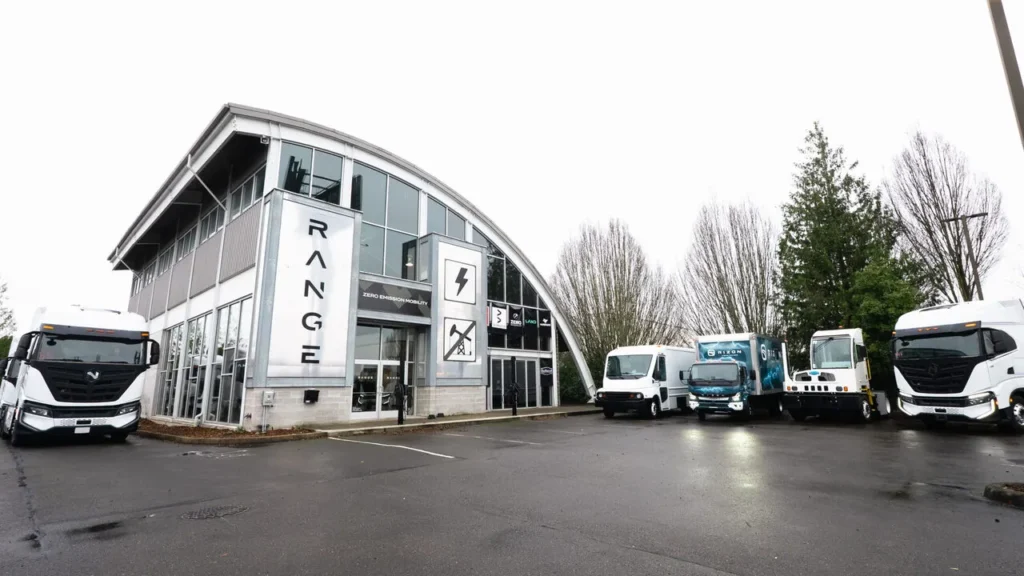
The trucking industry’s push toward zero-emission Class 8 semis may be moving too fast, according to Johannes Ariens, CEO of Range Zero Emissions. In an interview with FreightWaves, Ariens argued that medium-duty trucks, Class 4, 5, and 6 models, should lead the transition, as they can already operate on existing power infrastructure without requiring costly megawatt-scale charging networks.
Ariens, whose dealership sells vehicles ranging from electric motorcycles to hydrogen-powered Class 8 trucks, described electrification as a gradual process. “The industry is fixated on Class 7 and 8 trucks, but we’re skipping a natural progression,” he said. “A Class 8 semi can’t charge on a Level 2 system, it’s physically impossible.”
Most commercial fleets rely on medium-duty trucks, which Ariens noted can recharge overnight using standard business electricity. “If you have a washing machine and an air compressor at your facility, you already have enough power to install two Level 2 chargers,” he explained. “That’s all you need to keep two trucks running if they’re driving under 150 miles a day.”
Why medium-duty trucks are ready now: Zero-emission
In contrast, charging infrastructure for Class 8 trucks remains limited. Tesla, which opened its Semi factory in Sparks, Nevada, in September 2025, plans to deploy over 30 Megawatt Charging System stations by the end of the year. But Ariens warned that widespread adoption is still years away. “It will take time before legacy manufacturers and fleets fully commit to this technology,” he said.
Range Zero Emissions has expanded rapidly in the zero-emission commercial vehicle market. In August 2025, the company became an authorized dealer for Hyundai’s XCIENT Fuel Cell, a hydrogen-powered Class 8 truck, with Washington as its primary market. The same month, it acquired Ziegler Truck Group’s zero-emissions division and Ethero Truck & Energy’s West Coast operations, extending its reach from the Pacific Northwest into the Midwest and California.
Incentives and industry shifts
Major logistics companies are already investing in medium-duty electric trucks. “FedEx, Rivian, and Amazon are leading the way,” Ariens said. In September 2025, FedEx ordered 2,000 all-electric trucks from Harbinger, one of the brands Range represents. These vehicles, designed for shorter routes, align with Ariens’ argument that smaller fleets can adopt zero-emission technology now without waiting for Class 8 infrastructure to mature.
Ariens also called for policy changes to support smaller operators. “We should increase voucher amounts for Class 4, 5, and 6 trucks,” he said. “Most U.S. motor carriers operate fewer than 10 trucks, 91.5% of the nearly 580,000 active fleets, according to American Trucking Associations data. These businesses can transition to electric now, while the infrastructure for long-haul trucks is still developing.”
For small fleets, the decision is practical. “No one replaces a truck just to go electric,” Ariens said. “They’ll use their current vehicles until the end of their lifecycle. Medium-duty electric trucks are available today, why wait for Class 8 charging that won’t be widespread for years?”


Sign up free to ask CAMAL AI for a summary, the key points or anything else about this story.
Related stories
CAMAL AI
 Financial Ports Newsletter
The maritime economy, every morning
Ports, shipping and freight markets in one short email. Free.



