

Why Ports Are Stalling on Yard Automation—Despite Ready Tech
Autonomous yard trucks are commercially viable, yet adoption lags due to operational hurdles, not technology gaps.
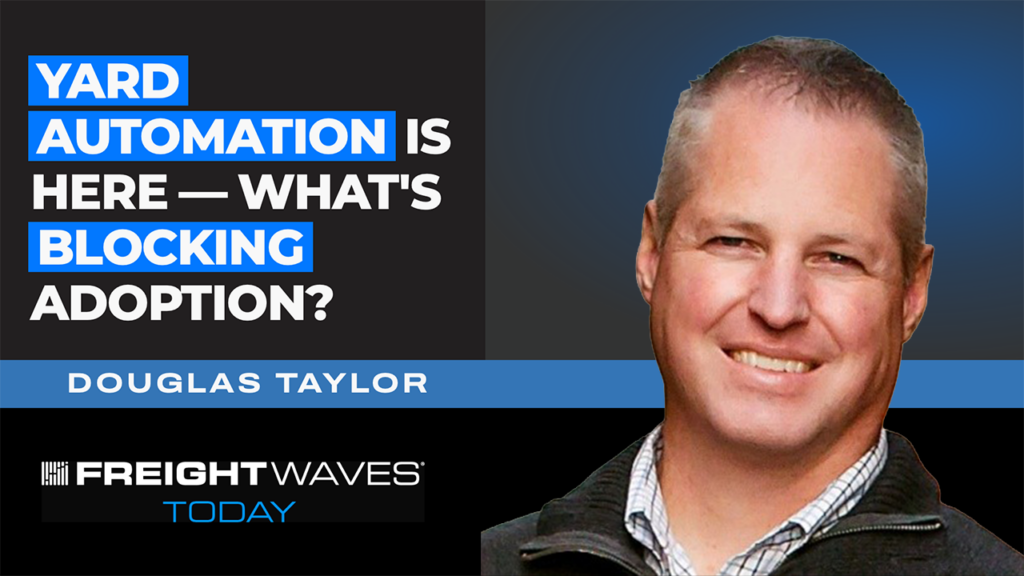
Douglas Taylor, General Manager of the Logistics Division at Autonomous Solutions Incorporated (ASI), argues that the real challenge lies in restructuring yards to support automation, from inconsistent processes to physical layout constraints.
Taylor’s assessment, delivered at a recent industry conference, underscores that the bottleneck is not hardware or software but the adaptation of existing infrastructure to accommodate autonomous workflows.
Why Yards Are Resisting Automation
The primary hurdle, according to Taylor, is the lack of standardisation in yard management systems (YMS). Yards vary widely in their adoption of digital tools, with some relying on outdated manual processes while others use advanced but incompatible software. Physical layouts further complicate deployment, as differences in dock door designs, gladhand connections, and parking stall configurations require bespoke solutions for each facility. “It’s not really a technology problem at this point,” Taylor said. “It’s more so maybe an adoption problem.”
ASI is addressing these challenges by shifting from narrow proof-of-concept trials to full-scale pilot programmes. These pilots, lasting 12 to 18 months, are designed to benchmark autonomous operations against traditional manned workflows across the entire yard. The goal is to demonstrate the efficiency gains of automation in real-world conditions, rather than testing isolated components. Taylor emphasised a holistic approach: “Let’s look at what we’re solving. Let’s bet on the outcome of what we’re looking for as opposed to looking in each of these individual areas.”
How Mobius Bridges the Gap
At the heart of ASI’s strategy is Mobius, a command-and-control platform that integrates with a facility’s existing YMS via API. Mobius creates a geolocated digital map of the yard, including dock doors, parking stalls, and fixed obstacles, and orchestrates move commands from the YMS while providing real-time status updates. The system also continuously scans the yard to reconcile trailer locations, pushing corrections back to the YMS to ensure accuracy.
One of Mobius’s key advantages is its remote supervision capability. Instead of requiring on-site operators for each truck, a single supervisor can oversee multiple autonomous vehicles across multiple facilities from a centralised location. Taylor framed this shift as an evolution of yard labour: “Instead of a driver out, it’s a driver up,” with workers transitioning into technical oversight roles that leverage their operational expertise.
However, the timeline for deployment remains constrained by OEM lead times of 6 to 10 months, pushing the realistic window from decision to live operation to 6 to 12 months. For ports and logistics providers, the delay is not in the technology but in the readiness of their operations to embrace it.
These environments, with their controlled layouts and high-volume material flows, offer ideal testing grounds for autonomous systems before scaling to more complex port operations.
For port operators considering automation, the message is clear: the technology is ready, but success hinges on operational restructuring. Without these steps, even the most advanced autonomous trucks will struggle to deliver their promised efficiency gains.
El siguiente paso para los operadores portuarios será evaluar los resultados de los pilotos en curso, previstos para el primer trimestre de 2025, y ajustar sus planes de reestructuración operativa antes del plazo límite de junio del mismo año, establecido en las reuniones sectoriales de noviembre.


Sign up free to ask CAMAL AI for a summary, the key points or anything else about this story.
Related stories
CAMAL AI
 Financial Ports Newsletter
The maritime economy, every morning
Ports, shipping and freight markets in one short email. Free.
Financial Ports Newsletter
The maritime economy, every morning
Ports, shipping and freight markets in one short email. Free.



