

Wind propulsion financing ties repayments to fuel savings in shipping first
Eastern Pacific Shipping secures 100% upfront financing for wind-assisted propulsion systems on two tankers.
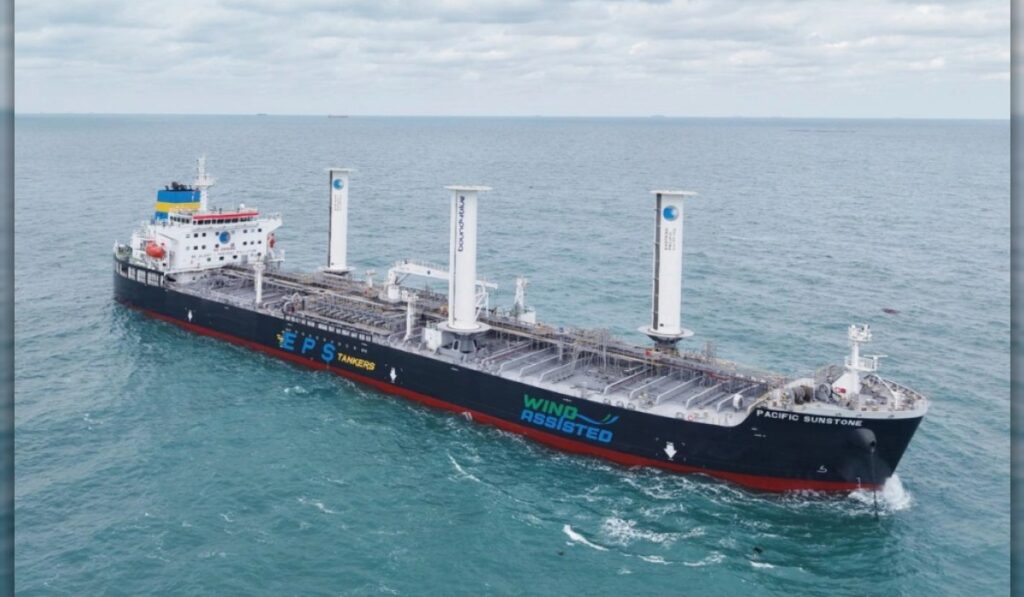
The financing mechanism, a pay-as-you-save model, is designed to accelerate the adoption of energy efficiency technologies (EETs) by removing the upfront cost barrier for shipowners. FEET, the first fund of its kind, ties repayments to verified fuel savings, ensuring that payments are directly linked to the performance of the installed technology.
The two vessels, MV Pacific Sentinel and MV Pacific Sunstone, are the first in the EPS fleet to be equipped with wind-assisted propulsion systems.
The methodology for quantifying fuel savings was developed through a collaboration between GCMD and EPS. The analysis focused on 203 valid sail on-off transitions to isolate the impact of the wind-assisted propulsion systems from varying operating conditions. The methodology has undergone independent review, and future project savings will be subject to verification before payments are calculated.
The role of data in scaling decarbonisation: wind-assisted propulsion
The data-driven approach ensures that fuel savings are accurately measured, providing a robust foundation for the financing model.
EPS chief executive Cyril Ducau emphasised the importance of integrating technology, data, and financing: “Decarbonisation moves faster when the technology, the data, and the financing come together.” The fund’s partners aim to expand the model to other EETs, potentially transforming how the maritime sector funds its transition to low-carbon operations.
The fund’s blended finance approach is designed to de-risk investments in emerging technologies, making them more attractive to institutional investors. By offering up to 100% upfront financing, FEET eliminates the financial barrier that often prevents shipowners from adopting energy efficiency technologies.
The Development Bank of Japan (DBJ), DBS Bank, and ING are among the financial institutions backing FEET. Their involvement reflects growing interest from the banking sector in financing decarbonisation initiatives, particularly those that offer measurable environmental and financial returns. The pay-as-you-save model aligns the interests of shipowners, financiers, and technology providers, creating a sustainable framework for scaling EETs.
The adoption of wind-assisted propulsion systems on MV Pacific Sentinel and MV Pacific Sunstone marks a significant milestone for EPS, which has been at the forefront of decarbonisation efforts in the maritime industry. The company, headquartered in Singapore, operates a fleet of over 100 vessels, including tankers, bulk carriers, and container ships. EPS has previously trialled other decarbonisation technologies, such as biofuels and carbon capture systems, demonstrating its commitment to reducing the environmental impact of its operations.
The 22-metre suction sails installed on the two tankers are designed to reduce fuel consumption by harnessing wind power. The technology works by creating a pressure differential across the sail, generating thrust that reduces the engine’s workload. This not only cuts fuel consumption but also lowers greenhouse gas emissions, aligning with the International Maritime Organization’s (IMO) targets for reducing the carbon intensity of shipping by at least 40% by 2030.
The data collected during the four-month trial period will be critical for validating the performance of the wind-assisted propulsion systems. The 276 million data points gathered provide a comprehensive dataset for analysing the technology’s impact under real-world conditions. The independent verification of fuel savings ensures that the financing model remains transparent and credible, which is essential for attracting further investment in decarbonisation technologies.
For the shipping industry, the FEET model represents a potential game-changer. By linking repayments to verified fuel savings, the fund reduces the financial risk for shipowners while incentivising the adoption of energy efficiency technologies. If successful, the model could be replicated for other EETs, such as hydrogen fuel cells, ammonia-powered engines, and carbon capture systems, accelerating the industry’s transition to a low-carbon future.
The next steps for FEET include expanding the financing model to other energy efficiency technologies and scaling the deployment of wind-assisted propulsion systems across more vessels. The fund’s partners are also exploring opportunities to collaborate with other shipowners and technology providers to drive further innovation in the maritime sector. As the industry grapples with the challenges of decarbonisation, initiatives like FEET offer a promising pathway for aligning financial incentives with environmental goals.
By integrating data-driven methodologies with innovative financing structures, the sector can overcome the barriers to adopting energy efficiency technologies and accelerate its transition to a sustainable future.


Sign up free to ask CAMAL AI for a summary, the key points or anything else about this story.
Related stories
CAMAL AI
 Financial Ports Newsletter
The maritime economy, every morning
Ports, shipping and freight markets in one short email. Free.



