

USS Ronald Reagan Returns: The $210m Overhaul
The US Navy’s second-youngest Nimitz-class carrier rejoins the fleet after an 18-month.
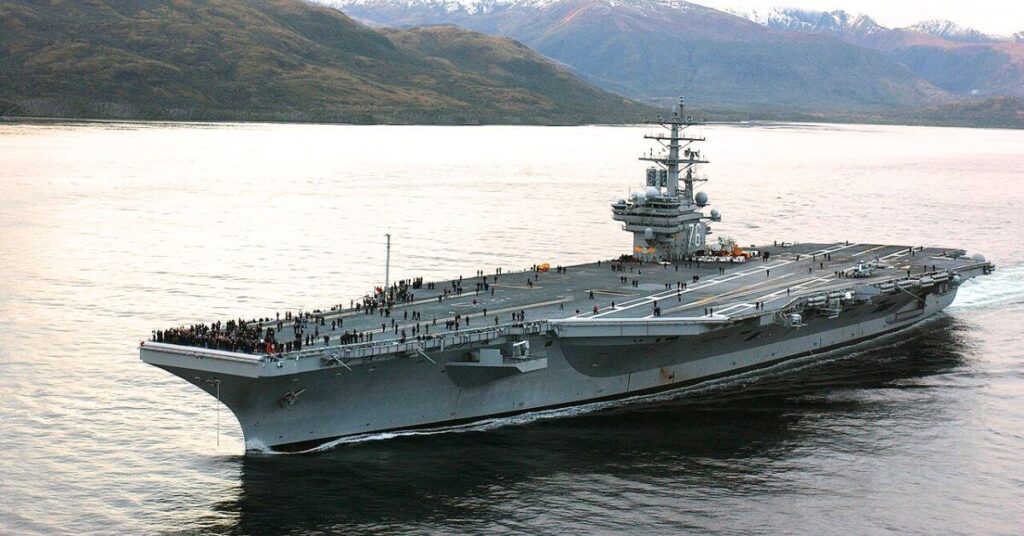
The overhaul, known as a Docked Planned Incremental Availability (DPIA), was carried out at Puget Sound Naval Shipyard in Washington and marked the carrier’s first major refit since 2012. Work included repairs to the hull and flight deck, upgrades to reactor-related systems, enhancements to combat capabilities, and improvements to crew spaces designed to accommodate up to 5,000 sailors during deployments.
Ronald Reagan entered the shipyard in March 2025 and left in early September 2026, followed by sea trials to validate the upgrades. The Navy confirmed the carrier’s return to the fleet this month but has not disclosed its next deployment.
What Was Fixed and Why It Matters: uss ronald reagan
The DPIA addressed critical components of the ship’s infrastructure. The hull and flight deck received structural repairs to ensure the carrier can continue operating in high-stress environments, while reactor systems were upgraded to maintain the ship’s nuclear propulsion capabilities. Combat systems, including radar and weapons integration, were modernised to keep pace with evolving threats in the Indo-Pacific region, where Ronald Reagan has spent much of its service.
Crew spaces were also a focus of the overhaul. With a complement of about 5,000 sailors, the carrier’s living and working areas were updated to improve efficiency and habitability. The upgrades reflect the Navy’s commitment to sustaining its ageing fleet while adapting to modern operational demands.
The carrier’s nuclear propulsion system, a defining feature of the Nimitz-class, allows it to operate for extended periods without refuelling.
From Yokosuka to Bremerton: A Carrier’s Decade in the Indo-Pacific
Before returning to the United States for maintenance, the USS Ronald Reagan spent nearly a decade as the Navy’s forward-deployed carrier in Yokosuka, Japan.
The exercise involved complex manoeuvres, including simulated air defence and anti-submarine operations, demonstrating the Ronald Reagan’s role as a linchpin in regional security.
While Yokosuka served as its home port for 9 years, Bremerton will now host the Ronald Reagan as it prepares for future deployments. The Puget Sound Naval Shipyard, where the DPIA was conducted, is one of the few facilities in the US capable of handling the maintenance of nuclear-powered aircraft carriers. Its proximity to the Pacific Fleet’s operational hubs makes it an ideal location for carriers returning from forward-deployed assignments.
For the sailors aboard the Ronald Reagan, the move to Bremerton also represents a change in routine. Many of the 5,000 personnel who serve on the carrier during deployments are based in the Pacific Northwest, and the shift allows for greater stability in terms of family proximity and logistical support. The Navy has not yet announced the carrier’s next deployment, but its return to the fleet signals its readiness to re-enter the operational cycle, whether in the Indo-Pacific or elsewhere.
The USS Ronald Reagan’s return to service comes at a time when the US Navy is navigating a transition between its legacy Nimitz-class carriers and the newer Ford-class vessels. While the Ford-class introduces cutting-edge technologies, the Nimitz-class remains indispensable, with each carrier representing decades of operational expertise and billions of dollars in investment.
The Nimitz-class, named after World War II Admiral Chester W. Nimitz, has been the workhorse of the US carrier fleet since the 1970s. Over its 20 years at sea, the carrier has participated in countless operations, from humanitarian missions to high-stakes military exercises. Its latest DPIA ensures that it can continue to serve as a critical asset in an era where maritime security is increasingly contested.
The US Navy’s decision to invest in the Ronald Reagan’s maintenance reflects a broader strategy of extending the lifespan of its Nimitz-class carriers while gradually introducing the Ford-class. The Ford-class, which features advanced systems such as electromagnetic aircraft launch systems and a redesigned flight deck, is expected to reduce maintenance requirements and improve operational efficiency. However, the transition is gradual, and the Nimitz-class will remain a cornerstone of the fleet for decades to come.
For the sailors and officers who serve aboard the USS Ronald Reagan, the carrier’s return to the fleet is a testament to the Navy’s ability to sustain its most complex assets. The DPIA not only addressed immediate maintenance needs but also positioned the ship for future challenges. As the carrier prepares for its next deployment, its crew stands ready to uphold the legacy of the Nimitz-class, ensuring that the US maintains its edge in an increasingly competitive maritime environment.
The USS Ronald Reagan’s overhaul and return to service underscore the logistical and strategic challenges of maintaining a fleet of nuclear-powered aircraft carriers. Each Nimitz-class carrier represents a significant investment, both in terms of construction and upkeep, and their operational readiness is critical to US power projection.
The carrier’s role in the Indo-Pacific, where it spent nearly a decade as the forward-deployed flagship, highlights its importance in regional security dynamics. The US Navy’s ability to maintain a visible presence in the region is a key deterrent against potential adversaries, and the Ronald Reagan’s return to the fleet reinforces this capability. While the Navy has not disclosed the carrier’s next deployment, its readiness signals a commitment to maintaining a robust presence in critical maritime zones.
For industry stakeholders and maritime security analysts, the Ronald Reagan’s overhaul serves as a case study in the challenges of sustaining ageing naval assets. The DPIA process, which involves thousands of personnel and spans nearly two years, demonstrates the scale of effort required to keep a carrier operational. The Navy’s ability to balance maintenance with operational demands is a testament to its logistical prowess, but it also raises questions about the long-term sustainability of the Nimitz-class as newer platforms enter the fleet.
The USS Ronald Reagan’s projected retirement in the early 2050s means that it will continue to play a pivotal role in global maritime security for decades to come. As the Navy navigates the transition to the Ford-class, the Nimitz-class carriers will remain a critical component of its strategy.
For now, the Ronald Reagan stands ready, its systems refreshed and its crew prepared for whatever comes next. Those interested in tracking the carrier’s future deployments can follow updates from the US Navy’s official website, which provides real-time information on fleet movements and operational status.


Sign up free to ask CAMAL AI for a summary, the key points or anything else about this story.
Related stories
CAMAL AI
 Financial Ports Newsletter
The maritime economy, every morning
Ports, shipping and freight markets in one short email. Free.
Financial Ports Newsletter
The maritime economy, every morning
Ports, shipping and freight markets in one short email. Free.



