

US trucking bankruptcies surge: 16 carriers collapse in a month
Midwest Expedited Co. reports $2.3m in liabilities against just $108,351 in assets.
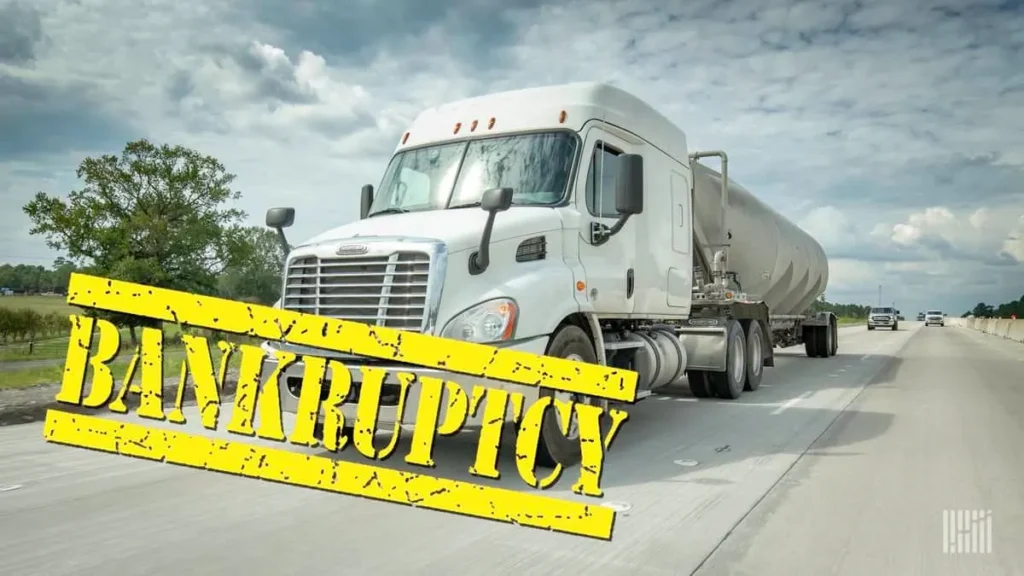
Sixteen US trucking companies filed for bankruptcy protection in just over a month, exposing a sector grappling with unsustainable debt and shrinking fleets. The wave of collapses, recorded between September 16 and October 21, spans multiple states and freight segments, from petroleum haulers to logging operators, with liabilities often dwarfing assets.
The financial strain is most acute among smaller operators, where debt loads far exceed recoverable assets. Chicago-based Midwest Expedited Co., which filed for Chapter 11 protection on October 6, reported $2.31 million in liabilities against just $108,351 in assets. The company’s bankruptcy schedules list $935,384 in secured claims and approximately $1.38 million in nonpriority unsecured claims, underscoring the severity of its financial distress.
Midwest Expedited’s fleet, though previously claimed to include 95 trucks on LinkedIn, was officially documented in court filings as comprising just seven Freightliner M2 trucks from the 2023 and 2024 model years, collectively valued at $107,500. The discrepancy highlights the fragile state of many carriers, where reported fleet sizes often fail to align with reality under financial scrutiny.
Debt burdens crush smaller carriers: us trucking bankruptcies
El Paso-based Site2Site Transport offers a stark example of how swiftly fortunes can unravel in the trucking sector. The company, which filed for Chapter 7 bankruptcy protection on September 29, reported a 24% decline in gross revenue, plummeting from approximately $2.1 million in 2024 to $1.6 million in 2023. By the time of its filing, Site2Site had recorded no gross revenue for the entirety of 2024, signalling a complete operational shutdown.
The company’s liabilities exceeded $493,000, with leases on eight trucks further complicating its financial position. Midwest Expedited, Site2Site opted for liquidation under Chapter 7, abandoning any attempt to restructure and continue operations. Its collapse reflects broader pressures on carriers unable to adapt to volatile freight rates, rising operational costs, or shifting demand patterns.
Other carriers mirror this pattern of distress. Eskil Trucking, based in Lakeview, Oregon, reported more than $1 million in liabilities against no more than $500,000 in assets. Its largest creditor, Sargent Transportation, is owed nearly $855,000, illustrating how interdependent the sector has become, and how quickly financial contagion can spread when one link in the chain fails.
Revenue collapses trigger liquidations
The bankruptcies span a diverse range of freight segments, from general freight to specialised niches like petroleum transport and logging. KLS KLS Logging Inc.., based in Lyons, Georgia, operates 53 power units and 28 drivers, primarily transporting unmanufactured logs, poles, beams, and lumber. Despite its size, the company’s inclusion in the bankruptcy wave underscores that no segment of the trucking industry is immune to current pressures.
Similarly, American Petroleum Carriers, a McAllen, Texas-based carrier with 16 trucks and 10 drivers, filed for Chapter 11 protection in the Southern District of Texas under case number 26-70331. The company’s restructuring attempt suggests some operators still see a path to survival, though the odds are increasingly stacked against smaller players.
Other filings reveal the breadth of the crisis. Maksteel Transport LLC and Douglass Logistics LLC, both Illinois-based carriers, filed for Chapter 11 on September 23. Windy City Supply Chain LLC, another Illinois operator, followed with a Chapter 7 filing on October 2. In North Carolina, FAB Trucking LLC, Porter’s Hauling LLC, and Queen’s Hauling LLC, ranging from single-truck operators to fleets of eight or nine vehicles, have all sought court protection in recent weeks.
The filings do not yet indicate an industry-wide surge in bankruptcies, but they do highlight the precarious position of smaller carriers. With liabilities often exceeding assets by factors of ten or more, and revenue streams drying up, many operators are left with few options beyond liquidation or restructuring. The question now is whether this wave of collapses is an isolated correction or the beginning of a broader shakeout in the US trucking sector.
For now, the data suggests a sector under siege, where even mid-sized carriers are struggling to stay afloat. As freight rates remain volatile and operational costs continue to rise, the coming months will reveal whether these bankruptcies are the exception, or the new norm.


Sign up free to ask CAMAL AI for a summary, the key points or anything else about this story.
Related stories
CAMAL AI
 Financial Ports Newsletter
The maritime economy, every morning
Ports, shipping and freight markets in one short email. Free.



