

$5.1bn Overhaul: Truman’s Nuclear Reactors Get Second Life
The USS Harry S. Truman begins a four-year, $5.1 billion refuelling and modernisation programme at Newport News.
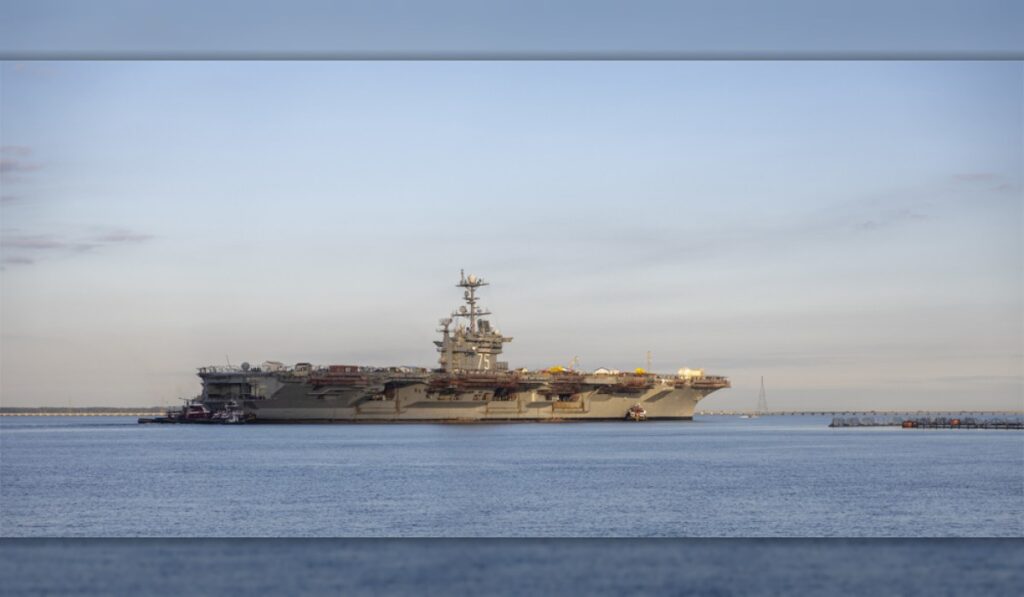
The USS Harry S. Truman (CVN 75), one of the U.S.
Navy’s response to Houthi threats in Yemen. During the deployment, the carrier’s strike group completed over 13,000 sorties and 25,000 flight hours, delivering a record 124,000 pounds of ordnance in a single day.
The $5.1 Billion Overhaul: What’s at Stake?: Truman
The RCOH is the most extensive maintenance and modernisation effort an aircraft carrier undergoes during its service life, representing nearly one-third of all such work. Thousands of compartments and tanks will be overhauled, ensuring the carrier remains a cornerstone of U.S. naval power for decades to come.
When the ship arrives at NNS, we’ll apply that same diligence to working with our suppliers and Navy partners to ensure a successful recapitalization of CVN 75.”
The contract, valued at $5,099,973,132, includes options that could bring the total value to $5,183,380,744 if fully exercised. Navy history, reflecting the scale and complexity of the RCOH process. The Truman is the eighth Nimitz-class carrier to undergo this mid-life refuelling, following the USS John C.
Why This Overhaul Matters for Naval Strategy
The Truman’s RCOH comes at a pivotal moment for the U.S.
The modernisation efforts will also ensure the Truman remains compatible with next-generation aircraft and weapons systems. This is particularly critical as the Navy prepares to introduce the future USS John F. Kennedy (CVN 79), which was preliminarily accepted by the Navy on September 29, 2026, and is expected to be formally delivered in March 2027.
The Truman’s overhaul is not just a technical necessity but a strategic imperative. The carrier’s deployment history underscores its importance: during its 2025 deployment, it fired over 124,000 libras de munición en un solo día, demonstrating its role as a key asset in modern warfare. However, the incidents during that deployment, including the collision with the merchant ship Besiktas-M and the loss of three F/A-18 Super Hornets, highlight the need for rigorous maintenance and modernisation to ensure operational safety and effectiveness.
The RCOH process is expected to take five years, with the Truman scheduled to return to service in sin fecha confirmada. Once completed, the carrier will be poised to serve well into the 2050s, maintaining the U.S. Navy’s ability to project power across the globe. For the shipyard workers at Newport News, the project represents a monumental engineering challenge, one that will test their ability to deliver on time and within budget, a critical factor given the delays experienced with the USS John C. Stennis.
The U.S. Navy’s commitment to the Truman’s overhaul reflects its broader strategy of extending the service lives of its Nimitz-class carriers while transitioning to the next generation of Ford-class carriers. The Truman’s RCOH ensures that the Navy retains a full complement of operational carriers, even as it introduces newer, more advanced vessels like the John F. Kennedy. This balance between legacy and innovation is essential for maintaining the Navy’s global reach and readiness.
For the crew of the Truman, the overhaul marks a period of transition. Many will be reassigned to other ships or shore duties during the refuelling, while others will remain to support the modernisation efforts. The carrier’s commanding officer at the time of the collision, Capt. Dave Snowden, was relieved of his duties following the incident, underscoring the high stakes of maintaining operational discipline and safety.
As the Truman undergoes its transformation, the U.S. Navy will continue to rely on its remaining carriers to fulfil its missions. The successful completion of the RCOH will not only extend the Truman’s service life but also serve as a testament to the Navy’s ability to adapt and modernise its fleet in an era of evolving threats and technological advancements.
The overhaul of the USS Harry S. Truman is more than just a maintenance project, it is a critical investment in the future of U.S. naval power. With the carrier expected to remain in service for decades to come, the $5.1 billion contract represents a commitment to maintaining the Navy’s dominance on the world’s oceans. For stakeholders in the maritime and defence sectors, the Truman’s RCOH is a bellwether for the Navy’s ability to balance legacy systems with next-generation capabilities, ensuring its readiness for the challenges of the 21st century.


Sign up free to ask CAMAL AI for a summary, the key points or anything else about this story.
Related stories
CAMAL AI
 Financial Ports Newsletter
The maritime economy, every morning
Ports, shipping and freight markets in one short email. Free.
Financial Ports Newsletter
The maritime economy, every morning
Ports, shipping and freight markets in one short email. Free.