

Norway’s $4.2bn Arctic Seizure Leaves 69 Russians Stranded
A Norwegian court detained the Professor Molchanov at Ukraine’s request.
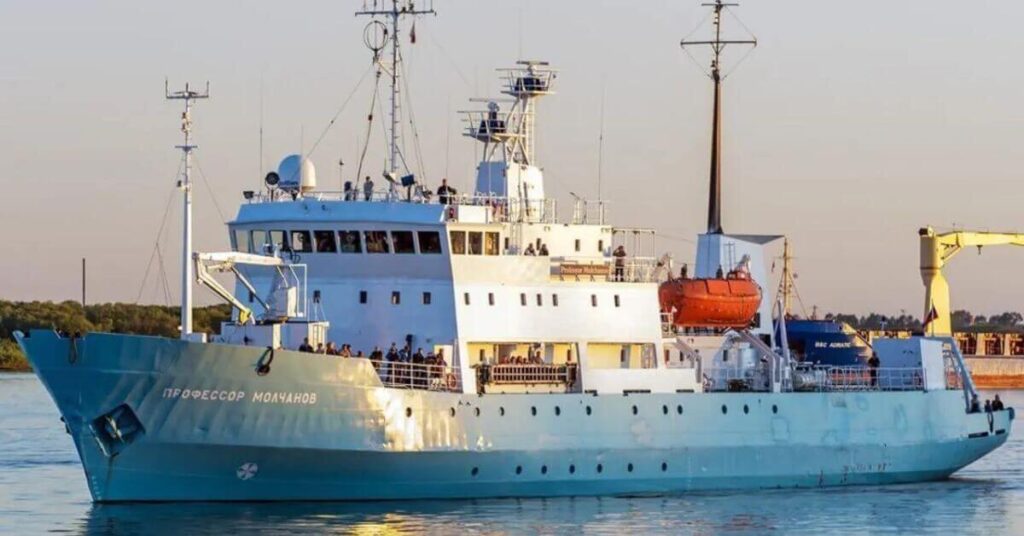
Norway has repatriated 69 Russian passengers and crew stranded in the Arctic after a court ordered the seizure of their cruise ship, the Professor Molchanov, at the request of Ukraine’s Naftogaz.
The stranded Russians were flown out of Svalbard on Sept. 8, arriving in Russia via the Norwegian town of Kirkenes. Norwegian authorities provided logistical support for the repatriation, while Russian diplomats also assisted. Maria Zakharova, spokeswoman for Russia’s Foreign Ministry, confirmed the return, stating, “As far as we know, practically everyone has already returned home.”
“We’re convinced that the Norwegian authorities’ actions belie the desire to complicate as much as possible the activities of Russian operators on Svalbard… and gradually move toward reducing Russia’s presence on the archipelago.”
Maria Zakharova·Russian Foreign Ministry spokeswoman
The Professor Molchanov, a cruise ship operating in the Arctic, was detained in Barentsburg, a Russian-operated coal mining settlement on Spitsbergen, the largest island in the Svalbard archipelago. The seizure followed a Norwegian court ruling in response to a legal claim by Ukraine’s state-owned energy company, Naftogaz, which seeks to enforce a $4.22 billion arbitration award over assets lost during Russia’s annexation of Crimea in 2014.
Norwegian Cruise Line
Russia has condemned the seizure as a violation of the 1920 Svalbard Treaty, which grants Norway sovereignty over the archipelago but ensures equal economic access for citizens of signatory nations, including Russia. The treaty also allows visa-free settlement in Svalbard, a provision Moscow argues Norway is undermining. The Russian Foreign Ministry summoned Norway’s ambassador in Moscow last week to protest the detention, signaling escalating tensions.
Norway, however, maintains that the seizure is a legal enforcement of an international arbitration ruling. The Professor Molchanov remains impounded in Barentsburg, where it was held pending further legal proceedings. Russia has announced plans to appeal the arrest, setting the stage for a prolonged legal battle.
The Geopolitical Stakes of Svalbard’s Arctic Dispute: svalbard treaty
The archipelago, with a total population of 2,914, hosts two Russian settlements, Barentsburg and Pyramiden, with a combined population of 392. Russia has accused Norway of attempting to limit its economic activities in the region, a claim Norwegian officials deny.
For Norway, the case underscores the delicate balance between enforcing international law and managing its Arctic sovereignty under the Svalbard Treaty. The dispute comes at a time when Arctic nations are increasingly competing for influence in the region, as melting ice opens new shipping routes and access to natural resources.
The diplomatic fallout from the seizure could have wider implications for Arctic cooperation. Svalbard’s unique legal status, governed by the 1920 treaty, has historically allowed for peaceful coexistence between Norway and Russia. However, the current dispute risks undermining that stability, particularly as climate change increases the strategic importance of Arctic shipping routes and resources.
Norway, as the administering power, has sought to maintain a neutral stance, but the seizure of the Professor Molchanov has drawn criticism from other Arctic states, including Canada and the United States, which have expressed concerns about the precedent it could set for future asset seizures in the region.
For businesses operating in the Arctic, the case raises questions about the legal risks of working in a region where geopolitical tensions can disrupt commercial activities. Cruise operators, in particular, may face heightened scrutiny over vessel ownership and routes, as the Professor Molchanov seizure demonstrates how quickly assets can be targeted in response to broader conflicts. The incident also highlights the challenges of enforcing international arbitration awards in jurisdictions with complex legal frameworks, such as Svalbard, where local and international laws intersect.
As Russia prepares its legal appeal, the fate of the Professor Molchanov remains uncertain. The case highlights the intersection of maritime law, energy disputes, and Arctic geopolitics, a combination that will likely shape the region’s future for years to come. For the 69 passengers and crew who were stranded, the repatriation offers a temporary resolution, but the broader implications of the dispute will reverberate across the Arctic, influencing how nations navigate sovereignty, economic rights, and international law in one of the world’s most strategically sensitive regions.
What the Drone Attack Near Poland Reveals About Russia’s War Strategy
While the Svalbard dispute unfolded, another incident underscored the escalating risks of Russia’s war in Ukraine. A Russian drone attack targeted a Ukrainian passenger train near the Polish border, striking just 800 meters from the frontier. The attack, which occurred during the weekend, was confirmed by Russia’s defence ministry, which stated it had hit “railroad infrastructure in western Ukraine that’s used to transport military material from European countries.” The strike took place at Jahodyn station, a key transit point for supplies and personnel.
Eivind Vad Petersson, a Norwegian state secretary, was among the passengers on the train. Petersson, who was returning from an Arctic summit in Rovaniemi, Finland, reported that the train arrived on time despite the attack. In a statement, he described the incident as a reminder of the war’s proximity to NATO’s eastern flank, stating, “This is everyday life for millions of Ukrainians heading into their sixth winter of war.” The presence of a high-ranking Norwegian official on the train further highlighted the risks faced by Western diplomats and officials operating near conflict zones.
The attack drew sharp condemnation from NATO and EU leaders. Mark Rutte, NATO Secretary General, described it as a sign of Russian President Vladimir Putin’s desperation, stating, “The attack shows how desperate Russian President Vladimir Putin has become.” German Defence Minister Boris Pistorius added, “What Vladimir Putin is doing is dangerous.
He knows that and it’s why he’s doing it.” Meanwhile, the EU’s foreign affairs chief, Kaja Kallas, warned that the strike was an attempt to intimidate Ukraine’s allies, urging a united response: “The attack is an attempt by Russia to frighten Ukraine’s partners. We must not be frightened, rather the opposite.”
The drone strike near Poland is not the first time Russia has targeted infrastructure close to NATO borders. In recent months, Ukraine has reported multiple attacks on rail networks and energy facilities in western regions, which serve as critical supply routes for Western military aid. The proximity of the latest attack to the Polish border, just 800 meters away, raises concerns about the potential for accidental escalation, particularly as NATO members continue to provide Kyiv with advanced weaponry and logistical support.
For businesses and governments operating in Eastern Europe, the incident underscores the growing risks of collateral damage in a war that shows no signs of de-escalation. Rail operators, in particular, face heightened security challenges, as Ukraine’s transportation networks remain a key target for Russian strikes. The attack also serves as a reminder of the broader economic consequences of the war, as disruptions to supply chains and infrastructure threaten to destabilise regional trade.
The timing of the attack, coinciding with an Arctic summit in Rovaniemi, suggests that Russia may be seeking to divert attention from its setbacks in Ukraine by escalating pressure on NATO’s eastern flank. The presence of national security advisers and former leaders, including former British Prime Minister Boris Johnson, at Jahodyn station during the strike further underscores the symbolic nature of the attack. As Russia intensifies its strikes on infrastructure, the risk of miscalculation grows, raising the stakes for NATO’s response.
The seizure of the Professor Molchanov and the drone attack near Poland are not isolated incidents but part of a broader pattern of disruption in maritime and Arctic trade. For shipping companies, the risks of operating in contested waters have never been higher.
The detention of the Professor Molchanov demonstrates how quickly assets can be targeted in response to geopolitical conflicts, even in regions governed by long-standing treaties like Svalbard. Cruise operators, in particular, must now weigh the legal and financial risks of navigating routes that pass through or near disputed territories.
For energy companies, the case of Naftogaz’s $4.22 billion arbitration award against Russia serves as a cautionary tale. The pursuit of compensation through international courts is a growing trend, as companies seek to recover losses from conflicts and sanctions. However, enforcing such awards remains challenging, particularly in jurisdictions with complex legal frameworks. The Professor Molchanov seizure shows that even assets in neutral or treaty-governed territories are not immune to legal action, creating uncertainty for businesses with operations in high-risk regions.
The Arctic, in particular, is becoming a focal point for legal and economic disputes. As melting ice opens new shipping routes, such as the Northern Sea Route, competition for control over these corridors is intensifying. Russia’s military buildup in the Arctic, combined with its efforts to expand economic influence in Svalbard, has raised concerns among NATO members about Moscow’s long-term intentions.
Businesses operating in the region must now navigate a landscape where geopolitical tensions can disrupt supply chains, delay shipments, and trigger legal action. For insurers, the incident highlights the need for greater scrutiny of risks in Arctic waters, particularly for ships linked to sanctioned entities or operating in disputed territories.
As the legal battle over the Professor Molchanov unfolds, the case could set a precedent for how international arbitration awards are enforced in the Arctic. If Russia’s appeal fails, it may encourage other nations to pursue similar actions against Russian assets abroad, further complicating maritime trade. Conversely, if the seizure is overturned, it could embolden Russia to challenge Norway’s enforcement of international rulings, potentially leading to further legal disputes in the region.
For those monitoring the Professor Molchanov case, the next critical milestone will be Russia’s legal appeal. The Norwegian court’s decision to uphold or overturn the seizure will determine whether Naftogaz can proceed with enforcing its $4.22 billion award. Businesses with interests in the Arctic should follow updates from the Norwegian Ministry of Foreign Affairs, which provides official statements on Svalbard-related developments. The Arctic Council, an intergovernmental forum, also offers insights into regional disputes and cooperation efforts.
For passengers and crew affected by similar incidents, the Norwegian government has established protocols for repatriation through its embassy in Moscow. Russian nationals stranded in Svalbard can seek assistance from the Russian Ministry of Foreign Affairs, which has previously coordinated evacuations with Norwegian authorities. Meanwhile, the Naftogaz website provides updates on its legal actions against Russian assets, including the status of the $4.22 billion arbitration award.
The drone attack near Poland underscores the importance of monitoring security advisories for travel in Eastern Europe. The NATO website and the European External Action Service offer real-time updates on security threats in Ukraine and neighbouring regions. For businesses operating in conflict zones, the incident highlights the need for enhanced risk assessments and contingency planning, particularly for rail and logistics companies.
As the war in Ukraine enters its sixth winter, the risks of escalation remain high. The seizure of the Professor Molchanov and the drone attack near Poland serve as reminders that geopolitical tensions can disrupt even the most routine commercial activities. For Arctic and maritime businesses, the key to navigating this uncertain landscape lies in staying informed through official channels, diversifying supply chains, and preparing for legal and operational challenges in contested waters.


Sign up free to ask CAMAL AI for a summary, the key points or anything else about this story.
Related stories
CAMAL AI
 Financial Ports Newsletter
The maritime economy, every morning
Ports, shipping and freight markets in one short email. Free.
Financial Ports Newsletter
The maritime economy, every morning
Ports, shipping and freight markets in one short email. Free.



