


Skip to content
Ports
Tuesday, 1 September 2026 · 11:25 · Morocco ·
World Trade Pulse▲ +7.0%seaborne trade this week · 4,788 port calls a dayIMF PortWatch
Conflicts

Strait of Hormuz Stalemate: Why the Gulf War Is Failing

A 60-day negotiation window collapses as sanctions and blockades return to the world’s busiest chokepoint.

strait of hormuz
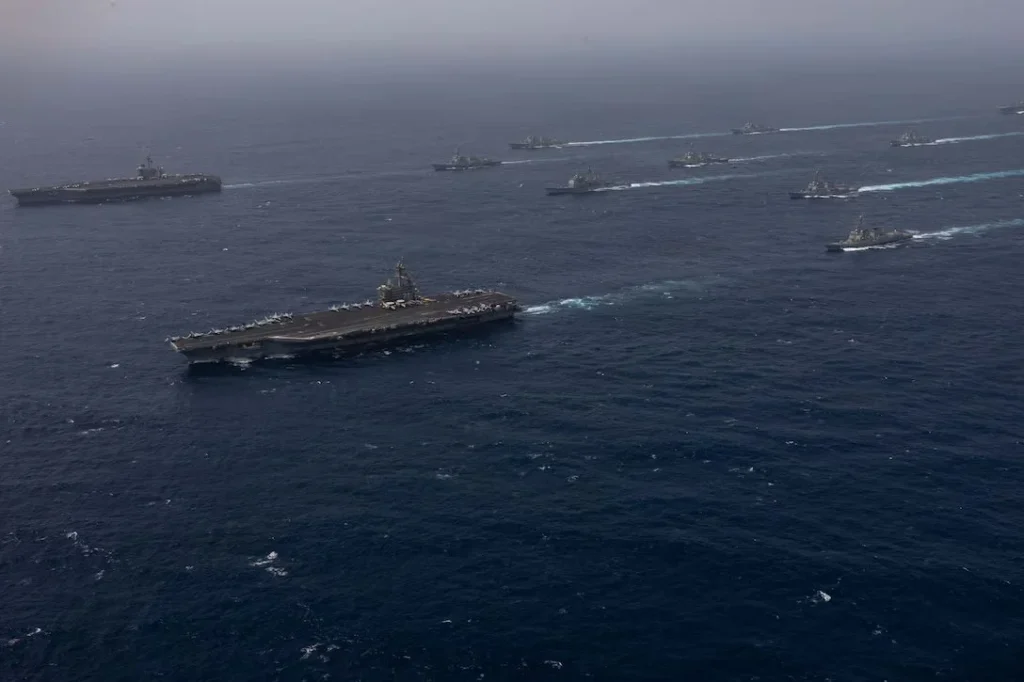
U.S. naval blockade resumes in the Strait of Hormuz after failed Iran negotiations.

The United States and Iran agreed on June 15 to negotiate for 60 days based on a 14-point Memorandum of Understanding (MoU), but the talks collapsed before they even began.

The MoU, which suggested the US had scaled back its war ambitions, was met with fierce opposition from Gulf states and Israel. Neither the Gulf Cooperation Council (GCC) nor Israel wants Iran to emerge as a regional superpower or gain a veto over trade and security in the Gulf. Former British Foreign Secretary William Hague, who played a key role in the 2015 JCPOA nuclear agreement negotiations, described the US concessions to Iran as “extraordinary” and a sign of weakness.

The June 15 agreement was supposed to pave the way for 60 days of negotiations, but no substantive talks ever took place. The Islamic Revolutionary Guard Corps (IRGC), Iran’s elite military force, has maintained its offensive capabilities along the Hormuz littoral, ensuring that the conflict remains at a low but persistent intensity.

The US strategy appears to focus on wearing down the IRGC’s offensive capabilities while hoping that economic pressure will generate unrest within Iran. Central Command, the US military command responsible for the Middle East, has indicated it can sustain current efforts indefinitely.

A private report conducted by ARA for Iranian President Masoud Pezeshkian, corroborated by covert polling from the Dutch GAMAAN Institute, reveals that the Islamic regime is one of the most hated governments in the world. While the Iranian population is turning away from religion, patriotism and national pride remain strong, particularly in the face of foreign interference. This sentiment was evident during the funeral of the late the late Supreme Leader Ali Khamenei, where fanatical supporters were a vocal but clear minority.

The Gulf States’ Resolve and the Future of the Conflict: strait of hormuz

The IRGC’s strategy hinges on pressuring Gulf states into capitulation or compromise. Initially, some Gulf states, such as Qatar, which shares the massive South Pars/North Field gas field with Iran, may have considered conciliation. However, the true nature of the IRGC has since been exposed, leading to a unified resolve among Gulf states to fight back. The United Arab Emirates (UAE), in particular, has rapidly implemented logistical work-arounds to reduce dependency on the Strait of Hormuz, realigning shipping routes and supply chains.

Israel has made it clear that it will intervene in the conflict when it deems necessary, without seeking permission from allies.

“To defeat an enemy like the IRGC, you need the resolve and cunning of a lion, and you need lawyers and diplomats who understand the negotiators sitting on the other side of the table,” he writes. The US, he notes, has a wealth of experts and citizens of Iranian origin who could have been deployed to strengthen its negotiating position, but they were sidelined or ignored.

The current stalemate in the Gulf is likely to persist, with neither side willing to escalate the conflict. The US hopes that sustained economic pressure will eventually weaken the IRGC’s grip on power, while Iran continues to rely on its strategic position in the Strait of Hormuz to exert influence over global energy markets. For now, the war remains a low-intensity conflict, but the stakes could not be higher for the region and the world.

For maritime businesses and global trade, the reinstatement of sanctions and the closure of the Strait of Hormuz pose significant risks. Shipping routes may need to be realigned, and logistical work-arounds will become increasingly important. The UAE’s efforts to reduce dependency on the strait serve as a model for other Gulf states, but the long-term solution will require a diplomatic breakthrough that currently seems out of reach.

The next few months will be critical in determining whether the conflict escalates or remains contained. The international community will be watching closely, particularly as the US presidential election approaches and global powers reassess their strategic priorities. For now, the war in the Gulf is a reminder of the dangers of waging conflict without a clear endgame.

CAMAL AI
Maritime artificial intelligence Go deeper with:

Sign up free to ask CAMAL AI for a summary, the key points or anything else about this story.

Related stories

CAMAL AI CAMAL AI

Financial Ports Newsletter Financial Ports Newsletter The maritime economy, every morning Ports, shipping and freight markets in one short email. Free.

Financial Ports newsletters

Pick the ones you want. Free, and you can unsubscribe in one click.