


Skip to content
Ports
Friday, 4 September 2026 · 11:07 · Morocco ·
World Trade Pulse▼ -5.3%seaborne trade this week · 4,659 port calls a dayIMF PortWatch
Conflict

Iran Downs US Drone in Hormuz: What It Means for Global Shipping

Iran’s Revolutionary Guard claims to have shot down a US MQ-9 Reaper drone over the Strait of Hormuz.

strait of hormuz
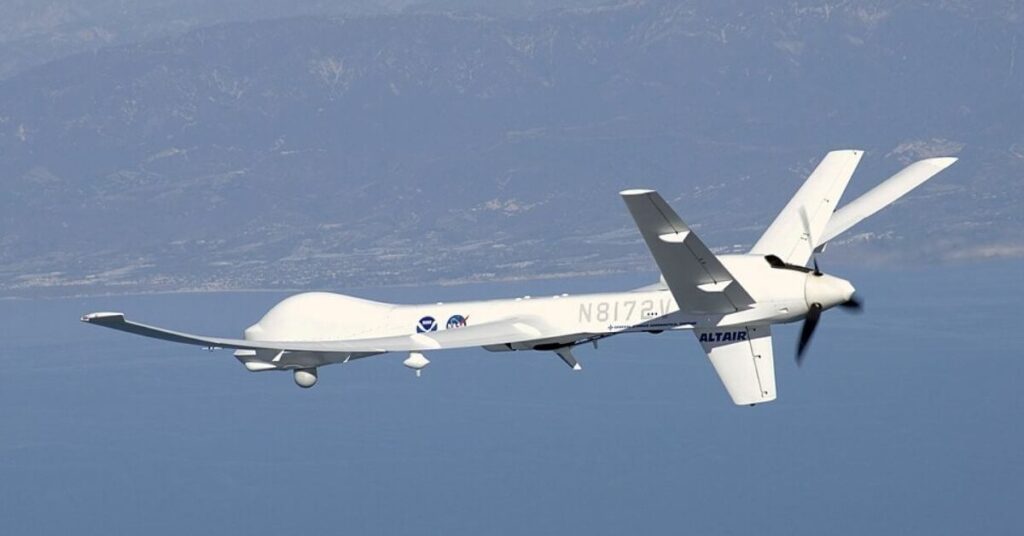
An MQ-9 Reaper drone, similar to the one Iran claims to have shot down over the Strait of Hormuz.

The Islamic Revolutionary Guard Corps (IRGC) said its Aerospace Force used a new advanced air defence system to destroy the unmanned aircraft early Monday, sending it crashing into the Persian Gulf.

The attacks were retaliation for a US strike on Larak Island the previous day, which Iranian sources said killed at least two people.

Why the MQ-9 Reaper is a critical asset, and a vulnerable one

The MQ-9 Reaper, manufactured by US aerospace company General Atomics, is a medium-altitude, long-endurance unmanned aircraft designed for intelligence gathering, surveillance, and precision strikes. With an endurance of 27 hours and a maximum altitude of 50,000 feet, it can carry a payload of up to 3,850 pounds (1,746 kg), including Hellfire missiles and laser-guided bombs. However, it lacks dedicated defences against air-defence missiles or fighter aircraft, making it vulnerable in contested airspace.

Key Markets▲ +4.84% today

Brent Crude

BZ=F · USD · last 6 months · tap for the full page
Source: CAMAL AI

The US military has lost at least 45 MQ-9 drones since the war began in February, representing roughly 25% of its entire Reaper fleet. The losses underscore the risks of operating high-value unmanned assets in regions where adversaries are rapidly improving their air defence capabilities.

How the Strait of Hormuz became a flashpoint for global trade

The Strait of Hormuz, a narrow waterway separating Iran from Oman and the UAE, is the world’s most important oil chokepoint.

The practice, while not illegal, increases the risk of collisions and complicates efforts to monitor maritime traffic.

The IRGC’s claim also comes as Iran continues to assert its military presence in the Persian Gulf. The group’s Aerospace Force, which operates Iran’s ballistic missile and drone programmes, has been at the forefront of recent attacks on US and allied targets. On Monday, Iranian forces used suicide drones to strike US military positions at Al Minhad Air Base in the UAE, further escalating the conflict.

Jordan, meanwhile, reported intercepting eight missiles that breached its airspace at dawn on Monday, though no injuries were reported at the targeted US bases.

The US has not yet responded to Iran’s claim of shooting down the MQ-9 Reaper. However, President Donald Trump has warned that Washington will respond to any attacks on American personnel in the region.

For commercial shipping, the risks are clear. The strait’s narrow geography, just a narrow waterway wide at its narrowest point, makes it vulnerable to blockades or attacks. The International Maritime Organization (IMO) has repeatedly warned that any disruption to traffic through the strait could send oil prices soaring, with ripple effects across the global economy. The recent downturn in vessel crossings suggests that some operators are already taking precautionary measures, though industry groups have not yet issued formal advisories.

The situation is further complicated by Iran’s growing military cooperation with regional allies. The IRGC’s ability to integrate new air defence systems into its network suggests it may have received technical assistance from countries like Russia or China, both of which have supplied advanced military equipment to Tehran in recent years. The US has accused Iran of using its drone and missile programmes to project power across the Middle East, a charge Tehran denies.

For now, the focus remains on the Strait of Hormuz and the potential for further escalation. The US Navy’s presence in the region is likely to increase in the coming days, with additional patrols and escort missions to reassure commercial shipping. However, the risk of miscalculation remains high, particularly as both sides continue to test each other’s red lines. The next 48 hours will be critical in determining whether the latest incident marks a temporary spike in tensions or the beginning of a broader conflict with far-reaching consequences for global trade.

“The ever-watchful fighters of the IRGC’s modern air defence.”

Islamic Revolutionary Guard Corps·military force

The IRGC’s statement, carried by Iran’s Mehr News Agency, underscores the group’s confidence in its new capabilities. The MQ-9 Reaper, while a formidable asset, is not invincible, and Iran’s ability to shoot it down sends a clear message to Washington and its allies. The question now is whether the US will respond with further military action or seek to de-escalate through diplomatic channels. Either way, the Strait of Hormuz is once again at the centre of a geopolitical storm with no easy resolution in sight.

CAMAL AI
Maritime artificial intelligence Go deeper with:

Sign up free to ask CAMAL AI for a summary, the key points or anything else about this story.

Related stories

CAMAL AI CAMAL AI

Financial Ports Newsletter Financial Ports Newsletter The maritime economy, every morning Ports, shipping and freight markets in one short email. Free.

Financial Ports newsletters

Pick the ones you want. Free, and you can unsubscribe in one click.



