

Shipping’s $66k-a-day dilemma: What happens when chaos pays too well?
The ClarkSea Index hits a record $66,421 per day as easing bottlenecks fail to cool the market.
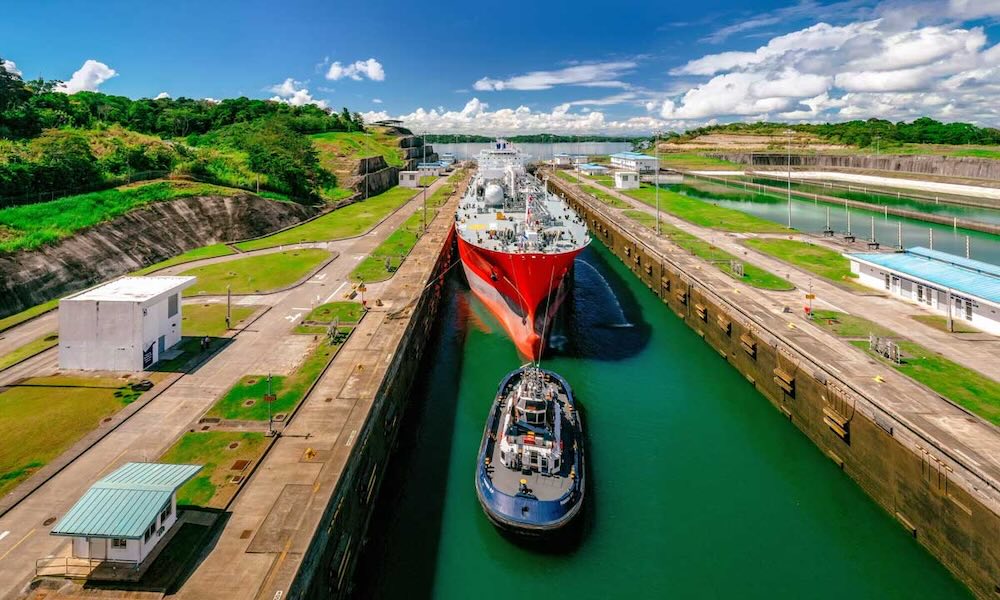
The global shipping industry, long accustomed to profiting from disruptions, now faces an unexpected challenge: stability. As critical maritime chokepoints show signs of easing, freight markets remain at record highs—raising questions about how long this paradox can last.
At the Panama Canal, authorities announced this week that improving rainfall will allow an increase in vessel drafts and daily transit capacity starting October 15. Meanwhile, the Suez Canal is seeing a gradual return of traffic.
The Premier Alliance’s FE1 Asia-Europe service will resume Suez routings this month, following industry leaders like Maersk, Hapag-Lloyd, and MSC in abandoning the longer Cape of Good Hope detour. Since May, over 140 containerships carrying more than 2 million TEU have shifted back to the canal. Yet risks persist: merchant vessels still queue for EU naval escorts in the southern Red Sea, where Brussels has acknowledged a shortage of warships to meet demand.
A.P. Møller-Maersk
The Strait of Hormuz tells a similar story. Despite recent attacks, Middle Eastern crude exports surged in September, and traffic through the strait has rebounded sharply from July’s lows. Even geopolitical tensions between Washington and Beijing have eased temporarily, with Presidents Xi Jinping and Donald Trump extending the suspension of reciprocal port fees until January and agreeing on new commodity trade commitments.
Freight markets defy gravity: freight rates
Yet these signs of normalization have done little to cool freight rates. The ClarkSea Index reached a new record of $66,421 per day last Friday, while very large crude carriers (VLCCs) continue to command extraordinary valuations. A five-year-old VLCC is now priced at $207.6 million—a 49% premium over a newbuild. Even 15-year-old tankers have surpassed newbuild values for the first time, a phenomenon analysts compare to climbers entering Everest’s “death zone”: extreme altitude, but unsustainable over time.
The dry bulk sector presents a slightly different dynamic. First-half tonne-mile demand grew by 6.7%, more than double the increase in actual cargo volumes, while the actively trading fleet expanded just 3.2%. Longer-haul routes from projects like Guinea’s Simandou iron ore mine are creating demand less dependent on short-term crises.
Still, Norden CEO Jan Rindbo warned against complacency in an interview with Splash. His company is reducing tanker exposure and shifting capital to dry cargo, where it sees a more favorable risk-reward balance. “Do not chase yesterday’s earnings with investments made near the top of a cycle,” he cautioned.
Terminals prioritize efficiency over expansion
Onshore, port operators are also rethinking growth strategies. APM Terminals CEO Keith Svendsen emphasized the need for operational discipline over simply building more capacity. The company’s Gemini hubs now handle over 70% more moves per hour than a decade ago. “Without operational discipline, you simply buy a larger version of the same problem,” he told Splash.
Yet even as markets soar, vulnerabilities remain. A recent SplashTech feature highlighted persistent risks like crew fatigue, weak access controls, and blurred accountability between IT and operational technology systems—gaps that software alone cannot fix. As the industry navigates this high-altitude moment, the question is whether it can adapt before the next disruption forces a reckoning.


Sign up free to ask CAMAL AI for a summary, the key points or anything else about this story.
Related stories
CAMAL AI
 Financial Ports Newsletter
The maritime economy, every morning
Ports, shipping and freight markets in one short email. Free.