

US Navy to Punish Sailor After Suicide Attempt at Sea: Why His Family
A 19-year-old sailor faces disciplinary action after going overboard during a mental health crisis aboard the USS.
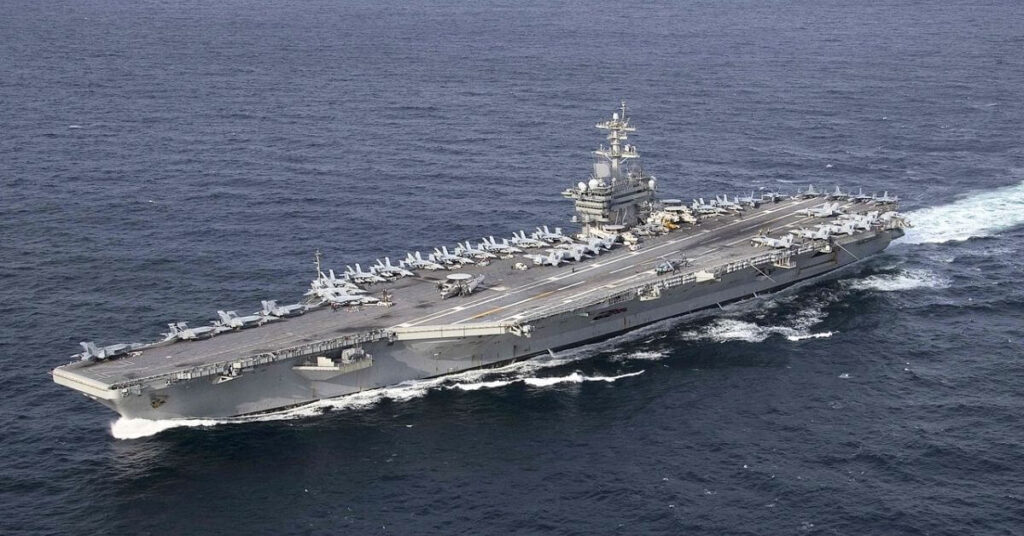
A 19-year-old U.S. Navy sailor faces disciplinary action after an apparent suicide attempt aboard the USS Abraham Lincoln earlier this month. The sailor, who is married and has two children, went overboard on August 3 during what his family described as a mental health crisis. He was rescued and later received medical treatment before returning to San Diego on August 13.
The Navy has charged the sailor with violating two articles of the Uniform Code of Military Justice. Under Article 83, he is accused of malingering—faking illness or injury to avoid duty. He also faces allegations under Article 86 for failing to report to his assigned duty station during the incident. The case will be handled through non-judicial punishment, a process typically used for lower-level misconduct, where a commanding officer can impose penalties without a formal court-martial.
Allegations and Family Concerns: Sailor
His wife has criticized the Navy’s response, questioning why disciplinary action is being pursued instead of prioritizing mental health support. She told reporters that punishing individuals in crisis could worsen their stress. The sailor had reportedly raised concerns about his mental health with his chain of command and medical staff multiple times before the incident. Thirteen days prior, he sent his wife a message expressing that conditions aboard the ship had become unbearable and that he was unsure whether he could complete the deployment.
The couple’s daughter was born in February while the sailor was deployed, and his requests for paternity leave to meet his newborn were denied. His wife also stated that Navy officials did not contact her until four days after the incident, and she first learned of it from a friend aboard the ship.
After returning to San Diego, the sailor spent five days at Naval Medical Center San Diego, where his wife said he was monitored for vital signs but did not meet with a psychiatrist or therapist. Upon his release, he was ordered back to work, with his first therapy appointment scheduled for August 26—nearly two weeks after his return.
Medical Care and Broader Implications
The case has drawn attention to mental health challenges within the military, particularly during extended deployments. The USS Abraham Lincoln has been at sea for more than 250 days, with its deployment repeatedly extended amid tensions in the Middle East. According to the Department of Defense, 471 service members died by suicide in 2024, down from 531 the previous year.
Rep. Sara Jacobs, a California Democrat on the House Armed Services Committee, has expressed concern about the mental health of sailors and Marines serving on ships like the Lincoln. While the Navy has not commented on this specific case, it has previously stated that it encourages service members to seek mental health support.


Sign up free to ask CAMAL AI for a summary, the key points or anything else about this story.
Related stories
CAMAL AI
 Financial Ports Newsletter
The maritime economy, every morning
Ports, shipping and freight markets in one short email. Free.
Financial Ports Newsletter
The maritime economy, every morning
Ports, shipping and freight markets in one short email. Free.



