

One in Ten Cargo Shipments Fails Safety Checks—Why Ships Keep Burning
A 10.36% deficiency rate in 2025 inspections reveals systemic failures in cargo packing and declaration.
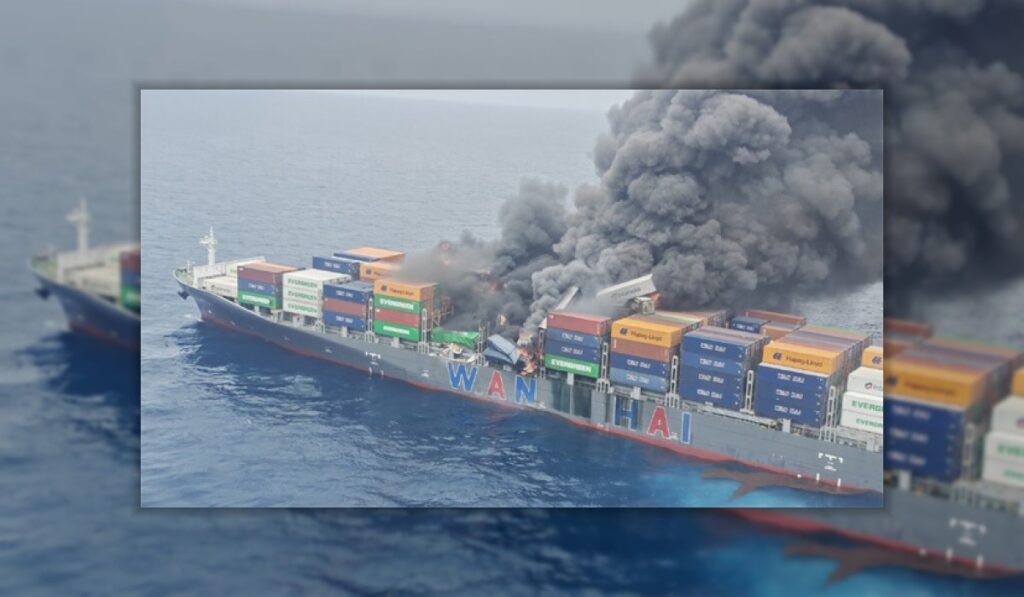
A comprehensive review of over 93,000 cargo inspections conducted in 2025 has uncovered a troubling pattern of safety failures in global shipping. The World Shipping Council‘s report reveals that more than one in ten inspected cargo units—10.36%—were found to have deficiencies, a rate that has steadily increased over the past decade.
The findings, compiled from inspections in seven countries—Chile, Finland, Germany, the Netherlands, the Republic of Korea, Sweden, and the United States—highlight persistent issues in cargo handling. Among the most common problems were incorrect documentation, improper labeling, inadequate packing, and insufficient securing of goods. These lapses significantly raise the risk of cargo damage, container losses, and shipboard fires, which have become an escalating concern for the industry.
Rising Deficiencies and Industry Risks: Safety
The data shows that the average deficiency rate has remained above 9% since 2017, with a notable increase in recent years. Between 2022 and 2024, the rate climbed to over 11%, reaching a three-year average of 10.9%. This upward trend coincides with a surge in high-profile maritime incidents, including containership fires that occur, on average, every 17 days, according to insurer Allianz.
Joe Kramek, President and CEO of the World Shipping Council, emphasized the gravity of the situation.
“Finding deficiencies in more than one in ten inspected units is far too high. Correct declaration, packing, securing, and marking are fundamental safety obligations. When these requirements are not met, people’s lives are put at risk.”
Joe Kramek·President and CEO, World Shipping Council
One of the most pressing concerns is the improper declaration of hazardous materials, particularly lithium-ion batteries. The International Energy Agency reports that global deployment of these batteries in 2025 was six times higher than in 2020, with demand projected to double by 2030. Undeclared lithium batteries pose a severe fire risk, yet the report indicates that thousands of such containers are currently in transit without proper documentation.
Gaps in Oversight and Enforcement
The World Shipping Council also raised alarms about the lack of global oversight. The International Maritime Organization (IMO) discontinued its annual consolidated report on cargo inspections in 2024, leaving a critical void in tracking safety trends. Only seven of the IMO’s 170+ member states submitted inspection data for 2025, further limiting the industry’s ability to address systemic issues.
Kramek stressed the need for stronger enforcement, stating, “States have a responsibility to enforce cargo safety rules, including through effective inspections.” Without consistent reporting and accountability, many safety lapses may go undetected until they result in catastrophic incidents. The stakes are particularly high for an industry that transports 90% of the world’s goods, with the largest containerships carrying over 20,000 containers at a time.
The report underscores the urgent need for improved compliance and international cooperation to prevent future disasters. As cargo volumes and the use of hazardous materials continue to rise, the shipping industry faces a critical challenge in ensuring that safety standards keep pace with demand.


Sign up free to ask CAMAL AI for a summary, the key points or anything else about this story.
Related stories
CAMAL AI
 Financial Ports Newsletter
The maritime economy, every morning
Ports, shipping and freight markets in one short email. Free.
Financial Ports Newsletter
The maritime economy, every morning
Ports, shipping and freight markets in one short email. Free.