
Russia’s Secret Push: Iran’s Supersonic Missile Threat to US Navy Blockade
Moscow’s ramjet expertise could slash US warship response time from 150 to 40 seconds in the Gulf of Oman.
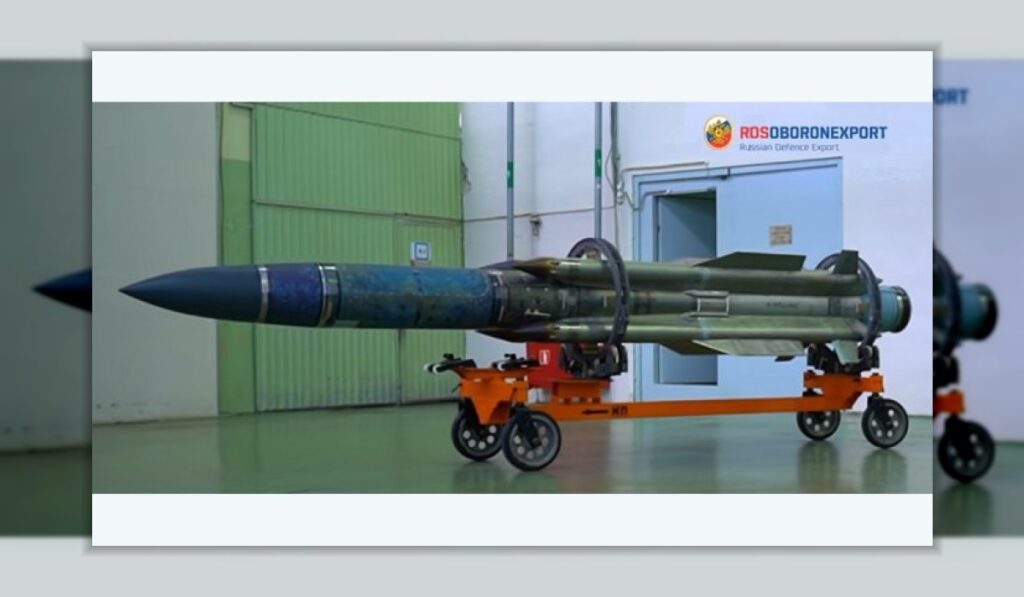
A recent report in the Financial Times, published on September 2, 2026, reveals that Russia is assisting Iran in developing a supersonic anti-ship cruise missile. This collaboration could significantly alter the strategic balance in the Gulf of Oman, where the US Navy has maintained a blockade on Iranian vessels and ports.
The US-led blockade has effectively isolated Iran from global maritime commerce, cutting off vital export revenues. These funds are crucial for the Islamic Revolutionary Guard Corps (IRGC) to sustain its Basij internal security forces and subsidize essential goods for Iranian citizens amid rising prices. Coordinated with US Treasury Secretary Bessent’s Operation Economic Outcast, the blockade has been the primary tool pressuring Iran to return to negotiations as internal unrest grows.
Impact on US Naval Operations: US Navy
Until now, Iran’s anti-ship arsenal—primarily subsonic missiles like the Noor and Ghadir, derived from the Chinese C-802 system—has failed to threaten US Navy warships. These missiles, while accurate, are detectable at around 20 nautical miles, giving defending vessels approximately 150 seconds to intercept.
However, a supersonic missile would reduce this window to just 40 seconds, complicating defensive measures. Current US systems, including Close-in Weapon Systems (CIWS) like the Phalanx and helicopter-based radar interceptors, rely on early detection, which supersonic threats would severely limit.
The collaboration, codenamed Project C430L, began in 2023, though Iran’s Farzanegan Propulsion Bureau has worked on ramjet technology since 2017. Most research and development occur in Iran, with Russian support coming from the sanctioned firm NPO Mashinostroyenia via Rosoboronexport. This assistance has focused on analyzing Iranian flight test telemetry to refine the missile’s design.
Russia’s Role in the Development
Despite past Iranian attempts to acquire Russian technology—including a failed 2018 effort to steal a Ukrainian Kh-31—Moscow has not provided physical examples of its Kh-31 or Kh-47 Kinzhal missiles. The report does not confirm whether Iran has achieved operational capability, but the potential shift in missile technology poses a clear challenge to US naval dominance in the region.
As the situation develops, the US Navy’s Fifth Fleet remains on alert, monitoring Iran’s progress. The next phase of this arms race could determine whether the current blockade strategy—and broader Gulf security—remains viable.


Sign up free to ask CAMAL AI for a summary, the key points or anything else about this story.
Related stories
CAMAL AI
 Financial Ports Newsletter
The maritime economy, every morning
Ports, shipping and freight markets in one short email. Free.
Financial Ports Newsletter
The maritime economy, every morning
Ports, shipping and freight markets in one short email. Free.