

U.S. Navy’s New Hovercraft Can Reach 80% of Global Shores
The U.S. Navy awards a $230 million contract to Textron for two next-generation ship-to-shore connectors.
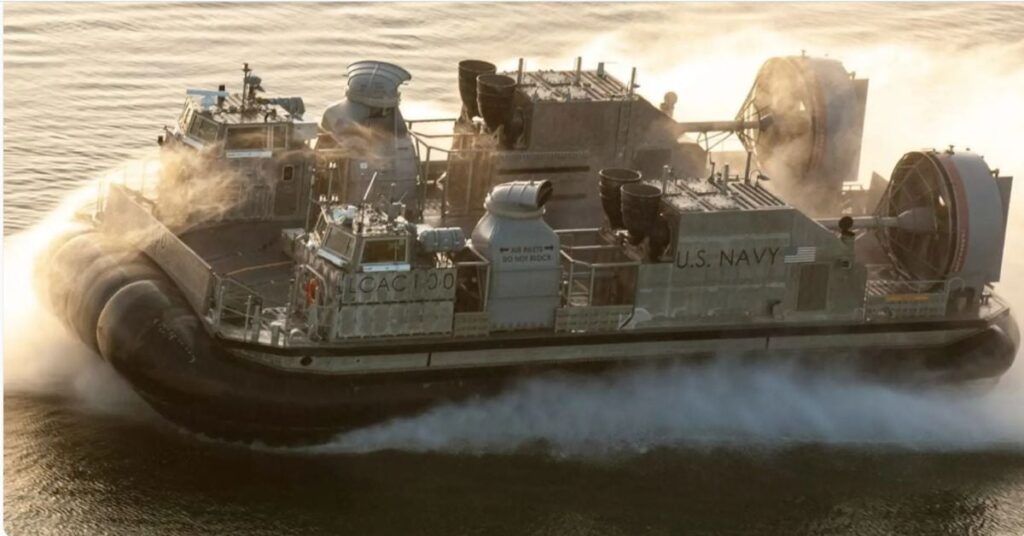
The U.S. Navy has awarded a $230 million contract to Textron Systems Corporation to construct two next-generation ship-to-shore connector (SSC) hovercraft at its shipyard in New Orleans, Louisiana. The vessels are designed to replace the Navy’s aging hovercraft fleet and enhance its amphibious operational capabilities.
The new SSCs will enable the Navy to access approximately 80% of the world’s coastlines, including shallow waters and contested environments where traditional vessels cannot operate. With a 74-tonne payload capacity, the craft can transport personnel, equipment, and critical supplies from offshore ships to land-based facilities, even in areas lacking established ports.
Larry D. Randle Junior, Senior Vice President of Marine Systems at Textron, stated that the primary role of these vessels is to support amphibious operations by moving troops and supplies from ships to shore. The SSCs are engineered to maintain high speeds while adapting to diverse operational demands, reducing maintenance requirements and extending the time between overhauls.
Enhanced Capabilities for Global Operations: Navy
Beyond combat applications, the SSCs are equipped for humanitarian assistance and disaster relief. Each vessel features 1,600 square feet of deck space, capable of carrying at least four reconnaissance vehicles. This flexibility allows the Navy to deploy them in crises where rapid response is essential, such as natural disasters in remote regions.
Textron has already delivered 18 SSCs to the Navy, with 13 more in various stages of production and testing. The latest contract brings the total number of vessels ordered to 33, ensuring a steady supply of advanced amphibious assets for future missions.


Sign up free to ask CAMAL AI for a summary, the key points or anything else about this story.
Related stories
CAMAL AI
 Financial Ports Newsletter
The maritime economy, every morning
Ports, shipping and freight markets in one short email. Free.



