

British Drone Boat Strikes Russian Ship in Black Sea Escalation
Kraken Technology’s K3 Scout autonomous vessel used in attack on Russian offshore ship Nefrit in Sochi port
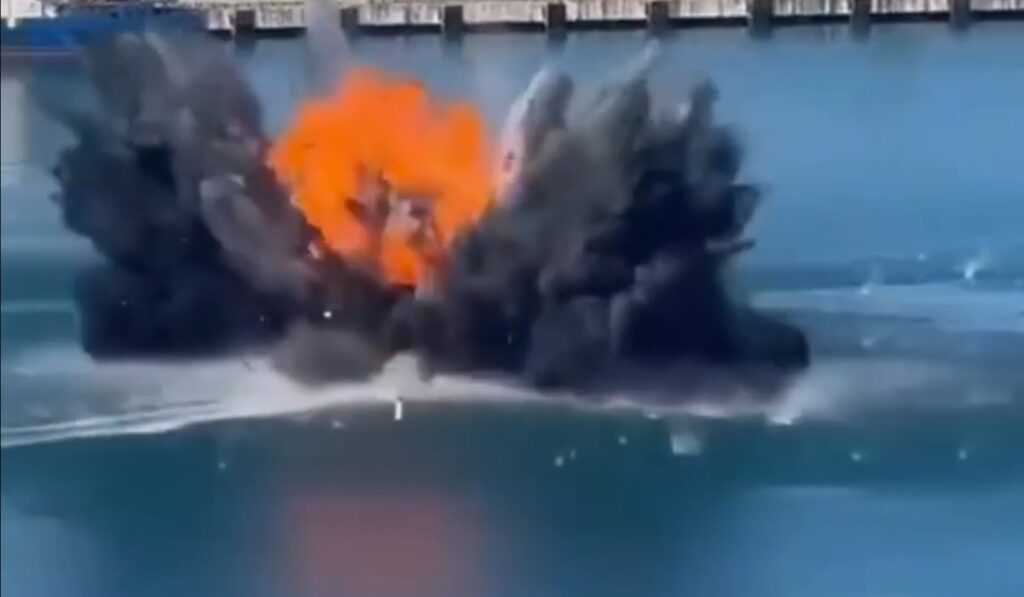
A British-designed uncrewed surface vessel (USV) played a key role in a recent Ukrainian strike on a Russian ship in the Black Sea, marking a significant development in naval drone warfare. Industry sources confirmed that Kraken Technology’s K3 Scout, a 28-foot autonomous boat, was deployed in the attack on the Russian offshore construction vessel Nefrit in Sochi port on September 3, 2026.
Footage from the incident shows one USV breaching the port’s defenses and striking the Nefrit on its port side, causing visible damage. A second drone boat was destroyed before reaching its target, likely intercepted by Russian gunfire. The attack demonstrated the growing effectiveness of Ukraine’s naval drone operations, with British technology now directly involved.
Capabilities of the K3 Scout: Russian
The K3 Scout, developed by UK-based Kraken Technology, is engineered for stealth and speed. With a top speed of 55 knots and a 600 kg payload capacity, the vessel is optimized for one-way strike missions. Its 650-nautical-mile range allows it to reach targets from Odesa, though alternative deployment methods have been tested. Earlier this year, the Royal Navy and Royal Air Force successfully airdropped the K3 from cargo aircraft, with the vessel surviving four consecutive parachute drops during trials.
Beyond its strike capabilities, the K3 can carry FPV drones for reconnaissance or coordinated attacks. It also features an optional 3D air and surface search radar, a rare addition for small USVs, enabling early detection of aerial threats.
UK Industry’s Growing Role in Ukraine’s Defense
The deployment of the K3 Scout highlights the UK’s expanding support for Ukraine’s drone campaign. Kraken Technology, headquartered in Fareham, secured $175 million in Series B funding this year, with backing from German defense firm Rheinmetall and U.S. company Anduril Industries. The startup operates a 35,000-square-foot manufacturing plant and aims to produce 1,000 units annually. Rheinmetall has also committed to manufacturing 200-1,000 units per year in Germany, while Anduril is producing the K3 and a larger variant, the K7, for the U.S. Navy.
An industry source told The Times that British support for Ukraine remains steadfast, emphasizing the country’s commitment to countering Russian aggression. The source stated:
“The unwavering British support for our Ukrainian allies continues, and you can see why it is something the whole country cares so deeply about. British industry is a key pillar of the fight against Russian aggression, and we support collaboration toward that effort.”
Ukraine’s drone campaign has also expanded beyond the Black Sea. On an unspecified Sunday, aerial drones struck the Russian roll-on/roll-off cargo vessel Lady Mariia near Crete in the Mediterranean. The 7,184 DWT ship, operated by Kremlin-linked firm MG-Flot LLC, was transporting military equipment when it was hit, setting its deck ablaze.
Classified by Ukrainian intelligence as a military supply vessel, the Lady Mariia had been sanctioned by the U.S. and Ukraine for its role in Russian logistics. The attack signals a strategic shift in Ukraine’s operations, targeting weapons supply lines rather than oil revenue.


Sign up free to ask CAMAL AI for a summary, the key points or anything else about this story.
Related stories
CAMAL AI
 Financial Ports Newsletter
The maritime economy, every morning
Ports, shipping and freight markets in one short email. Free.



