

Seven Missing as Black Sea Drone Strikes Sink Two Tankers
Romania and Bulgaria scramble search teams after attacks leave 23 seafarers unaccounted for in 10 days.
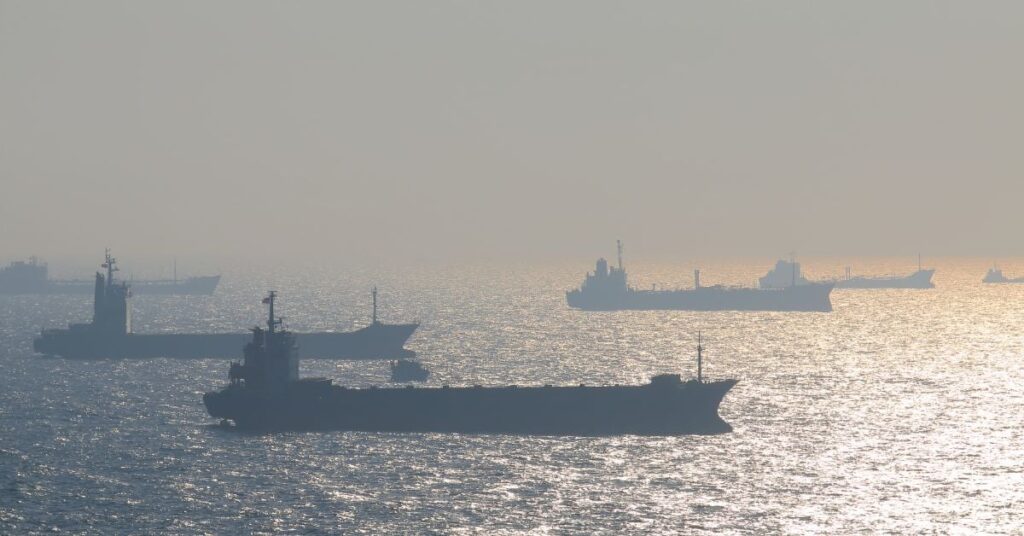
The vessels, identified as the Wine Trader and Yara J, were en route from Russia when they came under attack. While the crew of the Yara J were safely evacuated, all seven seafarers aboard the Wine Trader remain unaccounted for.
The Black Sea, a critical artery for global trade, has become a battleground for geopolitical tensions since Russia’s invasion of Ukraine in 2022.
Romania, which shares a 614-kilometre border with Ukraine, much of it along the River Danube, has faced repeated drone incursions into its airspace. This shift has exposed both nations to heightened risks, as evidenced by the sinking of the Alfa Watan, a Turkish-owned cargo ship flagged under Togo, after a drone strike earlier this week.
The escalation has drawn sharp condemnation from Western leaders. Romanian President Nicușor Dan called the attacks “unacceptable and [something that] has to stop,” urging Russia and Ukraine to return to the negotiating table. His Bulgarian counterpart, Prime Minister Rumen Radev, echoed the sentiment, stating,
The Black Sea: A New Flashpoint for Maritime Conflict
“Such an attack within the Bulgarian exclusive economic zone is absolutely unacceptable.”
Rumen Radev·Prime Minister of Bulgaria
The crisis has also prompted an emergency meeting between Radev, Romanian officials, and NATO Secretary General Mark Rutte. The discussions, held ahead of an upcoming North Atlantic Council meeting, focused on bolstering maritime defences in the Black Sea.
The attacks have not been limited to Russian-linked vessels. The Chelsea 3, a ship operated by Ukraine, was also struck by drones, though all 15 crew members were rescued, albeit with minor injuries. The vessel sustained damage to its deck and hull, underscoring the indiscriminate nature of the strikes. Meanwhile, the cargo ship HS Dignity remains a ghost vessel, with 11 crew members still missing after an earlier attack.
NATO and EU Leaders Condemn Attacks as ‘Unacceptable’
However, Nikolov delivered a grim update on the search for the Alfa Watan’s crew:
“There is no trace of the sailors.".
Search operations were officially halted on October 7, with no survivors recovered. The distress beacon from the sunken ship was last detected at 2:54am on Tuesday (23:54 GMT on Monday), marking a tragic end to what had been a routine voyage.
The Black Sea’s transformation into a conflict zone mirrors the instability seen in other critical maritime chokepoints, such as the Strait of Hormuz. Russia’s intensified bombing of Ukrainian port facilities has forced Kyiv to reroute exports, including grain, sunflower oil, and cosmetics, through the Danube River and along the coasts of Romania and Bulgaria. This workaround has inadvertently made both countries targets, as their EEZs and territorial waters become de facto extensions of Ukraine’s supply lines.
For the shipping industry, the implications are dire. Insurers have already begun revising risk assessments for Black Sea routes, with premiums for vessels transiting the region expected to spike. The International Maritime Organization (IMO), though not directly cited in the latest attacks, has previously warned of the dangers posed by drifting mines and unmanned aerial vehicles (UAVs) in the area. The IMO’s guidelines for safe navigation in conflict zones may soon be updated to reflect the growing threat of drone warfare at sea.
NATO’s response will be closely watched in the coming days. The North Atlantic Council, the alliance’s principal decision-making body, is set to discuss the Black Sea crisis in its next session. Analysts suggest that enhanced surveillance, including the deployment of unmanned maritime patrol vessels, could be on the table. However, any military escalation risks further provoking Russia, which has yet to comment on the latest attacks.
For now, the focus remains on the missing seafarers and the vessels still adrift. The Able, a grain-transporting ship flagged under Palau, was struck in the same wave of attacks that sank the Alfa Watan. Though all 18 crew members, 11 Turkish and 7 Indian nationals, were rescued, the incident underscores the global nature of the crisis. Seafarers from multiple nations are now caught in the crossfire of a war that shows no signs of abating.
As the search for survivors continues, the Black Sea’s reputation as a safe passage for commercial shipping hangs in the balance. With no end to the conflict in sight, the region’s ports and waterways may soon face the same fate as the Strait of Hormuz: a no-go zone for all but the most desperate, or the most heavily armed, vessels.


Sign up free to ask CAMAL AI for a summary, the key points or anything else about this story.
Related stories
CAMAL AI
 Financial Ports Newsletter
The maritime economy, every morning
Ports, shipping and freight markets in one short email. Free.



