

Black Sea Drone Strike Suspected as Tanker Yara J Burns Off Romania
Romania probes fire on chemical tanker 8-10 nautical miles off Sulina Canal amid rising Black Sea attacks
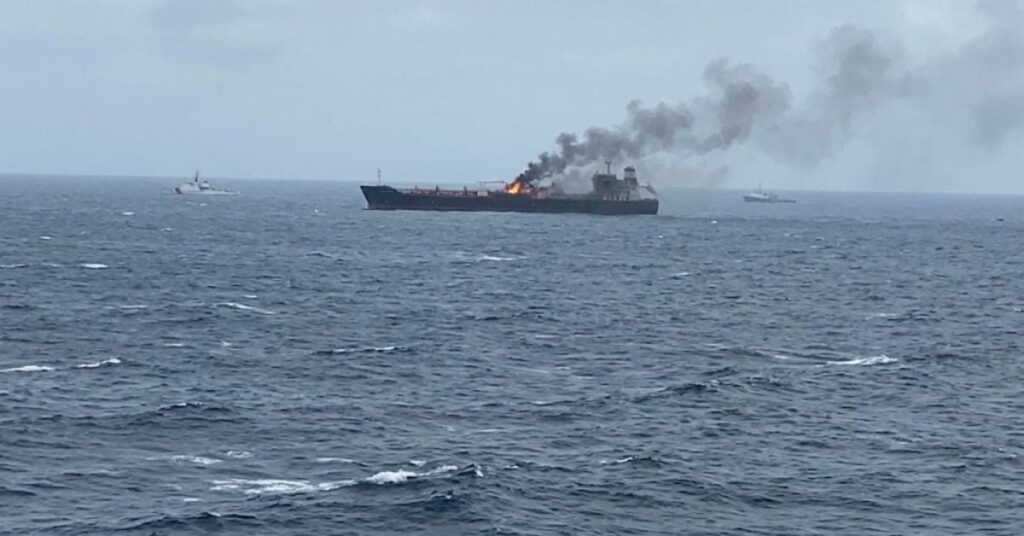
Romania’s Defense Ministry has opened an investigation into a suspected drone strike after the chemical and oil tanker Yara J caught fire while anchored 8-10 nautical miles off the Sulina Canal in the Black Sea. All crew members were rescued by Romanian naval authorities, but the incident underscores the escalating risks to shipping in the region.
Since the first week of October, at least five cargo ships have been targeted off the coasts of NATO members Romania and Bulgaria, resulting in the deaths or disappearances of 23 seafarers. The Sulina Canal, a key trade route for Ukraine’s grain exports, has become a flashpoint as delays, bad weather, and worker shortages create a backlog of dozens of vessels.
Russia’s repeated strikes on Ukrainian ports have forced Kyiv to rely on alternative routes near Romania and Bulgaria, drawing NATO members deeper into the conflict. In response, Ukraine has targeted Russia’s Port of Novorossiysk, including ships waiting to load oil, further escalating tensions. The strategic importance of the Black Sea extends beyond regional conflict.
Defense Minister Radu Miruta confirmed that an investigation is underway to determine whether the fire on the Yara J was caused by a drone strike. “An investigation has been opened to determine the cause of the incident, as it remains unclear whether it was a drone strike.”
President Nicușor Dan framed the attacks as a direct consequence of Russia’s war in Ukraine, warning that they threaten vital agricultural exports bound for Africa and the Middle East.
“The drone attacks are a result of the Russian war against Ukraine and threaten shipping and crucial agricultural commodities meant for other continents.”
Nicușor Dan·President of Romania
The fire on the Yara J is part of a broader pattern of violence in the Black Sea. The attacks have disrupted a critical shipping lane, raising fears that NATO members could be drawn further into the conflict.
The Sulina Canal, a vital artery for Ukraine’s grain shipments, has seen delays worsen due to the volatile security situation. Dozens of vessels are now stranded, waiting to cross as bad weather and a shortage of workers compound the crisis. The canal, which connects the Danube to the Black Sea, is a lifeline for Ukrainian exports, particularly grain destined for global markets.
Before the war, Ukraine exported around 6 million tonnes of grain per month via its Black Sea ports. Since Russia’s blockade, these volumes have plummeted, forcing Kyiv to rely on overland routes and the Sulina Canal, which has limited capacity.
For shipping companies and insurers, the Black Sea has become a no-go zone. Premiums for vessels operating in the region have surged, with some insurers refusing coverage altogether. The International Maritime Organization (IMO) has issued warnings about the risks of navigating the area, urging vessels to exercise extreme caution. For seafarers, the dangers are stark: the 23 deaths or missing reports since October highlight the human toll of a conflict that shows no signs of abating.
The Romanian naval authority’s swift response ensured that all crew members of the Yara J were rescued, but the incident serves as a stark reminder of the dangers facing commercial shipping in the region. As investigations continue, the Black Sea remains a tinderbox where geopolitical tensions and maritime security collide.
For businesses and governments reliant on stable trade routes, the stakes could not be higher. The next steps will likely involve intensified NATO patrols, stricter monitoring of drone activity, and diplomatic efforts to de-escalate tensions, though with Russia’s war in Ukraine showing no signs of ending, the Black Sea’s future as a safe shipping corridor remains uncertain.
Companies operating in the region are advised to monitor updates from the Romanian Naval Authority and NATO’s Maritime Command. The Romanian Ministry of Defence has set up a dedicated hotline for vessels reporting suspicious activity, while the IMO continues to publish real-time advisories on its website. For now, the message is clear: the Black Sea is open for business, but at a cost few are willing to pay.


Sign up free to ask CAMAL AI for a summary, the key points or anything else about this story.
Related stories
CAMAL AI
 Financial Ports Newsletter
The maritime economy, every morning
Ports, shipping and freight markets in one short email. Free.



