

EU Unleashes 930-Page Sanctions Blitz on Russia’s Entire Shipbuilding
The 1,600-strong list targets 23 shipyards, two dozen design bureaus, and every major supplier of naval components.
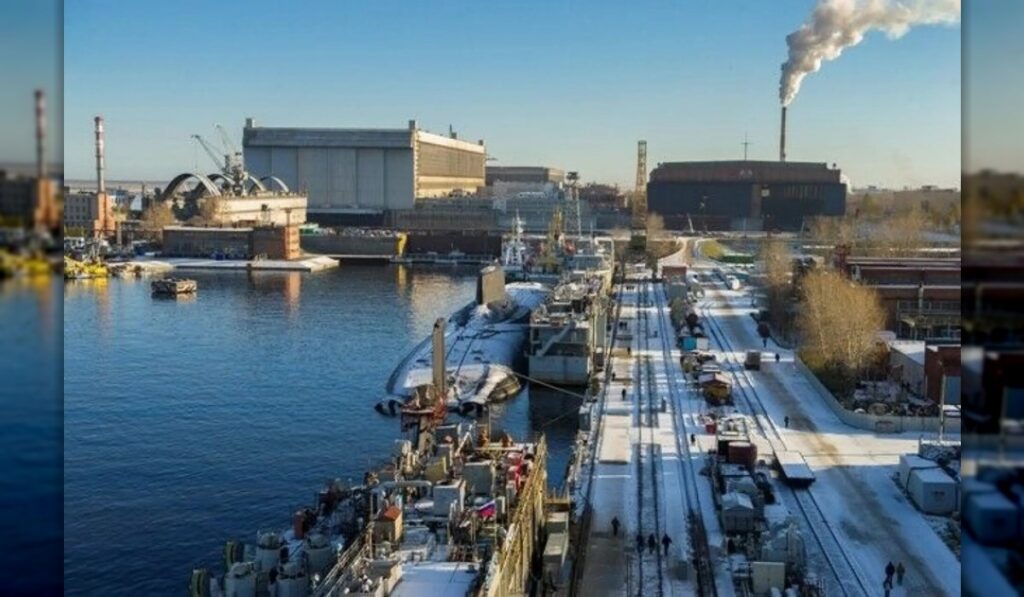
The European Union has rolled out its most sweeping sanctions package yet, a 930-page document that locks nearly every Russian shipyard, design bureau, and naval equipment supplier out of the global market.
EU top diplomat Kaja Kallas framed the package as a necessary escalation, stating, “This is the strongest package of listings we have adopted so far.” She added, “It is clear that at this time we need more pressure on Russia and not sending signals that we are easing up somehow, because they are actually killing more civilians than they have ever done.”
Which Russian Shipyards Are Now Blacklisted?
The EU’s list reads like a who’s who of Russian naval construction. At the top sits United Shipbuilding Corporation (USC), the state-owned conglomerate responsible for roughly 80% of all newbuild tonnage in Russia. Among its subsidiaries now under sanctions are.
- Sevmash, the primary constructor of Russia’s nuclear submarine fleet.
- Almaz Shipbuilding Company, based in St. Petersburg, which has produced icebreakers, amphibious craft, and assault hovercraft for the Russian Navy.
The sanctions also extend to the country’s most critical submarine design bureaus, Rubin, Malakhit, and Lazurit, all of which are part of USC. Beyond the yards themselves, the EU has targeted independent manufacturers of smaller but essential components, including valves, heat exchangers, desalination units, and navigational and communications equipment.
The granularity of the sanctions is unprecedented. The EU did not simply blacklist the major yards; it dug deep into the supply chain, ensuring that even the smallest suppliers of critical components are cut off.
In total, about 50 individual executives, one at nearly every targeted yard, have been personally sanctioned. Additionally, two dozen service and supply-chain companies are now barred from doing business with the EU.
Kallas emphasised the urgency of the measures, stating, “They are really escalating on the ground, and that is why it is time for no concessions.” The sanctions are designed not just to punish but to degrade Russia’s long-term military capabilities, particularly in shipbuilding, where the country has historically relied on Western technology and components.
«This is the strongest package of listings we have adopted so far. It is clear that at this time we need more pressure on Russia and not sending signals that we are easing up somehow, because they are actually killing more civilians than they have ever done.»
Kaja Kallas·EU top diplomat for Foreign Affairs and Security Policy
The sanctions package is not just a symbolic gesture; it is a calculated effort to undermine Russia’s ability to wage war. By targeting the shipbuilding sector, the EU is striking at the heart of Russia’s naval power, which has been a critical component of its military strategy. The long-term effects of these sanctions will likely reshape the global maritime landscape, forcing Russia to either adapt or fall further behind in naval technology and capacity.


Sign up free to ask CAMAL AI for a summary, the key points or anything else about this story.
Related stories
CAMAL AI
 Financial Ports Newsletter
The maritime economy, every morning
Ports, shipping and freight markets in one short email. Free.



