

Asia’s Port Chaos: 6.1% Plunge in Global Ship Reliability—Worst Since 2021
Global vessel reliability hit 56.4% in July as Asia’s 14 busiest ports logged record delays, Sea-Intelligence reports.
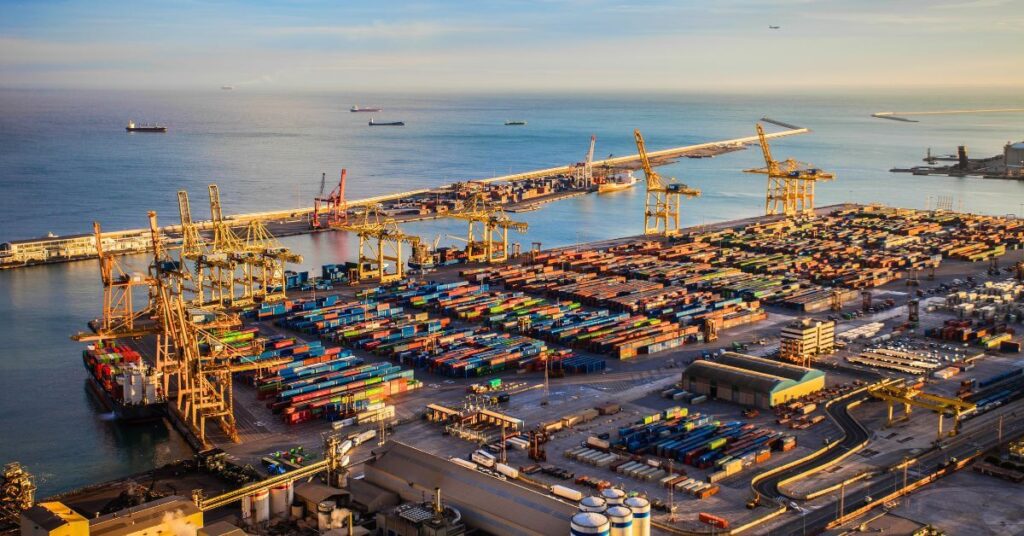
Global container shipping reliability suffered its steepest monthly decline in over three years during July, driven by severe congestion at major Asian ports. According to maritime analytics firm Sea-Intelligence, schedule reliability fell to 56.4%, a drop of 6.1 percentage points from June. This marks the largest single-month decrease since January 2021.
Delays also worsened, with late vessels arriving an average of 6.06 days behind schedule—an increase of 0.59 days from the previous month. The disruptions were concentrated in Asia, where all 14 of the region’s busiest ports reported lower on-time arrival rates.
Key Asian Ports Face Historic Delays: Reliability
Shanghai, the world’s largest container port, experienced the most dramatic decline. Its reliability plunged 19.2 percentage points to just 21%, a level not seen outside the COVID-19 pandemic in 14 years of recorded data. Sea-Intelligence CEO Alan Murphy described the figure as “particularly concerning,” noting that such extreme delays could ripple across global supply chains.
Other major hubs fared little better. Yantian, a critical export gateway in southern China, saw reliability drop 23.5 percentage points to 48.3%, the steepest decline among Asian ports. Hong Kong and Ningbo also recorded significant falls, with on-time arrivals dropping 20.4 percentage points and 20.1 percentage points, respectively. Ningbo, now the world’s second-largest container port, has been further strained by consecutive typhoons this year, including Typhoon Saudel, which caused severe disruptions the previous week.
Even secondary hubs struggled. Singapore, the world’s largest transshipment port, saw reliability fall 5.7 percentage points to 43.2%, while Port Klang and Busan recorded rates of 33.3% and 40.9%, respectively.
Backlogs Threaten Global Trade Routes
The congestion at Asian ports is expected to have far-reaching consequences. Murphy warned that with more than half of incoming vessels delayed at the region’s busiest terminals, the backlog would “naturally cascade through the maritime network,” likely triggering further delays on critical trade lanes in the coming months.
The timing could not be worse for shipping lines. After rerouting Asia-Europe services around the Cape of Good Hope for over two and a half years to avoid Houthi attacks in the Red Sea, carriers are now attempting to return to the Suez Canal. However, persistent security threats from Yemen’s Houthi rebels, who continue to blockade Saudi Arabian ports, complicate the transition.
Sea-Intelligence anticipates that the backlog will persist into the fourth quarter, with carriers advising shippers to prepare for extended lead times. Until port operations stabilize, the shipping industry—and the global economy—will remain vulnerable to further disruptions.


Sign up free to ask CAMAL AI for a summary, the key points or anything else about this story.
Related stories
CAMAL AI
 Financial Ports Newsletter
The maritime economy, every morning
Ports, shipping and freight markets in one short email. Free.
Financial Ports Newsletter
The maritime economy, every morning
Ports, shipping and freight markets in one short email. Free.



