

Red Sea shift sends container rates soaring despite demand dip
Asia-Europe rates climb 8% as carriers reroute through the Red Sea, defying post-peak season slowdown
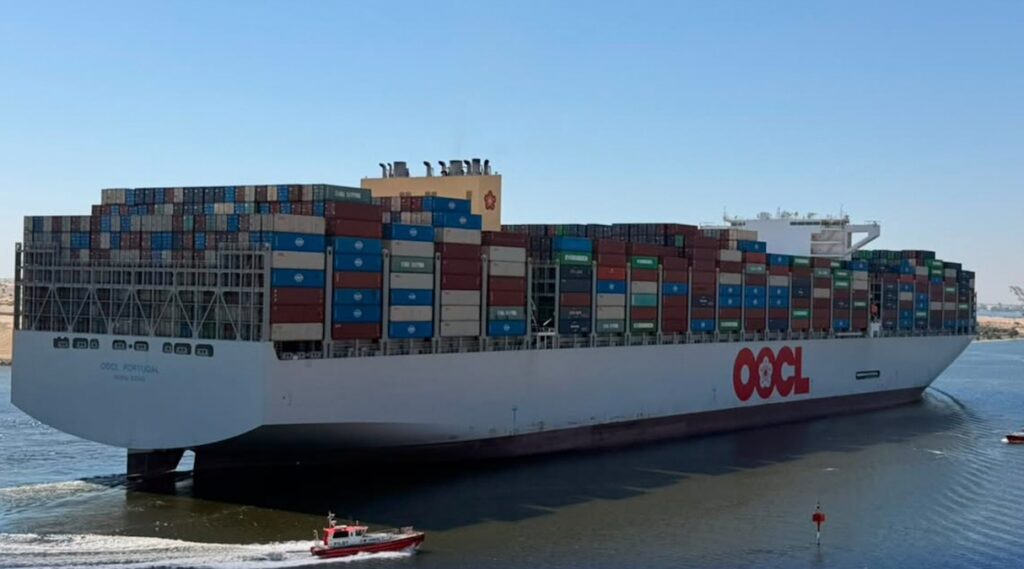
Container freight rates on key Asia-Europe and trans-Pacific shipping routes rose last week, bucking expectations of declining demand as operational disruptions and capacity management strategies kept prices elevated.
Nearly two-thirds of container capacity between Asia and Europe now transits the Red Sea, according to data from Alphaliner. The shift involves 24 of 46 direct services operated by the 10 largest carriers, representing 63% of deployed capacity. Mediterranean routes show higher adoption (70%) compared to North Europe services (58%).
Israeli carrier Zim resumed its joint Asia-U.S. East Coast service through the Red Sea with Mediterranean Shipping Co., despite ongoing security concerns. Houthi rebels in Yemen had declared the Bab el-Mandeb Strait off-limits to Israel-linked vessels as recently as August. The return to the shorter route remains partial, with some carriers continuing to use Africa for return voyages while favoring the Suez Canal for outbound trips.
Red Sea rerouting drives schedule changes
This uneven transition has created new challenges. Vessels arriving ahead of schedules based on longer Africa routings have clustered at destination ports, exacerbating existing congestion. The situation worsened last week when Typhoon Champi forced the closure of major Taiwanese ports including Kaohsiung, Keelung, and Taipei. While East China’s ports escaped direct impact, many remain congested following earlier summer storms.
Freight rates have climbed since mid-October, supported by both port congestion and carriers’ capacity management. The Freightos Baltic Index recorded a 3% weekly increase for Asia-North Europe routes, reaching $3,551 per 40-foot equivalent unit (FEU). Mediterranean rates rose more sharply by 8% to $4,252 per FEU.
Capacity restrictions push rates higher
Trans-Pacific routes also saw gains, with Asia-U.S. West Coast rates up 3% to $8,368 per FEU. East Coast rates jumped 9% to $10,565 per FEU – the highest level this year. While daily East Coast prices have since retreated slightly, they remain approximately $200 per FEU above the previous week’s levels.
Carriers are attempting to maintain upward pricing pressure through additional sailing cancellations. Drewry reported eight blank sailings scheduled for Asia-Europe routes in the coming week, compared to just two in the current week. However, forwarders report that carriers offered discounts during October and expect similar concessions in November, casting doubt on whether the announced rate increases will fully materialize.
A potential labor strike at the ports of Los Angeles and Long Beach adds further uncertainty to the market outlook.


Sign up free to ask CAMAL AI for a summary, the key points or anything else about this story.
Related stories
CAMAL AI
 Financial Ports Newsletter
The maritime economy, every morning
Ports, shipping and freight markets in one short email. Free.