

Red Sea chaos forces 125 ships a day to reroute—at what cost?
Vessel transits through the Strait of Hormuz plummeted from 125 to just four in a single day as attacks escalate.
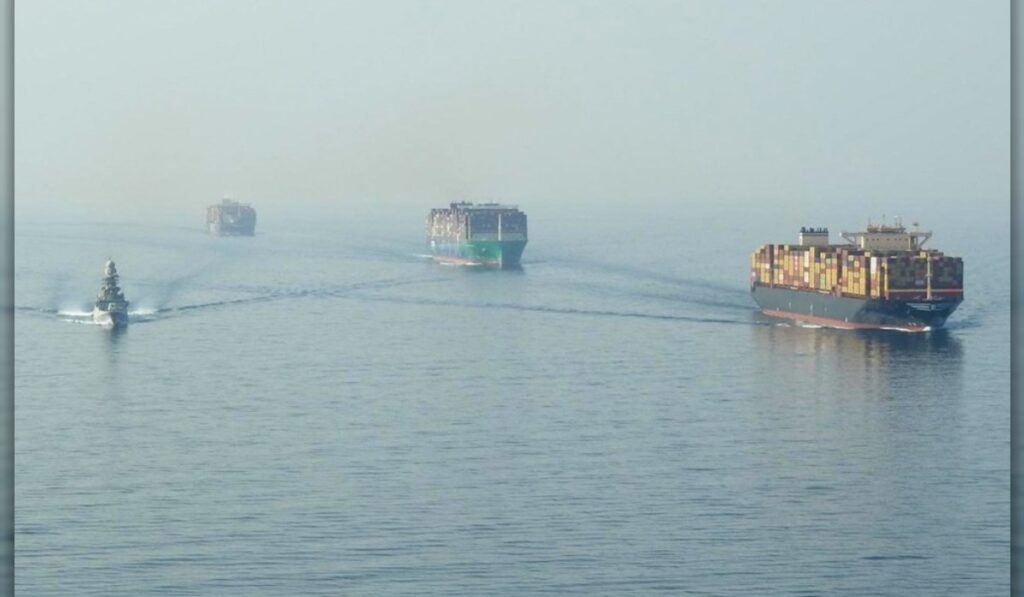
The Red Sea, once a bustling artery for global trade, has become a no-go zone for commercial shipping after a wave of attacks slashed daily transits to just four vessels, down from 125 before the conflict escalated in late 2023. The collapse, driven by drone strikes and missile attacks, has forced shipowners to abandon the route entirely, opting instead for the longer, costlier journey around the Cape of Good Hope.
Sunil Kapoor, a reporter embedded aboard a bulk carrier, described the stark reality: “We could have earned more trading in the region. We chose not to. It was not a risk we wished to take.” His vessel, like hundreds of others, shifted its employment toward the United States, Europe, and Latin America, carrying the same grain, fertilizers, and bulk commodities, but via safer, if slower, routes. The cargoes remained unchanged. The risks did not.
Why merchant ships are being targeted, and who pays the price: Red Sea
The question lingers: Why attack a merchant ship? A friend of Kapoor posed it bluntly:
Frontline
“Why are cargo ships and tankers being bombed? They are not a threat to anyone.”
Sunil Kapoor·Reporter
The answer lies in visibility and vulnerability. A merchant vessel carries no defensive weapons, follows employment orders, and is crewed by seafarers with no stake in geopolitical disputes. Yet its destruction sends a message, one of black smoke, red flames, and oil slicks, that reverberates far beyond the targeted ship.
Since late 2023, more than 100 commercial vessels have been targeted in the Red Sea alone. Ships have been sunk or seized, and seafarers have been killed, injured, or held captive. The escalation around the Strait of Hormuz in September added another layer of danger. Iran claimed to have targeted ten ships near the strait, resulting in one seafarer killed, another missing, and a tanker struck by a drone.
The economic ripple effects are profound. More ships, more fuel, more time, more money, all to compensate for a conflict the industry did not choose.
The Black Sea’s forgotten frontline, and the seafarers who pay the ultimate price
While the Red Sea dominates headlines, the Black Sea has become an equally deadly battleground for commercial shipping. Ukrainian ports around Odesa remain vital for grain and agricultural exports, yet Russian attacks have turned the region into a warzone.
In July 2026 alone, Ukrainian authorities reported that several dozen vessels were hit near Odesa. One of the most harrowing incidents involved the Golden Leo, a Guinea-Bissau-flagged ship carrying corn. Struck by three cruise missiles, the vessel erupted in flames, killing ten seafarers. Ten lives lost for a cargo of corn, and the world barely noticed.
Ukraine estimated it lost roughly a third of its Black Sea grain-export capacity due to the attacks. Some owners suspended calls to Ukrainian ports entirely, while others returned only when conditions allowed. The cargo still moved, but at a cost: rerouted ships, higher insurance premiums, and seafarers operating under the constant threat of missile strikes. The conflict has forced the industry to adapt, but the human toll remains invisible to most.
The long-term bets on global trade are staggering. Yet with chokepoints like the Red Sea and Black Sea under siege, the industry’s instinct remains unchanged: find another route.
For shipowners, the calculus is simple. The safety of the crew and the vessel outweighs the allure of higher freight rates. As Kapoor noted, “Sometimes the most important commercial decision is knowing which money not to earn.” For the rest of the world, the consequences are less visible but no less real: higher costs, delayed deliveries, and a fragile supply chain held together by rerouted ships and the seafarers who crew them.
The next few months will test the industry’s resilience. With no end in sight to the conflicts in the Red Sea and Black Sea, rerouting will remain the default strategy. The question is not whether the industry can adapt, but at what cost, and who will bear it.


Sign up free to ask CAMAL AI for a summary, the key points or anything else about this story.
Related stories
CAMAL AI
 Financial Ports Newsletter
The maritime economy, every morning
Ports, shipping and freight markets in one short email. Free.
Financial Ports Newsletter
The maritime economy, every morning
Ports, shipping and freight markets in one short email. Free.