

PSV Conversions Offer Fast Track to Luxury Expedition Cruising
Architect Stefano Pastrovich unveils a cost-effective model to convert platform supply vessels into boutique expedition.
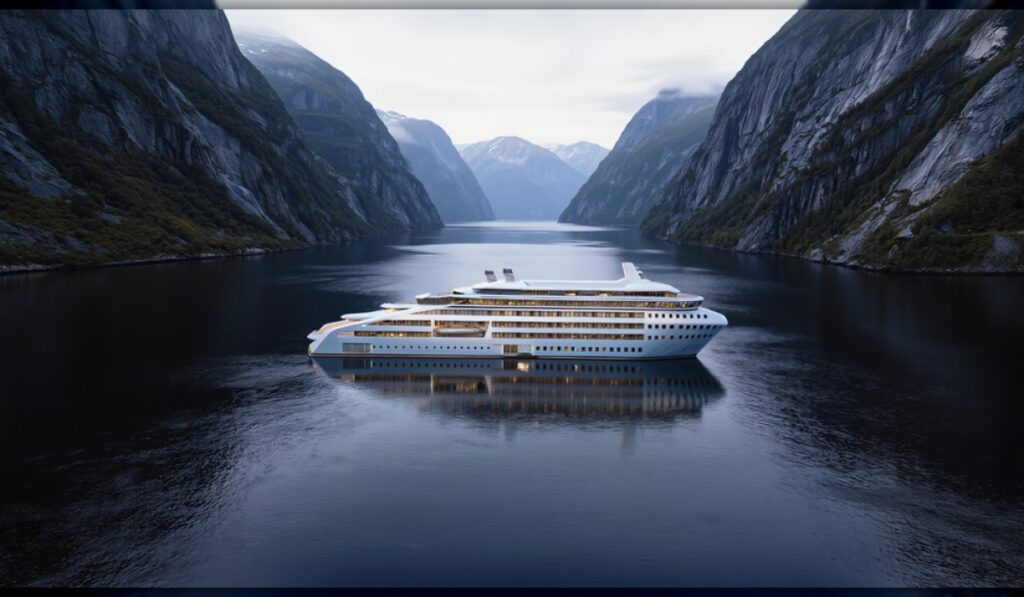
Architect and yacht designer Stefano Pastrovich has proposed an innovative approach to entering the luxury expedition cruise market by converting existing platform supply vessels (PSVs). This method offers a cost-effective and time-efficient alternative to building new ships, making it particularly appealing for boutique operators and smaller companies with limited financial resources.
Pastrovich, who studied architecture in Genoa and Seville, argues that conversions allow operators to test the market before committing to a full newbuild. “Conversions can be a very effective way to establish and sustain a viable business model,” he explained. The strategy addresses both budget constraints and the need for faster delivery times, providing a practical entry point into the growing expedition cruise sector.
Structural Advantages of PSV Conversions
PSVs, originally designed for the oil and gas industry, possess structural features that make them ideal for conversion into luxury expedition vessels. Their deep hulls, capable of carrying heavy loads, provide stability, while their open backend, described by Pastrovich as “like a pickup truck”, allows for the seamless addition of new superstructures. The vessels’ robust dynamic positioning systems, essential for station-keeping in remote locations, are retained, ensuring operational reliability for expedition cruising.
Norwegian Cruise Line
Pastrovich has developed multiple layouts for boutique expedition cruise ships, accommodating 64, 108, or 116 passengers. These conversions are based on PSVs ranging from 88 to 100 metres in length. For smaller operations, a 36-passenger charter yacht concept has been designed using a 70-metre supply vessel. During the conversion process, tanks in the hull are removed to create space for luxury interiors, while fixed ballast is added to maintain stability after the superstructure is installed.
Proven Track Record in Vessel Conversions
The viability of Pastrovich’s concept is demonstrated by his previous work with the Schmidt Ocean Institute. When the foundation needed a new research vessel, he designed the conversion of an existing ship into Falkor, which operated successfully for 11 years. When the institute sought a replacement, it again chose a conversion, resulting in Falkor (too). The project involved Swisship Ltd. for exterior modifications and Brosnan Design and Kmacon Designs for interior work, proving the approach’s effectiveness.
The idea for PSV conversions emerged in 2015 amid a downturn in the offshore oil and gas sector, which left many vessels idle. A Norwegian shipowner initially approached Pastrovich to repurpose two 88-metre PSVs, sparking the concept for boutique expedition cruise ships. Though the original project did not proceed, it laid the foundation for the current designs, which have since been refined with input from naval architects at Meccano Engineering. Industry interest is evident, with six shipyards already providing quotes for the 116-passenger conversion.


Sign up free to ask CAMAL AI for a summary, the key points or anything else about this story.
Related stories
CAMAL AI
 Financial Ports Newsletter
The maritime economy, every morning
Ports, shipping and freight markets in one short email. Free.



