

Port Automation’s Hidden Cost: €180m a Year in Lost Skills
Rotterdam’s terminals run at 78% capacity due to a shortage of automation engineers and IT specialists.
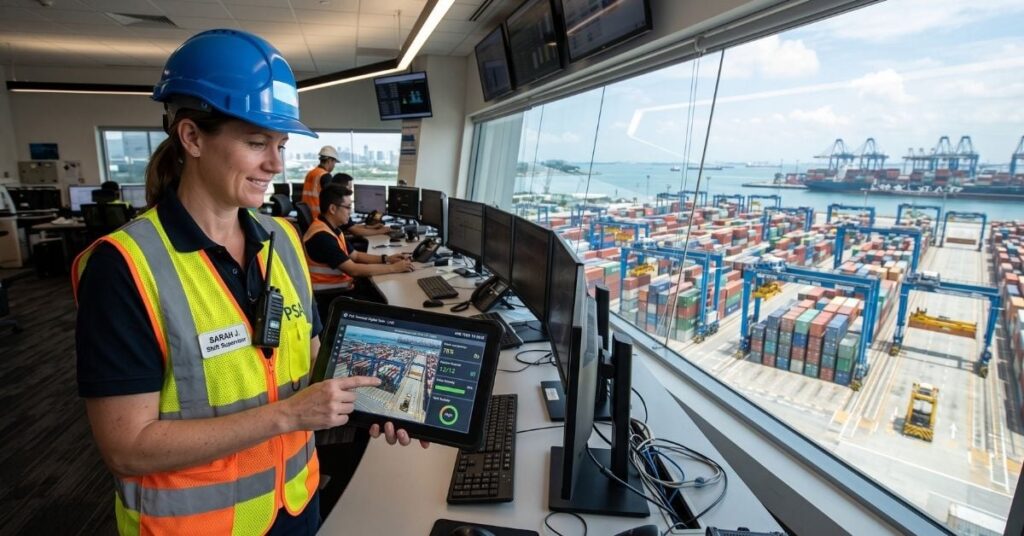
Rotterdam’s push for automation has exposed a critical flaw: its terminals are running at just 78% capacity, not because of cargo volumes, down from 2021 levels, but due to a shortage of skilled workers to operate the new systems. The gap is costing the port €180 million al año en pérdida de productividad in lost productivity, according to a 2024 study by research group TNO.
Port automation is often sold as a silver bullet for efficiency, promising faster turnaround times and reduced errors. Yet the reality is far more complex. While AI-driven systems like Pronto and PortAI can predict ship arrivals and optimise logistics, they require a workforce equipped to use them. Rotterdam’s experience highlights a broader industry challenge: automation doesn’t eliminate jobs, it transforms them, demanding a new breed of specialists, from automation engineers to IT/OT experts.
The port’s ambitious automation projects, including unmanned electric vehicles and automated stacking cranes, have run into a fundamental problem: a lack of skilled personnel. Rotterdam World Gateway spent 11 months trying to fill a single senior manager role for terminal automation, underscoring the severity of the talent shortage. The result? Terminals operating below capacity despite cutting-edge technology.
Silver
A 2024 study by TNO found that unfilled technical roles are costing the port €180 million annually in lost productivity.
Infyz Solutions, the provider of the iTOMS terminal operating system, has taken a different approach. The system is designed to work with existing staff, requiring no new training or rehiring.
The modularity of iTOMS addresses a key pain point for terminals handling diverse cargo types. By integrating these operations into a single platform, iTOMS reduces the need for multiple specialised systems, streamlining both training and day-to-day management.
The Human Factor in Port Automation
Automation doesn’t mean fewer workers, it means different ones. While manual tasks like crane operation may decline, the demand for specialists like automation engineers, robotic technicians, and IT/OT experts is rising. Rotterdam’s struggle to fill these roles has forced a reckoning: even the most advanced systems are only as effective as the people operating them.
The shift in workforce demands is reshaping how ports approach recruitment and training. Traditional port workers, such as crane operators and stevedores, are being retrained to manage automated systems, while new roles, like control-system specialists and robotic technicians, are being created. However, the transition is not seamless.
Real-time data visibility is another critical factor. Systems like iTOMS provide heat maps, cargo-ageing tracking, and destination filters, enabling shift supervisors to make informed decisions. For example, a supervisor can query the system, “how many appointments do we have today?” or “what’s our current yard occupancy?”, and receive instant answers. This level of transparency is essential for efficiency, but it requires workers who understand how to interpret and act on the data.
The reliance on real-time data underscores the need for a workforce that is not only technically skilled but also adaptable. Ports like Rotterdam are investing in continuous training programmes to ensure that staff can keep pace with evolving technologies. For instance, Infyz Solutions offers tailored training modules for iTOMS users, focusing on data interpretation, system troubleshooting, and workflow optimisation. These programmes are designed to be flexible, allowing workers to learn at their own pace while maintaining operational continuity.
The riskiest approach to automation is replacing most manual operations at once. Phased rollouts, such as automating gate operations one year and yard planning the next, help build expertise and reduce risk. This incremental strategy allows terminals to adapt gradually, ensuring that staff can keep pace with technological changes.
Rotterdam’s phased approach to automation serves as a model for other ports. By breaking down the transition into manageable stages, the port has been able to mitigate risks while building internal expertise. For example, the automation of gate operations was prioritised first, as it required fewer specialised skills and could be implemented with minimal disruption. Subsequent phases, such as yard planning and crane automation, were rolled out only after the workforce had gained confidence and proficiency with the new systems.
As ports worldwide race to automate, Rotterdam’s experience serves as a cautionary tale. Automation isn’t just about software or hardware; it’s a multi-year organisational shift. The ports that succeed will be those that invest in both technology and the people who use it.
The financial stakes are high. A previous analysis by Financial Ports estimated that non-automated port operations cost the global shipping industry $$6.900 millones billion annually in inefficiencies. For terminal operators, the message is clear: the future of port automation hinges on closing the skills gap. Without it, even the most advanced systems will underdeliver, leaving billions in potential efficiency gains on the table.
For industry stakeholders, the path forward is twofold. First, ports must prioritise workforce development, partnering with educational institutions and training providers to create pipelines of skilled labour. Second, technology providers like Infyz Solutions must continue to design systems that are intuitive and adaptable, reducing the barrier to entry for existing staff. Only by addressing both sides of the equation can ports fully realise the promise of automation.
Looking ahead, Rotterdam’s next steps will be closely watched. The port has announced plans to expand its automation initiatives, with a focus on further integrating AI-driven systems into its operations. Key projects include the deployment of autonomous guided vehicles (AGVs) for container transport and the introduction of predictive maintenance tools to reduce equipment downtime. These initiatives will require not only technological investment but also a continued commitment to workforce training and development.
For terminal operators and industry observers, Rotterdam’s journey offers valuable lessons. Automation is not a one-time project but an ongoing process of adaptation and improvement. The ports that thrive in this new era will be those that recognise the centrality of human capital, investing in both technology and the people who bring it to life.


Sign up free to ask CAMAL AI for a summary, the key points or anything else about this story.
Related stories
CAMAL AI
 Financial Ports Newsletter
The maritime economy, every morning
Ports, shipping and freight markets in one short email. Free.
Financial Ports Newsletter
The maritime economy, every morning
Ports, shipping and freight markets in one short email. Free.



