

Panama Canal slashes daily transits: 32 slots vanish as drought bites
From 34 to 23 daily transits by mid-September as Gatun Lake hits 84 feet—one foot below average
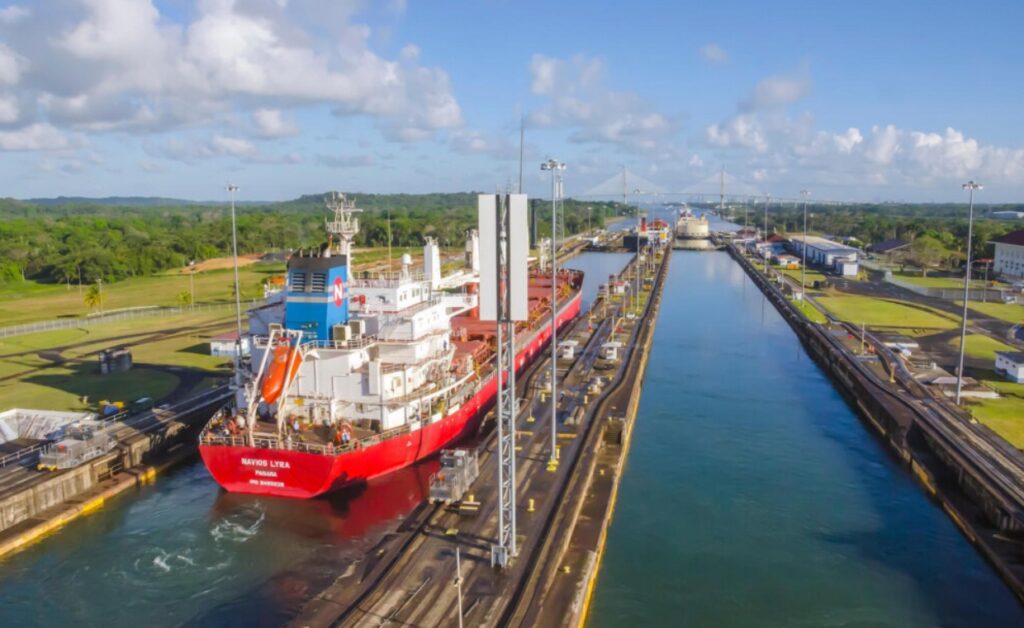
The Panama Canal Authority will cut daily transits from 34 to 23 by mid-September, the sharpest reduction yet as Gatun Lake’s water level hovers at 84 feet, one foot below the five-year August average.
The first wave of restrictions takes effect on September 3, when daily transits will drop from 34 to 32. The Neopanamax locks, which handle the largest vessels, will be limited to 9 daily slots, while the Panamax locks will see transits reduced to 25.
The Authority warns that the cuts will extend waiting times for vessels without secured reservations. As of August 20, non-booked ships faced average delays of 8.5 days northbound and 7.7 days southbound, with 36 vessels already queued. The congestion has sent auction prices soaring: a Seaspan containership chartered by Ocean Network Express (ONE) paid just under $4 million for a slot in early August, while LPG carrier G. Arete (54,842 dwt) shattered records with a $4.6 million bid to jump the line.
Natural Gas
How the cuts will unfold, and who pays the price: Panama Canal
To mitigate the fallout, the Authority is overhauling its auction system. Starting September 3, slots will be segmented by vessel type: LNG/LPG carriers, dry bulk/other cargo, container/RoRo/vehicle carriers/refrigerated ships, and tankers. Customers with an existing slot will be barred from bidding again the same day unless no competitors emerge. Full container vessels with the highest TEU capacity will receive priority at the Neopanamax locks.
“We are taking steps to promote a more equitable allocation process.”
Draft reductions delayed, but further cuts loom
The Authority has postponed the next draft reduction in the Neopanamax locks, pushing the cut to 48 feet (14.63 meters) from Sustituir ‘August 26’ por ‘September 2’ to September 2. The subsequent adjustment to 47.5 feet (14.48 meters) has been delayed until October 1. The moves buy time but offer little long-term relief: Gatun Lake’s water level has steadied at 84 feet, matching the lowest five-year average for August and far below the 87-foot peak typically reached in December.
Historical precedent offers scant comfort. In 2003, Gatun Lake briefly dipped to just under 80 feet, forcing emergency measures. This year, the Authority has not ruled out suspending parts of the Transit Reservation System if conditions deteriorate further. The cuts arrive as shipping lines scramble to adapt.
For now, the Authority’s focus is damage control. Water-saving measures, including cross-filling between locks and reduced lockages per transit, have helped stabilize Gatun Lake’s level, but with El Niño intensifying, the respite may be short-lived.


Sign up free to ask CAMAL AI for a summary, the key points or anything else about this story.
Related stories
CAMAL AI
 Financial Ports Newsletter
The maritime economy, every morning
Ports, shipping and freight markets in one short email. Free.
Financial Ports Newsletter
The maritime economy, every morning
Ports, shipping and freight markets in one short email. Free.