

NSR: Polar Silk Road

The Arctic maritime route is irreversibly moving towards commercial operation, in step with the accelerated climate change we are suffering.
On 15 August the SeaLegend Dubai Tower, a 1,740 TEU container ship, sailed from Ningbo. A weekly liner service has been announced for as long as weather conditions allow the use of the Northern Sea Route. Arrival at Felixstowe is reported with an ETA of 7 September: more than half a month cut from transit times on the usual Suez or Cape of Good Hope routings.
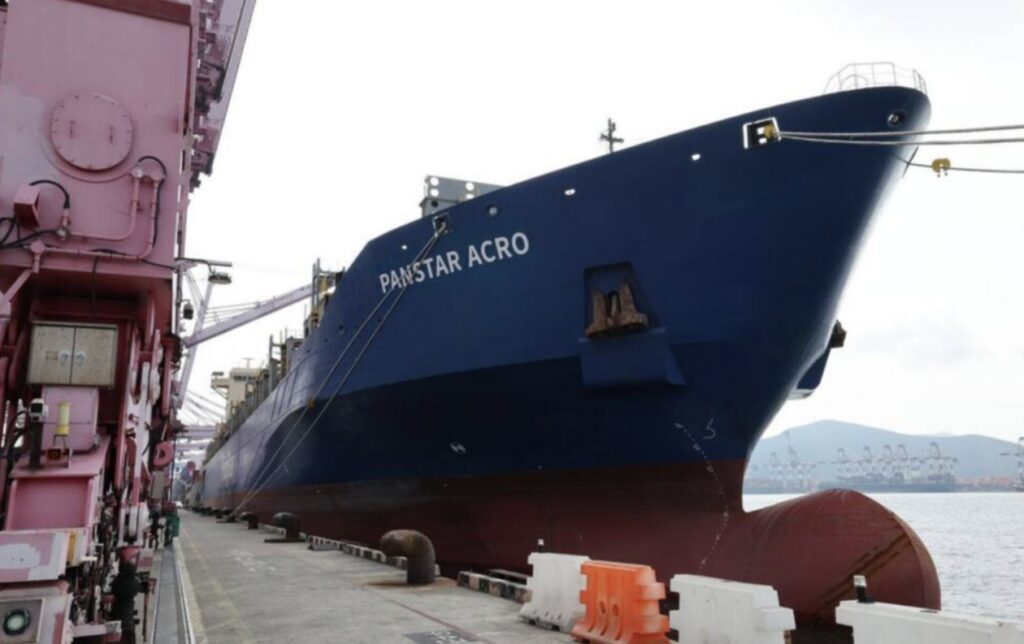
On 22 August, Korean carrier PanStar launched its own liner service, backed by a government that regards the new route as a priority and plans regular commercial exploitation by 2030. The PanStar Acro, of 2,738 TEU, loaded 837 TEU plus 100 empties on this maiden voyage.
A.P. Møller-Maersk
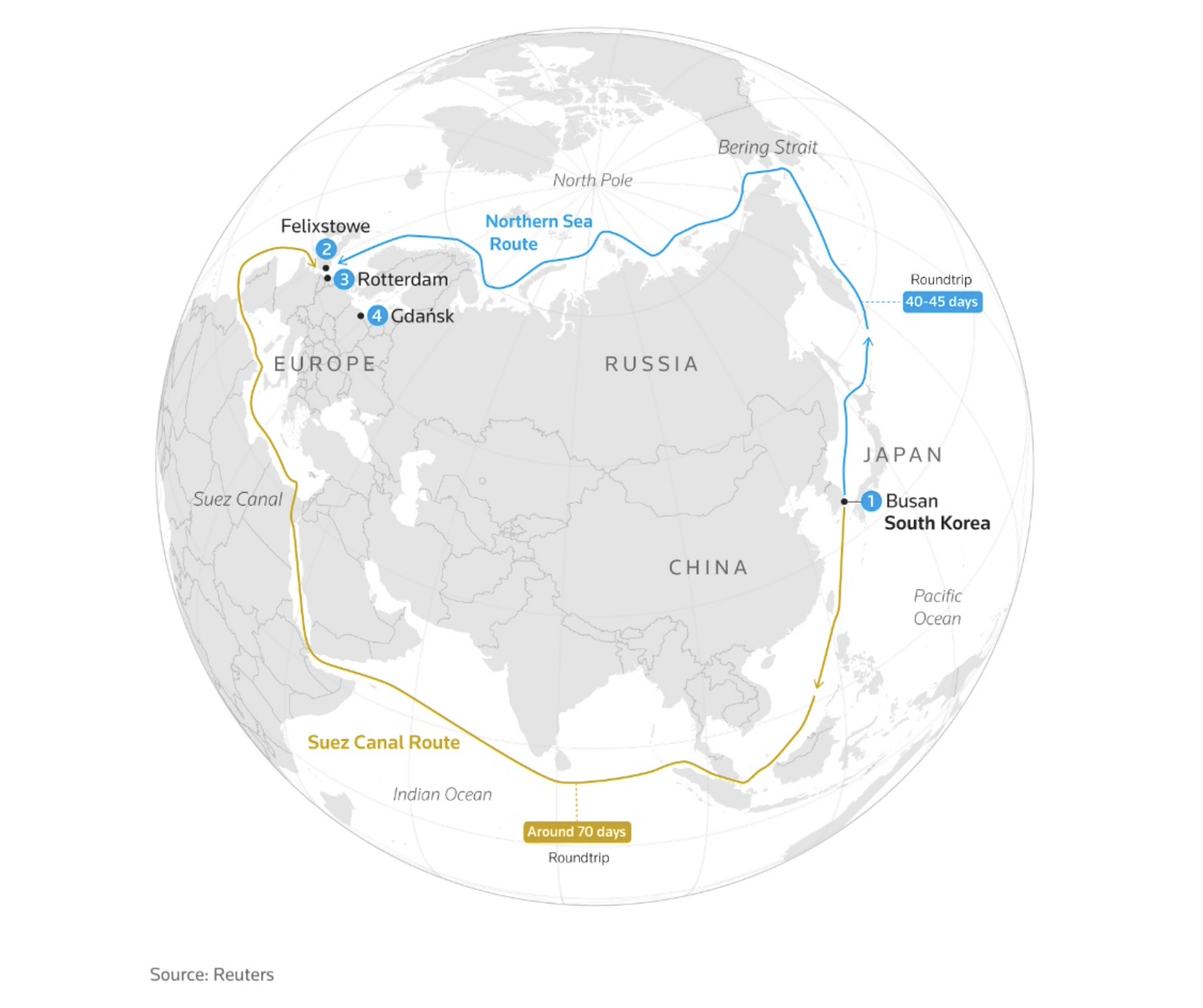
Until now, traffic along this route consisted of Chinese and Russian vessels, adding up to 103 voyages last year and 97 in 2024. Volumes look set to multiply as climate change accelerates the melting of the polar ice cap.
The new route favours Northern European ports, leaving Mediterranean ports dependent on feeder or rail connections, which hardly looks competitive; its future use remains to be seen. The NSR should be regarded as a premium service for high-value cargo, or for volumes and weights that rule out air transport. It is not a competitive alternative to the current routes via Suez or South Africa, since several factors set this type of service apart.
- A seasonal service dependent on weather
- Polar class vessels with structural reinforcement
- Suitable propulsion
- Dependence on icebreakers
The main constraint today is container ship capacity: the available fleet comprises 12 units of modest size, between 1,000 and 3,000 TEU, with the largest polar vessels being the Istanbul Express at 4,890 TEU and the Maersk Venta at 3,596 TEU (not active on the NSR). We are a long way from the ULCVs of over 20,000 TEU.
Given that Russian government authorisation is required to transit the NSR, the participation of the major global carriers in this route remains to be seen. There is a considerable geopolitical component still to be settled, and it will determine whether the route succeeds.
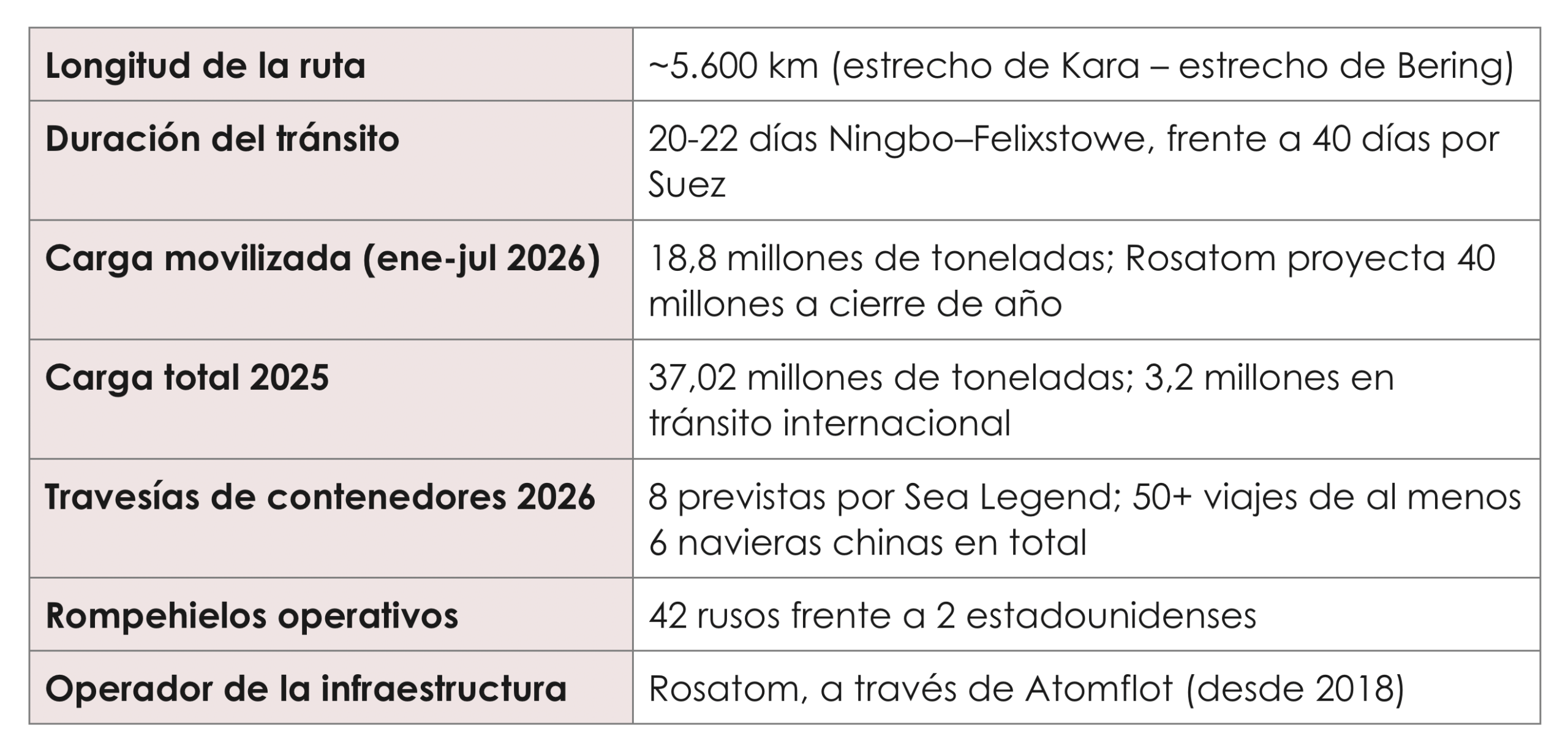
Russia and China will clearly control the future of the NSR. Transits from East Asia to Northern Europe pass by six Russian Arctic ports and, although current container voyages do not call at them, they may prove critical as a refuge in the event of adverse weather or major casualties. Icebreaker availability may be equally critical, which makes Russia’s role in this business self-evident.
The Northern Sea Route had been under discussion for a long time; it is now a reality. What is clear is that it poses no great threat to the existing routes serving the Mediterranean, and the volumes carried are negligible compared with Suez or the Cape of Good Hope. That said, ice once broken does not freeze back, and it blackens with soot and marine pollutants. There is no way back.


Sign up free to ask CAMAL AI for a summary, the key points or anything else about this story.
Related stories
CAMAL AI
 Financial Ports Newsletter
The maritime economy, every morning
Ports, shipping and freight markets in one short email. Free.
Financial Ports Newsletter
The maritime economy, every morning
Ports, shipping and freight markets in one short email. Free.



