

Chinese Spy Ships in US Arctic: Four Vessels, Zero Answers
US Coast Guard confirms four Chinese dual-use vessels operated near Alaska in 2026.
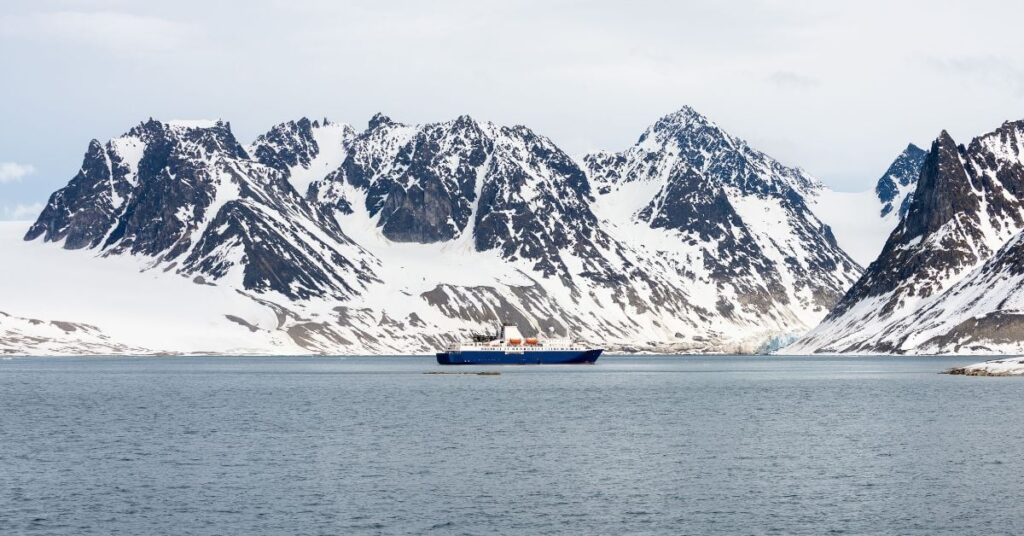
Rear Admiral Bob Little, Commander of the USCG Arctic District, revealed the vessels were spotted around the Aleutian Islands, Bering Strait, and even the North Pole.
The US has grown increasingly concerned about China’s activities in the Arctic, particularly as Beijing has not informed Washington of its ships’ presence, a customary practice in international maritime operations. According to Rear Admiral Little, when challenged, Chinese vessels typically respond that they are either conducting scientific research or operating in international waters.
Why the US is worried about Chinese vessels in the Arctic
The primary concern lies in the potential for these dual-use vessels to gather sensitive data on seabed minerals in areas under US sovereignty.
Natural Gas
However, the presence of foreign vessels conducting unannounced research missions raises concerns about unauthorised data collection that could compromise US security.
“Where I have responsibility, interest, and concern is when they are operating in and around US sovereign space,” Rear Admiral Little stated at the Arctic Security Meet in Oslo. “So inside of our exclusive economic zones, or over our extended continental shelf, we certainly have a security concern.”
China’s ambitions in the Arctic are not new. Beijing has declared itself a ‘near-Arctic State’ and launched the Polar Silk Road initiative, which includes research missions and trade routes in collaboration with Russia.
In the Arctic, its duties extend to monitoring foreign vessels, ensuring compliance with international maritime laws, and deterring activities that threaten US sovereignty.
US Coast Guard’s Operation Frontier Sentinel and the ICE Pact
In response to the increasing activity of Chinese and Russian vessels in the Arctic, the US Coast Guard has executed Operation Frontier Sentinel, a mission aimed at monitoring and deterring foreign vessels transiting through the US exclusive economic zone (EEZ) and extended continental shelf. Operation Frontier Sentinel involves continuous surveillance, intelligence gathering, and coordination with allied nations to track the movements of foreign vessels and respond to any suspicious activities.
The presence of foreign research vessels in this zone, particularly those with dual-use capabilities, poses a direct challenge to US authority and could lead to unauthorised data collection or intelligence gathering.
Additionally, the US is constructing new Arctic cutters in Galveston, Texas, as part of the Icebreaker Collaboration Effort (ICE Pact). These vessels are designed to enhance the USCG’s ability to operate in polar waters, where ice and harsh conditions pose significant challenges.
The ICE Pact is a trilateral agreement between the US, Canada, and Finland, aimed at strengthening Arctic defence capabilities through joint shipbuilding efforts and shared operational expertise. The first of these new cutters is expected to enter service in the coming years, significantly boosting the USCG’s presence in the Arctic.
Admiral Kevin Lunday, speaking at a shipbuilding ceremony in Galveston on June 1, 2025, emphasised the importance of these cutters in maintaining US sovereignty in the Arctic. “The Arctic is no longer a remote, frozen frontier, it is a critical region for our national security and economic future,” he stated. “These new cutters will ensure that the US Coast Guard has the capability to operate effectively in this challenging environment and protect our interests.”
The USCG has also been working closely with allies, including Norway, to study operational similarities between Russian and Chinese activities in polar waters. Rear Admiral Little noted that the threat extends beyond the Arctic, with Russian missions also being monitored in the Baltic and Barents Seas.
The collaboration with Norway, a key Arctic nation, involves intelligence sharing, joint exercises, and coordinated responses to foreign vessel activities. This partnership is part of a broader effort to counter the growing influence of China and Russia in the region and ensure that the Arctic remains a stable and secure space.
However, both China and Russia have denied allegations that their research vessels are conducting illegal activities or posing security risks to other nations. Beijing has consistently maintained that its vessels operate in accordance with international law and that its research missions are purely scientific in nature. Similarly, Russia has argued that its activities in the Arctic are aimed at promoting economic development and environmental protection, rather than expanding its military or strategic influence.
For the US, the stakes are high. The Arctic is a critical region for national security, economic interests, and environmental monitoring. The presence of foreign vessels, particularly those with dual-use capabilities, poses a direct challenge to US sovereignty and strategic positioning.
The Arctic holds vast reserves of oil, natural gas, and rare earth minerals, making it a key area for future economic development. Additionally, the region’s melting ice is opening new shipping routes, which could reduce transit times between Asia, Europe, and North America, further increasing its geopolitical significance.
The US Coast Guard’s role in the Arctic is not limited to security and defence. The agency also plays a crucial role in environmental protection, search and rescue operations, and scientific research. As the Arctic becomes more accessible due to climate change, the USCG is increasingly called upon to respond to emergencies, such as oil spills or vessel groundings, and to support scientific missions that monitor the region’s changing ecosystem. This multifaceted role underscores the importance of maintaining a strong and capable presence in the Arctic.
With the Arctic becoming an increasingly contested space, the US is likely to ramp up its surveillance and defence capabilities in the coming years. The next steps include the completion of the new Arctic cutters under the ICE Pact and continued collaboration with international partners to counter the growing influence of China and Russia in the region. The USCG will also focus on enhancing its intelligence-gathering capabilities, improving coordination with allied nations, and developing new strategies to address the evolving challenges in the Arctic.
For stakeholders in the maritime and shipping industries, the developments in the Arctic present both opportunities and challenges. The opening of new shipping routes could reduce costs and transit times, but it also raises concerns about security, environmental risks, and the potential for increased competition between nations. Companies operating in the region will need to stay informed about the latest developments and work closely with governments and international organisations to ensure safe and sustainable operations.
As the situation in the Arctic continues to evolve, the US Coast Guard remains committed to protecting US interests and maintaining stability in the region. The agency’s efforts, in collaboration with its allies, will be critical in shaping the future of the Arctic and ensuring that it remains a secure and prosperous space for all nations.


Sign up free to ask CAMAL AI for a summary, the key points or anything else about this story.
Related stories
CAMAL AI
 Financial Ports Newsletter
The maritime economy, every morning
Ports, shipping and freight markets in one short email. Free.
Financial Ports Newsletter
The maritime economy, every morning
Ports, shipping and freight markets in one short email. Free.