

US Coast Guard to Base First Two Arctic Security Cutters in Alaska
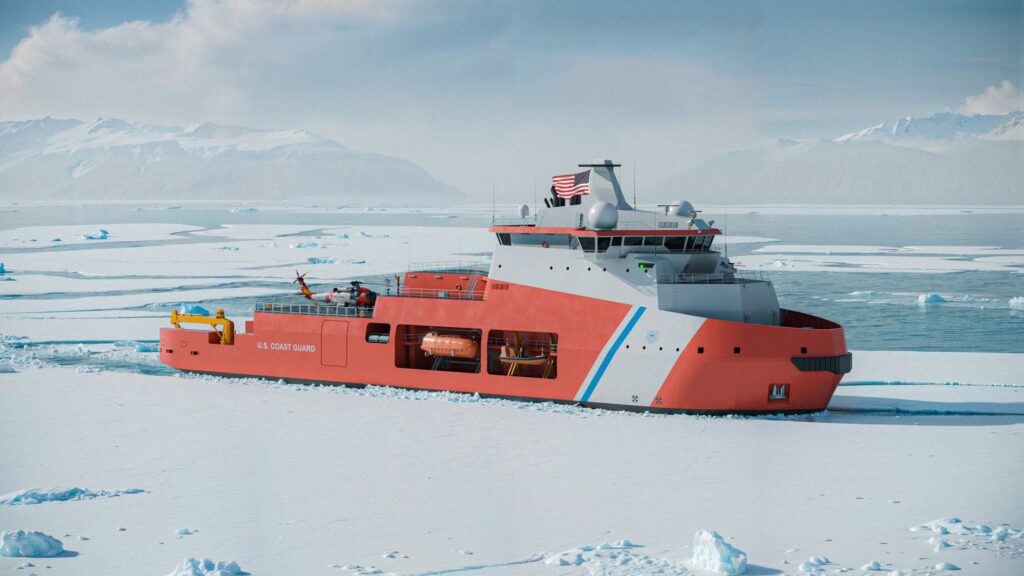
On Thursday, the U.S. Coast Guard said it will homeport its first two Arctic Security Cutters in Alaska, describing the move as a key step as the service advances toward fielding a new generation of polar-capable vessels. The announcement underscores a deliberate effort to align basing decisions with emerging operational demands in high-latitude waters, where conditions are unique, distances are vast, and logistics are complex.
The decision to base these cutters in Alaska signals intent to position capacity closer to the northern approaches, where seasonal variability and maritime activity increasingly require persistent attention. While the Coast Guard did not elaborate in the brief statement provided here, the choice of Alaska as the homeport reflects geography, access, and mission proximity tied to the Arctic theater, where response times and endurance can be decisive.
A milestone toward a new polar-capable fleet
Homeporting, in practical terms, encompasses the stationing of ships, crews, and support functions at a designated location. For the Coast Guard, it typically enables sustained operations by synchronizing personnel pipelines, maintenance, and logistics. The basing of two cutters in Alaska will require coordinated shore-side arrangements and layered support, from pier access and fuel availability to training schedules and supply chains, ensuring that crews can deploy reliably and return to predictable support cycles.
Operationally, proximity matters. Basing assets within reach of northern sea routes and coastal communities increases the likelihood of timely response to routine and urgent maritime needs. Although the Coast Guard’s brief notice does not enumerate mission sets, its statutory responsibilities include a wide range of tasks that often converge in polar regions—tasks that can demand specialized capabilities and robust endurance. Establishing a stable homeport footing is among the first enablers of sustained operations in these conditions.
The move also aligns with the service’s stated aim to field a new generation of cutters designed to function in challenging environments. While program specifics are not detailed in the statement excerpted here, the framing emphasizes the stepwise approach: build the fleet, designate the base, and align people, processes, and materiel so that capability turns into day-to-day capacity at sea. That conversion from assets on paper to ships on patrol is where basing decisions play an outsized role.
From a support perspective, basing two ships in Alaska will likely involve phased arrangements to ensure shore-side infrastructure, technical support, and maintenance capacity are scaled in tandem with crew training and operational testing. The Coast Guard commonly sequences these pieces to avoid gaps between fleet introduction and mission demand, using incremental milestones to validate systems, certify crews, and integrate new hardware with established procedures.
The implications for mission readiness are straightforward: a local base reduces transit times to operating areas, places technical expertise within reach of the pier, and simplifies recurring logistics that can otherwise consume scarce underway hours. In austere or remote regions, where weather and sea state can narrow operating windows, predictable support can be as consequential as hull strength or propulsion when it comes to sustaining patrols and meeting tasking.
Notably, the Coast Guard’s brief communication in this instance focuses on the homeport decision itself. It does not, in the text available here, specify timelines, detailed logistics, or exact arrangements associated with the move. Those elements typically emerge as acquisition schedules mature, shore projects are scoped, and operational testing informs final basing requirements. Until then, the headline decision frames the path ahead while leaving tactical details to subsequent planning milestones.
For stakeholders, the key markers to watch will include delivery sequencing, crew assignment and training gates, pier and maintenance capacity build-out, and the integration of the cutters into existing patrol patterns. As those pieces come into view, the homeport decision announced today should begin translating into visible, measurable presence in northern waters—presence that can underpin maritime governance, environmental stewardship, and at-sea safety outcomes across a demanding operating area.


Sign up free to ask CAMAL AI for a summary, the key points or anything else about this story.
Related stories
CAMAL AI
 Financial Ports Newsletter
The maritime economy, every morning
Ports, shipping and freight markets in one short email. Free.
Financial Ports Newsletter
The maritime economy, every morning
Ports, shipping and freight markets in one short email. Free.



