

How an island becomes the world’s largest free port

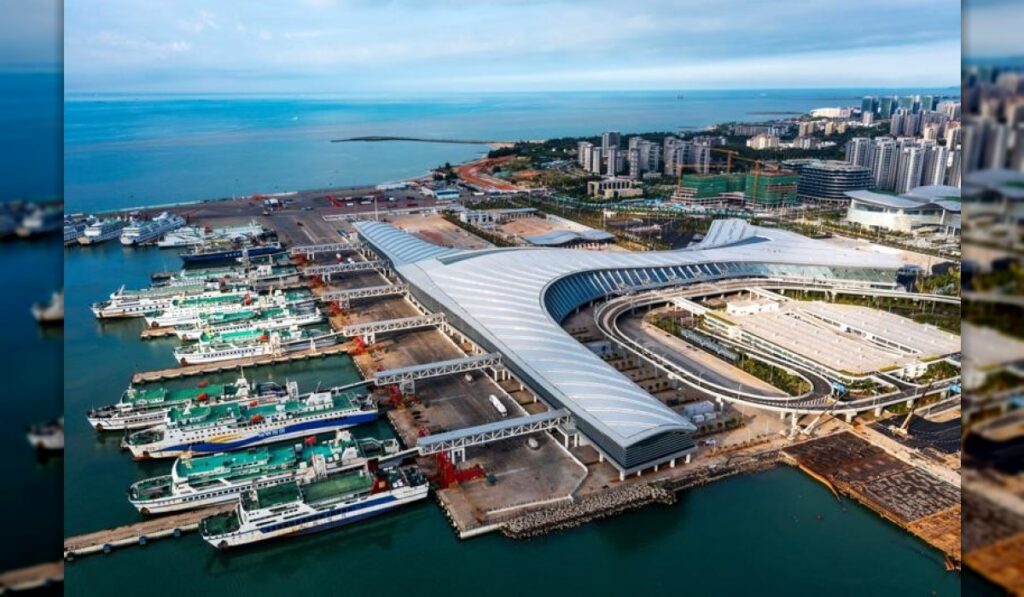
When managing a small territory, geographically located next to large logistics and commercial centers, specific tools are required to generate the necessary confidence to attract wealth and activity.
Good examples of this can be seen in financial centers like Singapore, Dubai, Hong Kong, and Shenzhen. Blending the concepts that give value to these four strategic enclaves, Beijing has decided, with a much more ambitious initiative, to create a gigantic economic, financial, and logistical laboratory—the largest free port on the planet—using it as a platform to reinforce its commercial, industrial, and maritime dominance.
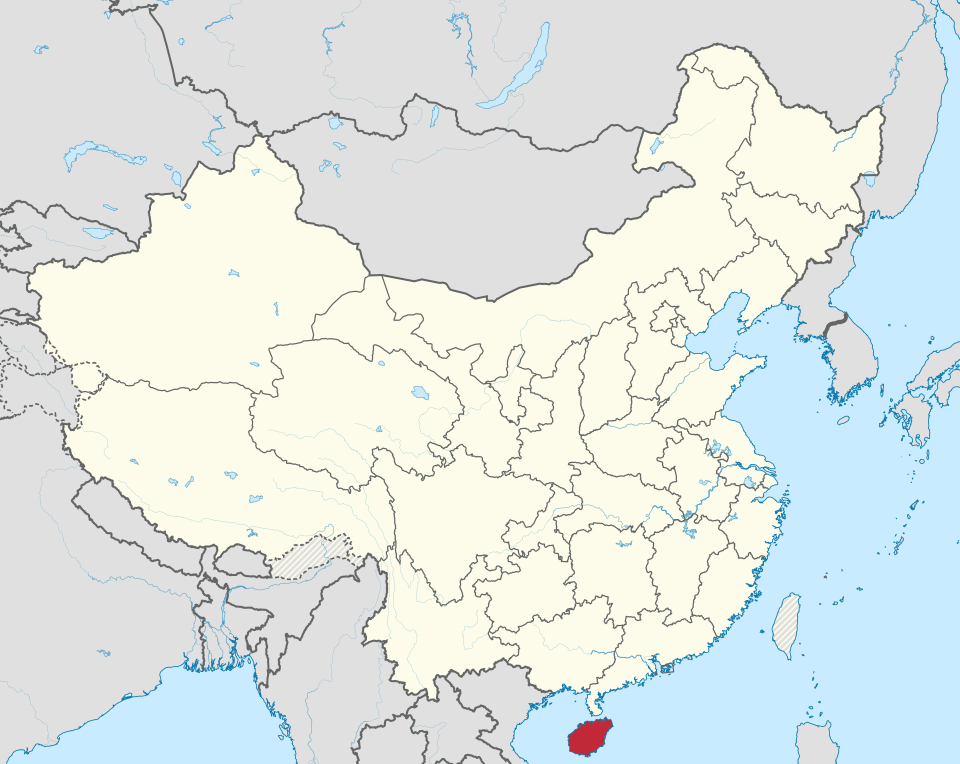
The project has a name: Hainan, a tropical island primarily dedicated to tourism, located in the South China Sea. The scale of the project is impressive. Hainan covers more than 35,000 square kilometers, roughly the size of Belgium, and dozens of times larger than the port of Singapore (735 km²). Unlike other special economic zones, this isn’t just about a port or an industrial park; the entire island will function as a vast free-trade ecosystem. This isn’t an improvisation. China never does that, by the way. Since the late 1970s, special economic zones have been the mechanism that has allowed agricultural economies to transform into the world’s leading manufacturing powers. Shenzhen was the industrial experiment of the 20th century. Hainan aims to become the great logistics and financial experiment of the 21st century.
The objective is clear: to attract capital, multinational companies, advanced industrial chains, logistics centers, technology platforms, and cross-border financial operations. All of this is supported by an exceptionally flexible customs regime, with zero import duties to maximize the facilitation of foreign investment and reduce bureaucratic barriers. Any product processed on the island itself, increasing its added value by 30%, can then be exported to the mainland Chinese market completely duty-free. The project incorporates extremely aggressive tax incentives. The island boasts a highly competitive tax regime, a corporate tax rate of 15%, a more flexible regulatory framework for foreign investment, and specific mechanisms designed to expedite capital flows and cross-border international operations. This transforms Hainan into a gigantic assembly, industrial processing, and logistics hub for the Asia-Pacific region.
In maritime terms, the implications represent a true revolution. Hainan is strategically located next to some of the most sensitive and heavily trafficked shipping lanes on the planet, connecting directly to the South China Sea, the Strait of Malacca, and the major Asia-Europe corridors. Beijing aspires to transform the island into a key node of the New Silk Road and a gigantic hub for intercontinental trade.
The Asian dragon’s strategy is not based solely on logistics or maritime trade. The renminbi (RMB), the legal tender of the People’s Republic of China, plays a key role.
The unstoppable growth of Chinese exports, despite global conflicts, has depended largely on maintaining a structurally competitive currency against a strong dollar. At the time of writing, 1 renminbi is worth 0.13 euros or 0.15 US dollars.
This year, the Chinese economy continues to grow at around 5%, driven by exports, advanced manufacturing, and fiscal stimulus. However, behind this resilience lie threats such as weak domestic consumption due to the depreciated currency, a prolonged real estate crisis that shows no signs of abating, excess manufacturing capacity, and a growing dependence on foreign demand. For all these reasons, Beijing needs to continue exporting massively. Several Western analysts believe that the Chinese currency remains significantly undervalued against the dollar, possibly by around 20%. This undervaluation allows Chinese companies to maintain enormous price competitiveness in international markets, even though Chinese labor costs are no longer as low as they were twenty years ago. The macroeconomic mechanism is clear: a weak renminbi makes Chinese exports cheaper when measured in dollars and euros. Simultaneously, it makes imports more expensive, contributing to the Asian country’s enormous trade surpluses, which have reached historic proportions. China’s manufacturing surplus now exceeds 10% of its national GDP and represents approximately 1% of global GDP. No other modern industrial power has managed to accumulate such a large export imbalance for so long.
But keeping the renminbi competitive requires complex financial engineering. China needs to prevent the massive inflow of foreign currency from its exports from excessively strengthening its currency. To do this, it uses capital controls, indirect intervention by state-owned banks, managed exchange rates, and enormous foreign reserves. Unlike the dollar or the euro, the renminbi is still not fully convertible or completely free in international markets. Paradoxically, this limitation is both a weakness and an advantage. It is a weakness because China is still far from challenging US financial dominance. The renminbi represents only a small portion of international reserves and global payments. The dollar continues to dominate global financial markets, thanks to the depth of Wall Street, full currency convertibility, and international confidence in US assets. But it is also an advantage because it allows Beijing to effectively control its currency’s exchange rate and artificially sustain its export competitiveness.
And so Hainan Island reappears in the equation, functioning as a partially liberalized laboratory. Foreign companies can operate with greater regulatory flexibility, special access to financing, and more flexible capital flows. In essence, China is using Hainan as an experimental platform to partially open its financial system, avoiding the risks of full national liberalization.
All of this is happening while Europe and the United States are precisely trying to reduce their dependence on China. The European Union is currently considering requiring European companies to diversify their critical suppliers and limit excessive industrial reliance on Beijing. However, Western decoupling is progressing much more slowly than anticipated. The reason is simple: the Chinese manufacturing ecosystem remains extraordinarily difficult to replace.
The so-called “China Shock 2.0” is already affecting numerous Asian countries. Vietnam, Indonesia, Malaysia, and Thailand receive enormous volumes of Chinese industrial exports while simultaneously depending on Beijing for raw materials, components, machinery, and technology to maintain their productive sectors. Beijing no longer exports only cheap products; it produces entire industrial ecosystems. Hainan aspires precisely to become one of the major logistics and maritime coordination centers of this new economic order.
From a port and maritime transport perspective, this represents a profound transformation of global trade. Greater industrial regionalization means more logistics hubs, more transshipment, more feeder traffic, and more digitally hyperconnected ports.
Beijing fully understands that it cannot overcome the dollar’s financial supremacy in international markets. But it can attempt to dominate the planet’s physical economy: ports, containers, logistics corridors, green energy, advanced manufacturing, and industrial chains. Hainan will represent precisely that: a gigantic geoeconomic platform designed to consolidate Chinese maritime, commercial, and industrial power in an increasingly fragmented, protectionist, and uncertain world.


Sign up free to ask CAMAL AI for a summary, the key points or anything else about this story.
Related stories
CAMAL AI
 Financial Ports Newsletter
The maritime economy, every morning
Ports, shipping and freight markets in one short email. Free.
Financial Ports Newsletter
The maritime economy, every morning
Ports, shipping and freight markets in one short email. Free.