
North Korea’s Shadow Fleet Exposed: 7 Ships Tracked
New Zealand frigate HMNZS Te Mana monitored seven vessels suspected of evading UN sanctions in the Yellow and East.
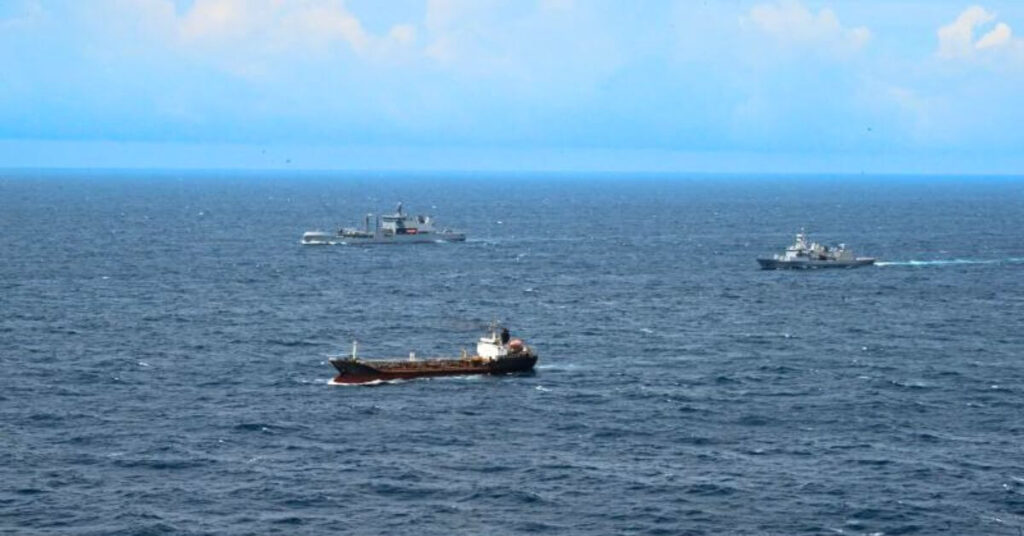
A Royal New Zealand Navy frigate has completed a three-month patrol in the Yellow and East China Sea, tracking seven vessels suspected of evading UN sanctions to fund North Korea’s nuclear and ballistic missile programmes. HMNZS Te Mana, an Anzac-class frigate, covered 180,000 square nautical miles and sent 60 radio messages to deter illicit ship-to-ship transfers.
The deployment, the first of its kind for Te Mana, focused on vessels believed to be carrying refined petroleum, coal, iron ore, and sand, commodities the New Zealand Defence Force says are critical to Pyongyang’s weapons development. North Korea’s shadow fleet employs tactics such as disabling Automatic Identification Systems (AIS), spoofing signals, and altering ship drafts to conceal its activities.
Commander Tuijo Thompson, the frigate’s commanding officer, said the mission allowed Te Mana to “use its sensors, systems, and other capabilities to improve maritime domain awareness and support regional security.”
“The mission gave the frigate a chance to use its sensors, systems and other capabilities to improve maritime domain awareness and support regional security.”
Tuijo Thompson·Commanding Officer, HMNZS Te Mana
- Switching off AIS transponders to disappear from tracking systems.
- Spoofing signals to mislead authorities about their location or identity.
- Removing flags or painting over ship names to obscure ownership.
- Adjusting cargo loads to alter the vessel’s apparent draft, making it harder to identify.
These tactics are part of a larger strategy involving ship-to-ship transfers, where illicit cargo is moved between vessels at sea to avoid port inspections. Royal New Zealand Navy’s patrols aimed to disrupt these operations by maintaining a visible presence and issuing radio warnings.
HMNZS Te Mana was supported by the sustainment vessel HMNZS Aotearoa, which conducted six replenishments at sea, allowing the frigate to extend its operational reach. Two SH-2G(I) Seasprite helicopters, one carried by each ship, provided aerial surveillance to detect vessels beyond the horizon.
New Zealand’s Role in Enforcing UN Sanctions: North Korea
Commodore Shane Arndell, Maritime Component Commander, said Te Mana’s deployment demonstrated the frigate’s versatility in both sanctions enforcement and warfighting.
“Te Mana’s first sanctions-monitoring deployment showed that the frigate could carry out different types of missions, including sanctions enforcement and warfighting when required.”
Shane Arndell·Maritime Component Commander
The Anzac-class frigate, commissioned in 1999, is one of two operated by the Royal New Zealand Navy.
The New Zealand Defence Force emphasised that the commodities transported by North Korea’s shadow fleet, such as refined petroleum and coal, are directly linked to the funding of Pyongyang’s nuclear and ballistic missile programmes.

Sign up free to ask CAMAL AI for a summary, the key points or anything else about this story.
Related stories
CAMAL AI
 Financial Ports Newsletter
The maritime economy, every morning
Ports, shipping and freight markets in one short email. Free.
Financial Ports Newsletter
The maritime economy, every morning
Ports, shipping and freight markets in one short email. Free.