

North Korea Fires Two Submarine Missiles: Why This Test Alarms the Region
Pyongyang launches two types of submarine-launched cruise missiles in the Sea of Japan.
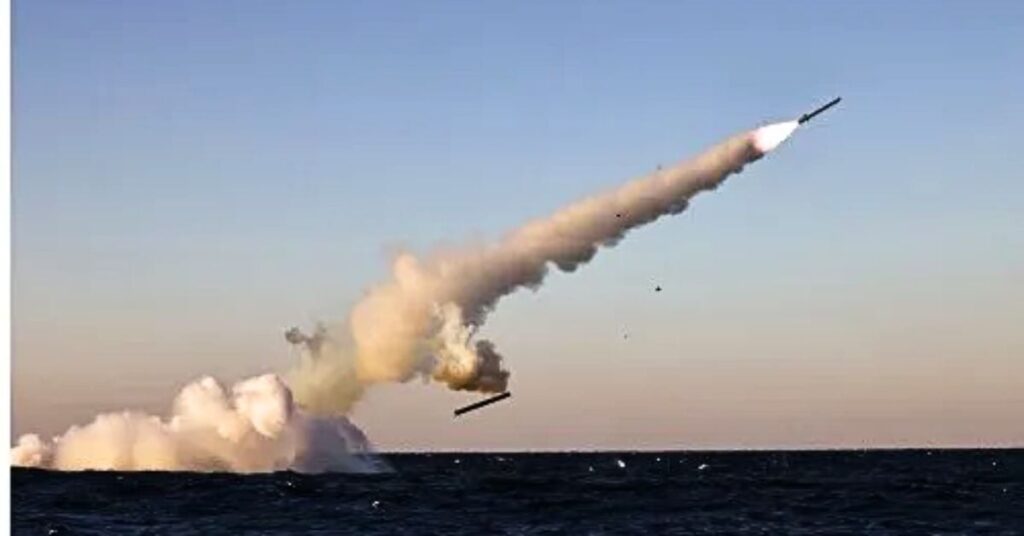
North Korea conducted a test of two submarine-launched cruise missiles in the Sea of Japan on October 14, as part of a naval exercise to evaluate its underwater combat systems. The launches were tracked in real time by South Korea’s military, which monitored the missiles from take-off to their final stages.
State media KCNA reported the test the following day, describing it as a routine readiness inspection. According to KCNA, the exercise aimed to assess the condition of North Korea’s underwater systems and the reliability of its deterrent forces, while insisting the launches posed no threat to neighboring countries.
Launch Methods and Unanswered Questions: submarine-launched cruise missiles
Images released by KCNA depicted one missile emerging vertically from the water amid a cloud of smoke, while another appeared to launch at a 45-degree angle. South Korea’s Joint Chiefs of Staff confirmed the dual launch methods: one missile was fired from a vertical launch system, and the other from a torpedo tube. Analysts suggest this flexibility could improve North Korea’s ability to evade detection, though the exact advantages of each method remain debated.
Key details about the test remain unverified. The launch platform—whether an operational submarine or an underwater test rig—has not been independently confirmed. Some analysts speculate the missiles may have been fired from the Kim Kun Ok Hero, a modified diesel-powered submarine unveiled by North Korea in September 2023, but this has not been corroborated. Additionally, Pyongyang has not disclosed the missiles’ range, accuracy, or whether they were nuclear-capable, leaving regional militaries to assess their potential impact.
Hong Min, a senior researcher at the Korea Institute for National Unification, noted that vertical launches could allow missiles to climb steeply before heading toward their targets, potentially extending their range. In contrast, angled launches might enable missiles to fly at lower altitudes, making them harder for defense systems to detect and intercept.
Strategic Context and Limitations
The test reflects North Korea’s ongoing efforts to develop submarine-based missile capabilities, which could allow it to strike targets from offshore waters with reduced warning. Cruise missiles, which fly at lower altitudes than ballistic missiles, are more difficult to detect and intercept, enhancing their strategic value.
However, experts caution that successful missile tests alone do not equate to a fully operational sea-based nuclear deterrent. Submarines must demonstrate the ability to remain undetected during patrols, maintain reliable communication, and launch weapons under operational conditions—capabilities North Korea has yet to fully prove.
Tensions between North and South Korea persist, with recent incidents, including a landmine explosion in the Demilitarized Zone last month, underscoring the fragile security environment. While North Korea’s latest test signals progress in its naval capabilities, its operational readiness remains limited, leaving regional powers to monitor further developments closely.


Sign up free to ask CAMAL AI for a summary, the key points or anything else about this story.
Related stories
CAMAL AI
 Financial Ports Newsletter
The maritime economy, every morning
Ports, shipping and freight markets in one short email. Free.



