

Norden shifts billions from tankers to dry bulk amid geopolitical storm
Danish group reduces tanker exposure as orderbook swells and Middle East risks rise.
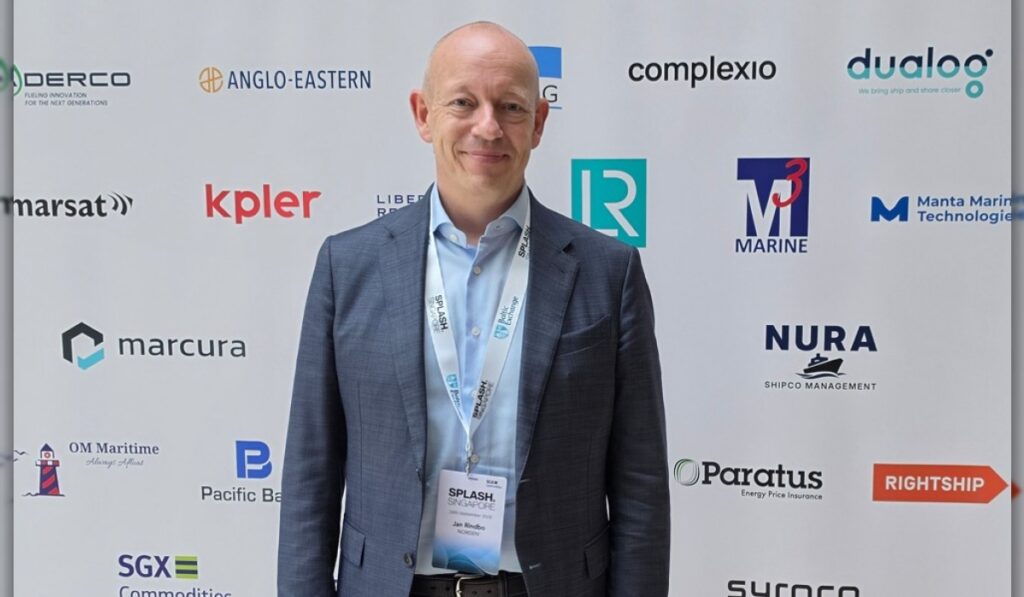
The move comes amid growing geopolitical uncertainty and a rapidly expanding orderbook, which has prompted the company to adopt a more cautious stance on tanker investments while ramping up exposure to dry cargo.
However, the current environment presents unique challenges. Tanker earnings remain robust, but the market is increasingly tied to geopolitical developments, particularly in the Middle East, making it harder to predict long-term trends. “When I look at the strength of the market and look at the orderbook, I would say that the tanker market may be closer to a peak,” Rindbo said in a recent interview.
The decision to pivot towards dry bulk is rooted in a fundamental reassessment of risk and reward. Shipyard slots are disappearing fast, with delivery dates stretching into 2030 and even 2031.
Dry bulk, by contrast, is seen as less directly exposed to geopolitical disruptions. “We think the risk-reward is now more favourable in dry cargo,” Rindbo stated. The company is not abandoning tankers entirely but is taking a more defensive approach, securing longer-term charters to mitigate exposure to market volatility.
Norden’s shift is also influenced by structural changes in global trade. The fragmentation of shipping fleets, driven by environmental regulations, geopolitical conflicts, and regional restrictions, has made the market less efficient. “The global fleet is breaking into smaller fleets, and that means that you overall have a less efficient utilisation of the global fleet,” Rindbo explained.
Supply chain de-risking fuels shipping demand: Norden
Another factor driving Norden’s strategy is the changing behaviour of its customers. Companies are increasingly diversifying their supply chains to reduce dependence on single suppliers or regions. “Our customers are de-risking their supply chains, and that means that they are sourcing from different places,” Rindbo noted. This trend leads to more complex logistics, which in turn increases demand for shipping services.
The company’s capital allocation approach is designed to remain flexible. Norden has ordered 41 newbuildings, with deliveries scheduled between 2026 and 2030. These vessels will bolster its dry bulk fleet, allowing it to capitalise on the growing demand for commodities transportation. The company’s ability to shift investments between markets as conditions change is a key advantage in an industry where cycles can turn quickly.
Norden is also leveraging technology to optimise its operations. “For us, AI is about how we maximise the output of all the revenue and all the voyage costs,” Rindbo said.
Despite the challenges, Rindbo remains optimistic about the broader outlook for global trade. “The world economy is more resilient than I think most people believed it would be under the circumstances,” he said. “The underlying tone for the world economy, for world trade, is actually quite positive.” This resilience, combined with the structural changes in shipping, suggests that the industry is entering a new phase, one where agility and risk management will be more critical than ever.
As the shipping cycle matures, Norden’s ability to adapt will be key to maintaining its competitive edge in a fragmented and unpredictable market.
Looking ahead, the company’s newbuildings will play a crucial role in its dry bulk expansion. With delivery dates stretching into the next decade, Norden is positioning itself to meet the growing demand for commodities transportation while mitigating the risks associated with tanker markets. The next few years will be critical as the company navigates the complexities of a rapidly evolving industry.


Sign up free to ask CAMAL AI for a summary, the key points or anything else about this story.
Related stories
CAMAL AI
 Financial Ports Newsletter
The maritime economy, every morning
Ports, shipping and freight markets in one short email. Free.
Financial Ports Newsletter
The maritime economy, every morning
Ports, shipping and freight markets in one short email. Free.