

US Navy Orders 30 Unmanned Warships in $1.2bn Autonomous Push
Three contractors to build 10 autonomous vessels each at an average cost of $40m per hull.
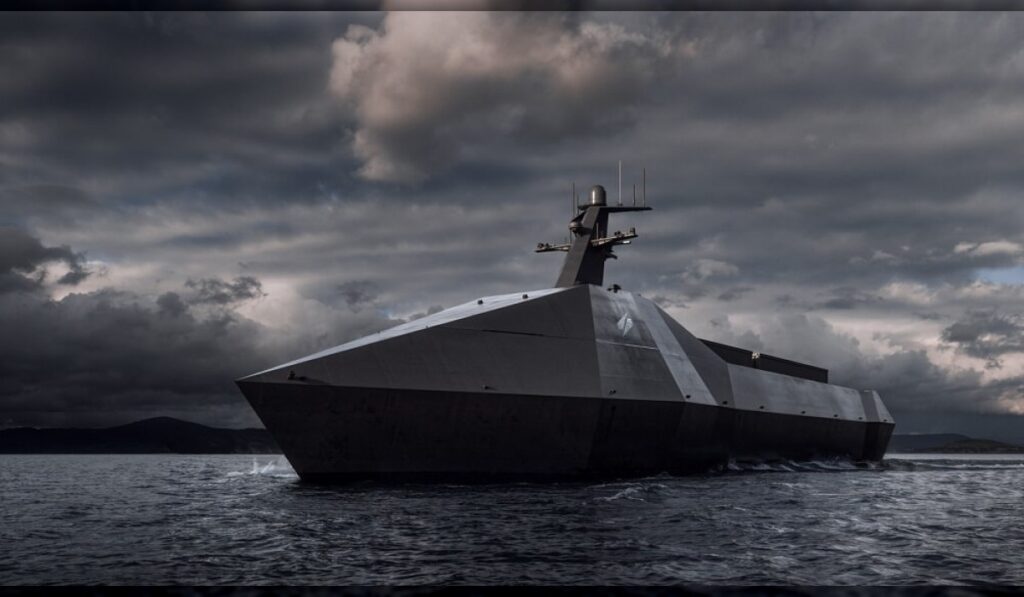
The move marks a significant step in the Navy’s strategy to integrate unmanned systems into its fleet, with each hull priced at an average of $40 million.
Huntington Ingalls Industries (HII), Galliano Marine Services and Saronic have each secured contracts to build 10 vessels, while competitors Leidos, PAC MAR and Sea Machines received $15 million completion awards and will be listed on the Pentagon’s Drones.mil “Maritime Marketplace” for future orders. The contracts reflect the Navy’s push to develop a mixed fleet of manned and unmanned platforms, capable of performing roles from intelligence and surveillance to mine countermeasures and strike missions.
HII’s Romulus: A Modular Platform for Multiple Roles: Navy
HII’s entry, the Romulus MUSV, is a midsize unmanned vessel designed for versatility. With a top speed of 25 knots and a range of 2,500 mileses, it features a crewboat layout with a long aft deck, allowing for modular payloads. The company envisions the Romulus performing a variety of missions, including intelligence, surveillance and reconnaissance (ISR), counter-drone operations, mine countermeasures, and the launch and recovery of smaller unmanned systems like HII’s own Remus submersible drone.
To accelerate development, HII partnered with Breaux Brothers, a Gulf Coast commercial yard specialising in aluminium construction. The collaboration leveraged Breaux’s expertise in building lightweight, durable vessels, ensuring the Romulus could be manufactured efficiently in a commercial setting. Chris Kastner, HII’s president and CEO, emphasised the company’s early investments in autonomous systems, stating.
“HII has made deliberate, early investments in the development of autonomous systems, advancing capabilities essential to the Navy’s hedge strategy.”
Chris Kastner·President and CEO of Huntington Ingalls Industries
Saronic’s $3bn Mega-Shipyard Aims to Rival China’s Output
While HII and Galliano Marine Services will produce their vessels in existing facilities, Saronic is taking a different approach by constructing a $3 billion mega-shipyard in Brownsville, Texas.
Initially, Port Alpha will have a capacity of 150,000 GT per year, with a maximum hull length of 850 feet, enough to build sub-Panamax vessels. At full buildout, the yard will expand to accommodate Neopanamax ships of up to 1,200 feet. Saronic’s CEO, Dino Mavrookas, framed the project as a strategic move to revitalise American shipbuilding, stating.
“American shipbuilding needs to be rebuilt for what comes next. Port Alpha is designed from the ground up to produce both autonomous and manned vessels at scale.”
Dino Mavrookas·Co-Founder and CEO of Saronic
The yard’s first contract will be for the Navy’s Landing Craft Utility (LCU), a workhorse vessel for beach logistics.


Sign up free to ask CAMAL AI for a summary, the key points or anything else about this story.
Related stories
CAMAL AI
 Financial Ports Newsletter
The maritime economy, every morning
Ports, shipping and freight markets in one short email. Free.
Financial Ports Newsletter
The maritime economy, every morning
Ports, shipping and freight markets in one short email. Free.



