

US Navy bets $300m on robots to slash warship corrosion costs
The five-year contract quadruples the original $71m award and aims to cut inspection times from months to days.
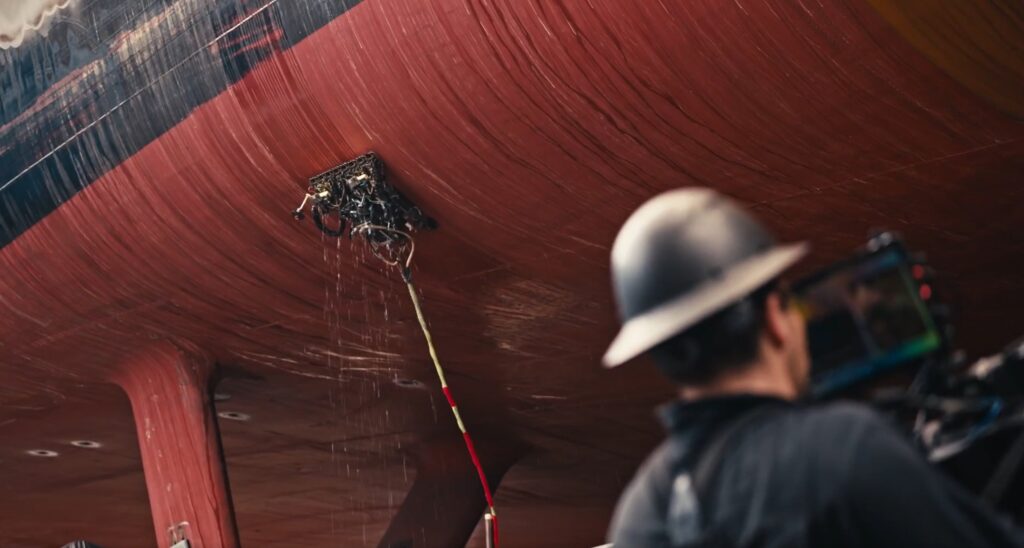
The U.S. Navy has significantly expanded its partnership with Pittsburgh-based Gecko Robotics, awarding the company a $300 million contract to deploy advanced robotic inspection systems across its fleet. The agreement, structured as an indefinite-delivery, indefinite-quantity (IDIQ) contract, quadruples the value of a $71 million award announced earlier this year. The move reflects the Navy’s growing reliance on automation to combat corrosion and streamline maintenance operations.
Gecko Robotics’ technology employs wall-climbing robots, drones, and fixed sensors to inspect ship hulls, decks, welds, and other critical structural components. Unlike traditional methods, these systems can scan through thick nonskid coatings without requiring removal, preserving the integrity of the vessel’s surface. The data collected is processed through the company’s AI-driven Cantilever platform, which generates detailed maps of corrosion and material thickness. This allows maintenance teams to identify structural weaknesses and plan repairs before ships enter dry dock.
Robotic inspections transform naval maintenance: Navy
The efficiency gains are substantial. Gecko’s systems can complete inspections in days, a process that typically takes months using conventional human-led methods. The company estimates its technology can detect structural issues 50 times faster than traditional approaches, potentially saving the Navy up to $8 million per ship in repair costs. Faster inspections also reduce yard time, a critical factor in maintaining fleet readiness and optimizing shipyard capacity.
“With savings of millions of dollars per ship and warships returning to sea faster, the U.S. Navy is demonstrating how to deploy technology at scale,” said Jake Loosararian, co-founder and CEO of Gecko Robotics. The contract expansion follows successful deployments on 18 ships in the U.S. Pacific Fleet under the original $71 million award, which was announced in March.
Expanding applications in submarine manufacturing
The $300 million ceiling represents the contract’s maximum potential value, not a guaranteed expenditure. However, the scope of work extends beyond surface vessels. Gecko Robotics will also conduct nondestructive testing of submarine components at Anduril’s future manufacturing facilities in Sparrows Point, Baltimore, and Orange County, California. The Sparrows Point yard is expected to begin operations in 2030, while work at the Orange County site is already in progress.
Loosararian highlighted the shift from experimental technology to practical applications in defense. “The conversation around AI and robotics in defense is no longer about experimental technology. It’s about delivering measurable and impactful returns,” he said. The expanded contract aligns with the Navy’s broader goal of achieving 80% combat surge readiness at any given time, a target set by the Chief of Naval Operations.


Sign up free to ask CAMAL AI for a summary, the key points or anything else about this story.
Related stories
CAMAL AI
 Financial Ports Newsletter
The maritime economy, every morning
Ports, shipping and freight markets in one short email. Free.



