

MSC Baltic III Wreck Hauled 53 Metres Closer to Shore
The 207-metre containership, grounded since February 2025, is being dismantled in place.
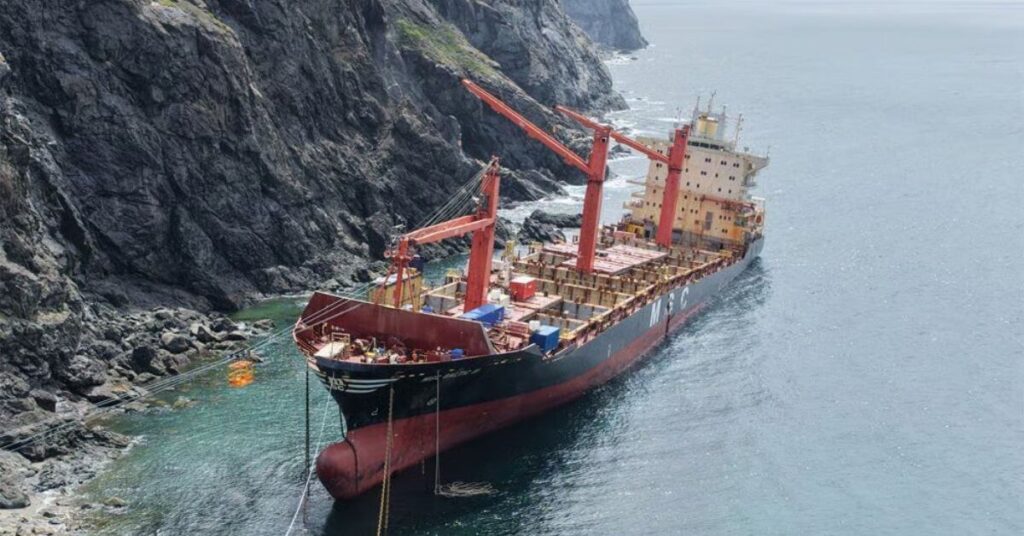
The wreck of the MSC Baltic III, a 207-metre containership grounded off Newfoundland since February 2025, has been pulled 53 metres closer to shore as salvors intensify efforts to dismantle the vessel.
The MSC Baltic III, operated by MSC Mediterranean Shipping Company, had 472 containers onboard when it grounded. All but one have been removed, with the damaged container expected to remain attached to the wreck until it reaches shore.
How the Salvage Operation Unfolded: MSC Baltic III
The ship lost power on February 15, 2025, approximately 12 nautical miles outside the Bay of Islands, after encountering severe weather. Unable to secure an anchor, the vessel drifted and grounded at Wild Cove. All 20 crew members were safely airlifted by a Royal Canadian Air Force CH-149 Cormorant helicopter, though four sustained injuries.
The operation has been carefully timed to coincide with high tides, which provide the additional buoyancy needed to move the wreck incrementally toward a scrap pad on the shoreline.
A crane stationed on the scrap pad has been instrumental in lightering work, transferring material from the wreck to shore. Initially, workers relied on a cableway to access the ship, but this was later replaced by a temporary gangway from shore, a safer and more efficient method for moving personnel and equipment.
Environmental Risks and Next Steps
Pollution checks remain a priority as the wreck is dismantled. The Canadian Coast Guard, which has been overseeing the environmental response, recently reported a slight sheen near the vessel, indicating residual fuel in the holds. This is a common issue in grounded ships, where fuel can become trapped in structural compartments.
To mitigate the risk of leaks, absorbent booms have been deployed inside the holds, and teams conduct daily shoreline inspections when conditions permit. Small amounts of tar balls and oil-related debris have been found and removed, underscoring the ongoing threat of pollution despite the salvage team’s efforts.
The Canadian Coast Guard has urged the public to avoid the work site and follow instructions from local authorities. This advisory is standard in salvage operations, where the presence of heavy machinery, unstable structures, and potential pollutants creates significant safety risks. The Coast Guard’s role extends beyond environmental monitoring; they also coordinate with local response teams to ensure the operation adheres to regulatory requirements and minimises disruption to nearby communities.
Sections of the wreck are being transported to a recycling facility on Newfoundland, either by barge or truck. This phase of the operation is critical for ensuring that the vessel’s materials are disposed of responsibly. Newfoundland’s recycling facilities are equipped to handle large volumes of scrap metal, which can be repurposed for industrial use. The economic benefits of recycling the wreck’s materials are modest but tangible for the region, providing local jobs and supporting the circular economy.
The salvage operation is expected to continue through high-tide windows, with salvors aiming to complete the dismantling before winter conditions set in. Winter in Newfoundland brings harsh weather, including freezing temperatures and rough seas, which could complicate the final stages of the operation. The timeline for completion remains fluid, dependent on weather conditions and the structural integrity of the wreck as it is moved closer to shore.
MSC Mediterranean Shipping Company, the world’s largest container line, has not issued a public statement on the salvage progress. The MSC Baltic III incident serves as a cautionary tale for the shipping industry, highlighting the risks of power loss in adverse weather and the logistical challenges of wreck removal. For MSC, the grounding of the MSC Baltic III has likely prompted a review of its operational protocols, particularly in regions prone to extreme weather.
The incident has also drawn attention to the broader issue of maritime safety in Canada’s coastal waters. The Canadian Coast Guard, responsible for marine search and rescue and environmental response, has faced increasing pressure to enhance its capabilities in remote regions like Newfoundland. The MSC Baltic III salvage operation has provided valuable lessons for future responses, including the importance of rapid deployment of pollution containment measures and the need for specialised salvage equipment in challenging conditions.
For local communities in Newfoundland, the salvage operation has brought both economic activity and environmental concerns. The recycling of the vessel’s materials could provide a modest boost to regional industries, while the ongoing pollution checks aim to mitigate long-term ecological damage. The presence of salvage teams has also generated temporary employment opportunities, though these benefits are balanced by the disruption caused by the operation.
The MSC Baltic III grounding is not an isolated incident. In recent years, several high-profile ship groundings have occurred in Canadian waters, including the 2018 grounding of the Nathan E. Stewart in British Columbia and the 2020 grounding of the MV Alta off Newfoundland.
These incidents have prompted calls for stricter maritime regulations and improved infrastructure to support salvage operations. The Canadian government has responded by investing in coastal monitoring systems and expanding the capabilities of the Canadian Coast Guard, but challenges remain in ensuring rapid and effective responses to maritime emergencies.
For stakeholders in the shipping industry, the MSC Baltic III salvage operation serves as a reminder of the importance of preparedness. Vessel operators are increasingly investing in advanced weather routing systems and redundant power sources to mitigate the risks of power loss in adverse conditions. Additionally, the industry is exploring new technologies for wreck removal, including modular salvage systems that can be rapidly deployed to remote locations. These innovations could reduce the time and cost of salvage operations while minimising environmental impact.
As the salvage of the MSC Baltic III enters its final stages, the operation will continue to be closely monitored by maritime authorities, environmental groups, and industry observers. The lessons learned from this incident will inform future responses to grounded vessels, ensuring that salvage operations are conducted safely, efficiently, and with minimal environmental harm. For Newfoundland and the broader maritime community, the successful removal of the MSC Baltic III will mark the end of a challenging chapter, and the beginning of a more resilient approach to maritime safety.


Sign up free to ask CAMAL AI for a summary, the key points or anything else about this story.
Related stories
CAMAL AI
 Financial Ports Newsletter
The maritime economy, every morning
Ports, shipping and freight markets in one short email. Free.
Financial Ports Newsletter
The maritime economy, every morning
Ports, shipping and freight markets in one short email. Free.