

MSC Baltic III Wreck Removal Hits 40%—But Winter Could Delay the Rest
The 33,767-dwt containership has been pulled 53 metres ashore as crews remove 4,200 tonnes of steel.
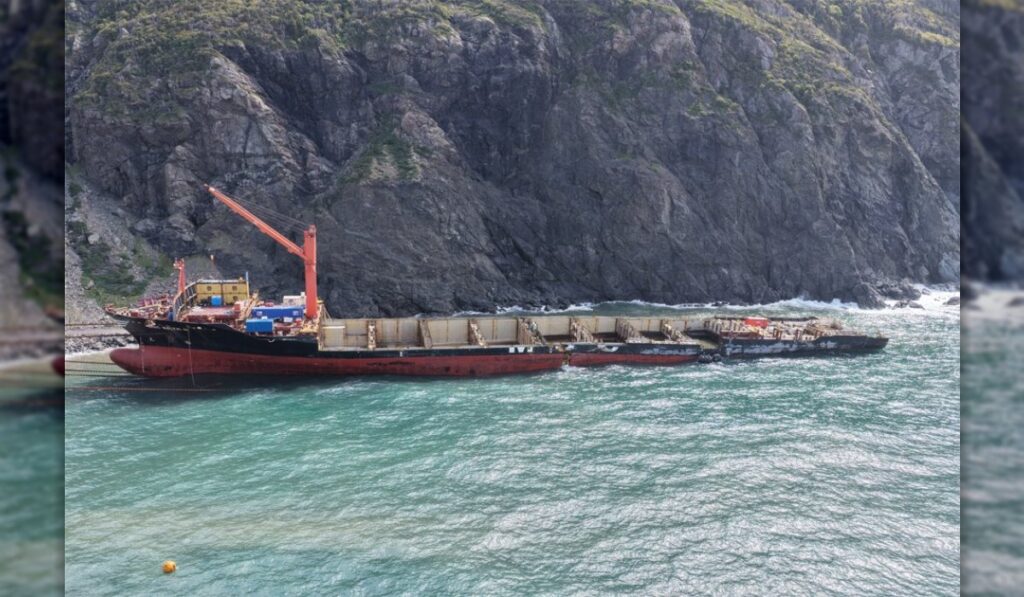
The deconstruction of the grounded MSC Baltic III has reached a critical milestone, with 40% of the vessel’s 33,767-dwt structure now removed, but winter weather threatens to halt progress before the wreck is fully cleared from Newfoundland’s rugged coastline.
The Canadian Coast Guard confirmed this week that salvage teams from Resolve Marine have extracted 4,200 tonnes of steel from the wreck, which ran aground in February 2025 after losing power during a storm.
How the Wreck Is Being Dismantled, and Why It’s Taking So Long: MSC Baltic III
The operation has proceeded in phases, with crews first removing the vessel’s deckhouse, bridge, and cargo equipment in the second half of July. By the end of that month, the superstructure and the cargo equipment and the hatch covers had been cleared. The final container, too damaged to extract safely, remains with the wreck as it is pulled ashore.
“The wreck will be deconstructed as it comes onshore,” the Canadian Coast Guard stated, emphasising the methodical nature of the salvage. A scrap pad was recently completed on the shoreline to support a crane for lightering operations, while a barge alongside the wreck assists in cutting and removing steel sections. Despite progress, residual fuel has complicated efforts, with tar balls and a slight sheen observed near the wreck site. An absorbent boom has been placed inside the holds to contain any further pollution, a precautionary measure to prevent additional environmental harm.
Earlier phases of the operation, completed in 2025, focused on removing onboard fuel and other pollutants.
The MSC Mediterranean Shipping-owned vessel grounded near Wild Cove, west of Corner Brook, after its crew of 20 was safely evacuated by helicopter. The remote location of the wreck, in a cove west of Corner Brook, has added to the complexity of the operation, with limited access and harsh weather conditions posing ongoing challenges.
The Environmental and Economic Stakes for Newfoundland
The Canadian Coast Guard’s efforts to mitigate pollution have been critical in protecting these resources, but the long-term impact of the incident remains a concern for local communities and environmental groups.
The province has closely monitored the situation, ensuring that the cleanup adheres to environmental regulations and that the shoreline is restored to its pre-incident condition once the wreck is fully removed.
For residents and businesses in the region, the ongoing salvage operation serves as a reminder of the risks posed by maritime traffic along Newfoundland’s coast. The province has a long history of shipwrecks, with its rugged shoreline and unpredictable weather conditions making it a hazardous area for vessels. The MSC Baltic III incident has reignited discussions about the need for enhanced maritime safety measures, including improved navigation systems and stricter enforcement of environmental protections.
The deconstruction of the MSC Baltic III highlights the complexities and challenges of modern maritime salvage operations. The incident has underscored the importance of robust safety protocols, particularly in regions prone to harsh weather and remote locations. For the shipping industry, the grounding serves as a cautionary tale about the risks of operating in environmentally sensitive areas and the potential financial and reputational costs of maritime accidents.
The polluter pays principle, which has guided the salvage operation, has also drawn attention to the need for clearer accountability in maritime incidents. While the principle ensures that vessel owners and insurers bear the financial responsibility for cleanup efforts, the MSC Baltic III case demonstrates the lengthy and costly nature of such operations.
The delays caused by winter weather and the technical challenges of deconstructing a large vessel in a remote location have extended the timeline for the project, raising questions about the preparedness of the industry to handle similar incidents in the future.
For salvage companies like Resolve Marine, the operation has provided valuable insights into the logistical and technical demands of large-scale wreck removals. The use of specialised equipment, such as the MM Newfoundland barge and shoreline cranes, has been essential in managing the complexities of the site. However, the experience has also highlighted the need for adaptive strategies, as crews have had to replace the cableway system with a temporary gangway from shore to improve access to the wreck.
Resolve Marine plans to continue operations until winter weather forces a pause, with the goal of removing as much of the wreck as possible before conditions deteriorate. However, the Coast Guard has warned that the project is unlikely to be completed before next year, followed by shoreline restoration efforts. The slow pace reflects the challenges of working in a remote cove, where tides, residual fuel, and structural instability demand caution.
Once the wreck is fully removed, the focus will shift to restoring the shoreline, a critical step in mitigating the environmental impact of the incident. The Canadian Coast Guard has committed to ensuring that the site is returned to its pre-incident condition, though the timeline for this phase of the project remains uncertain. For local communities, the restoration efforts will be closely watched, as the health of the coastline directly impacts fishing, tourism, and other economic activities in the region.
For those following the salvage operation, updates on progress can be found on the Canadian Coast Guard’s official website, which provides regular reports on maritime incidents and environmental response efforts. The site offers detailed information on the MSC Baltic III salvage, including timelines, environmental assessments, and contact details for further inquiries. As the operation continues, stakeholders and the public alike will be monitoring developments closely, with the hope that the wreck will be fully cleared and the coastline restored by 2027.
The Canadian Coast Guard and Resolve Marine remain committed to the task, though the clock is ticking before winter halts progress entirely. The lessons learned from the MSC Baltic III salvage will likely inform future maritime safety and environmental protection efforts, both in Canada and internationally.


Sign up free to ask CAMAL AI for a summary, the key points or anything else about this story.
Related stories
CAMAL AI
 Financial Ports Newsletter
The maritime economy, every morning
Ports, shipping and freight markets in one short email. Free.
Financial Ports Newsletter
The maritime economy, every morning
Ports, shipping and freight markets in one short email. Free.



