

Canada’s $3bn Arctic giant: keel laid for largest home-built icebreaker
The 26,000-tonne CCGS Imnaryuaq will be the first Polar Class 2 icebreaker built in Canada, with delivery set for 2032.
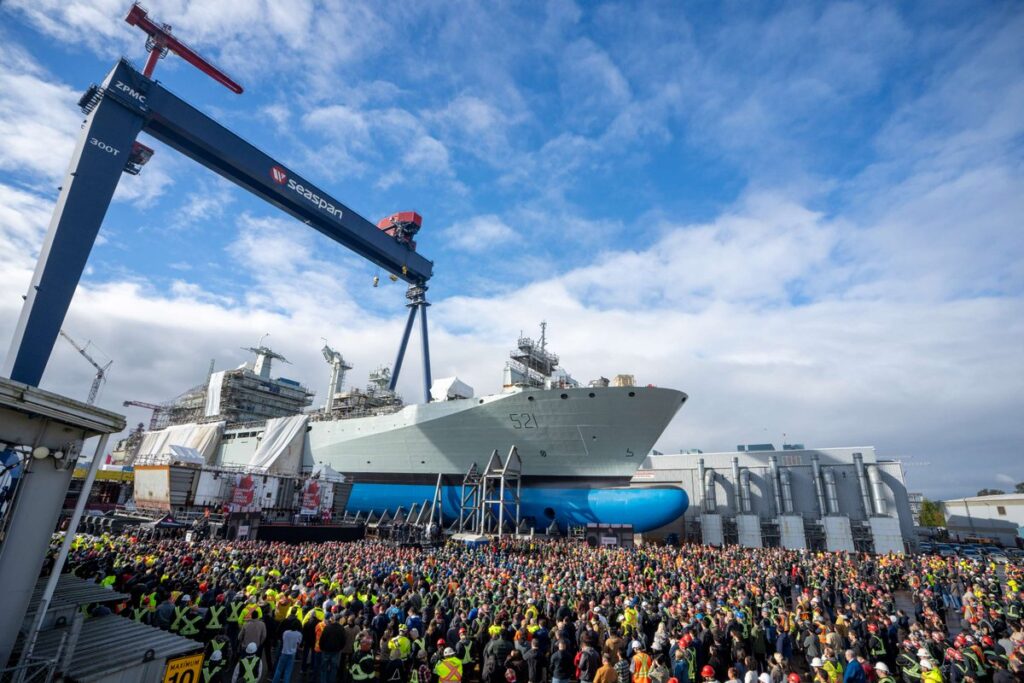
Seaspan’s Vancouver Shipyards has laid the keel for the Canadian Coast Guard’s next polar icebreaker, the future CCGS Imnaryuaq, marking a milestone in the country’s delayed but ambitious Arctic fleet renewal.
The 26,000-tonne vessel, stretching 520 feet, will be the largest icebreaker ever constructed in Canada. Designed to Polar Class 2 standards, it will slice through ice up to 10 feet thick and operate in the High Arctic’s most severe conditions. The ship’s extra strengthening will allow it to serve as both a sovereign presence and a floating research platform, accommodating up to 40 scientists alongside its Coast Guard crew.
The keel-laying ceremony, held on 16 October, arrives 15 years after the initial contract was awarded, a delay caused by the prioritisation of the Royal Canadian Navy’s two Protecteur-class naval auxiliaries, both nearing completion at Seaspan. The icebreaker’s name, Imnaryuaq, honours Inuit placenames and culture, reflecting its intended role in serving communities across Inuit Nunangat for decades to come.
Canadian Coast Guard Commissioner Kevin Brosseau underscored the vessel’s significance in a statement:
“Today’s keel laying is an important step forward in the renewal of the Canadian Coast Guard fleet. The CCGS Imnaryuaq, named to honour Inuit placenames and culture, will be a world-class icebreaker that will protect Arctic sovereignty and serve Canadians and communities across Inuit Nunangat for generations to come.”
Kevin Brosseau·CCG Commissioner
The project’s price tag has swelled to an expected US$3 billion, making it one of the most expensive vessels in Canadian maritime history. For comparison, Davie’s Helsinki Shipyard is building a slightly smaller polar icebreaker for US$2.3 billion, with delivery scheduled two years earlier, in 2030.
With the keel now laid, construction of the CCGS Imnaryuaq will accelerate toward its revised delivery date of 2032.
Seaspan’s track record in ice-class construction is already established. The shipyard has delivered multiple ice-strengthened vessels for the Coast Guard under the National Shipbuilding Strategy and is currently building 16 smaller multipurpose icebreakers to bolster Canada’s Arctic presence. These vessels, though less imposing than the Imnaryuaq, will play a critical role in maintaining year-round access to remote communities and supporting search-and-rescue operations.
The CCGS Imnaryuaq’s delayed timeline has not dampened its strategic importance. The vessel’s dual role, sovereign presence and scientific research, positions it as a cornerstone of Canada’s Arctic strategy for the next half-century.
The initial delay to accommodate the Royal Canadian Navy’s Protecteur-class auxiliaries highlights the balancing act required to modernise multiple fleets simultaneously.


Sign up free to ask CAMAL AI for a summary, the key points or anything else about this story.
Related stories
CAMAL AI
 Financial Ports Newsletter
The maritime economy, every morning
Ports, shipping and freight markets in one short email. Free.



