

China’s shipping dominance hits new high: 1,347 vs 633 for nearest rival
UNCTAD’s latest index shows China’s connectivity score more than doubles South Korea’s and Singapore’s.
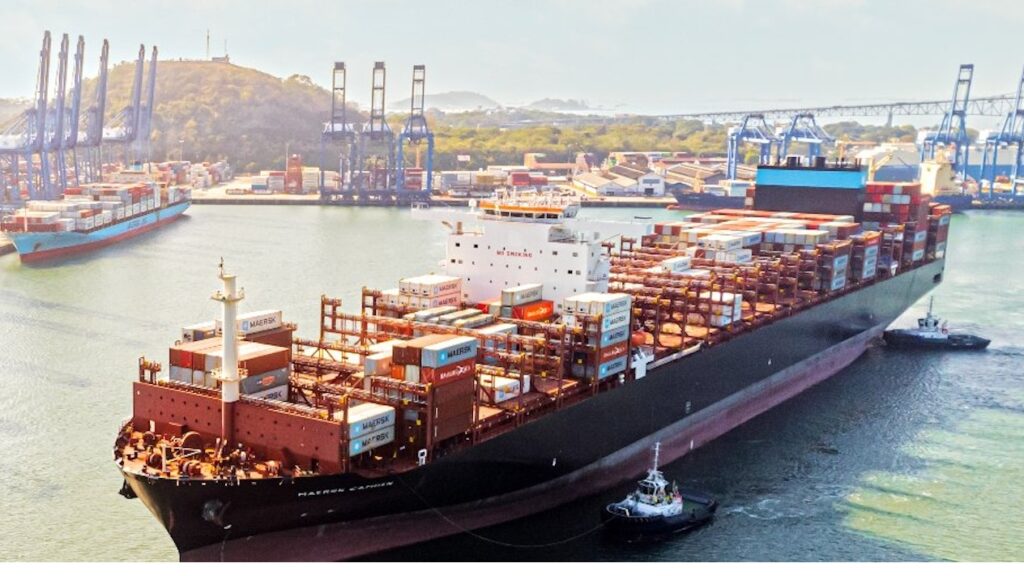
China has cemented its dominance in global liner shipping, with its Liner Shipping Connectivity Index soaring to 1,347.8 in September 2028, more than double the scores of second-ranked South Korea and Singapore, according to the latest UNCTAD data. The figures underscore Asia’s central role in container-shipping networks, with eight of the world’s 15 best-connected economies located in the region.
United Nations Conference on Trade and Development (UNCTAD) on Trade and Development (UNCTAD) index measures a country’s integration into global container-shipping networks by evaluating factors such as vessel calls, port capacity, carrier availability, largest ship size, and the number of countries reached through direct services.
Established in 1984, UNCTAD operates under the United Nations General Assembly and serves as a key policy forum for trade, investment, and development issues, particularly for developing economies. UNCTAD’s Liner Shipping Connectivity Index Index, introduced in 2004, has become the industry standard for assessing maritime trade integration, providing quarterly updates that shape strategic decisions for ports, carriers, and governments worldwide.
Royal Caribbean
China’s advantage has grown steadily since 2023, widening the gap with its closest competitors despite modest declines in South Korea and Singapore’s scores. The country’s rise reflects a deliberate strategy to expand port infrastructure, invest in mega-ships, and forge strategic alliances with global carriers.
Since the early 2000s, China has systematically developed its port network, with facilities such as Shanghai, Ningbo-Zhoushan, and Shenzhen now ranking among the world’s busiest. This infrastructure push has been complemented by state-backed initiatives to enhance digitalisation, automation, and sustainability in maritime logistics, further solidifying its leadership in the sector.
Asia’s connectivity lead reshapes global trade routes: liner shipping connectivity
China’s connectivity index of 1,347.8 in September 2028 dwarfed South Korea’s 833.0 and Singapore’s 828.7, reflecting the country’s unmatched infrastructure and strategic positioning in global trade. The United States and Malaysia followed in fourth and fifth place, respectively, though their scores remained below 2025 levels, signalling a partial recovery rather than a full rebound.
At the regional level, the United States led North America, Spain topped Europe, Egypt dominated Africa, and Panama ranked first in Latin America and the Caribbean. China and Panama and Panama improved their connectivity year-over-year, the United States, Spain, and Egypt saw declines in their index values, highlighting uneven progress across global shipping hubs.
Spain ports, the data presents a stark challenge: as Asian hubs like Shanghai and Busan expand their reach, traditional gateways such as Rotterdam and Hamburg must innovate to retain their relevance. Spain’s leadership in Europe, driven by the Port of Algeciras, underscores the importance of strategic location and efficiency in maintaining competitive advantage.
UNCTAD’s data also revealed stark contrasts among smaller economies. Venezuela recorded the largest increase in connectivity, surging 91.4% from Q3 2025 to Q3 2028, followed by Saint Pierre and Miquelon (89.3%) and Syria (79.7%). Venezuela’s rebound reflects a gradual reopening of trade routes after years of economic isolation, while Saint Pierre and Miquelon, a French overseas territory near Canada, benefited from increased transatlantic services.
In contrast, Persian Gulf hostilities drove Qatar’s connectivity down by 85.3%, the steepest decline globally, with Bahrain and Iraq also experiencing significant drops of 80.8% and 58%, respectively. These fluctuations highlight the vulnerability of smaller economies to geopolitical shocks, where a single conflict or policy shift can disrupt years of progress.
For businesses and policymakers, these shifts carry significant implications. Ports in high-connectivity regions, such as China and Singapore, are likely to see increased vessel calls and cargo volumes, creating opportunities for infrastructure investment and job growth.
Conversely, economies experiencing declines may face higher shipping costs, reduced access to global markets, and pressure to diversify their trade partners. The data also serves as a warning for industries reliant on stable supply chains, particularly in sectors like energy and manufacturing, where disruptions in key shipping corridors can lead to delays and increased costs.
Bilateral shipping links favour China-centric Asian corridors
The strongest bilateral liner-shipping relationships in the first quarter of 2028 were concentrated among neighbouring Asian economies, particularly those linked to China. UNCTAD noted that China’s connections with South Korea, Singapore, and Malaysia ranked among the world’s top five bilateral corridors, reflecting the region’s deepening trade integration over the past two decades.
This trend is not merely a reflection of geographic proximity but also the result of deliberate economic policies, such as China’s Belt and Road Initiative (BRI), which has funded port expansions and logistics hubs across Asia, Africa, and Europe. The BRI, launched in 2013, has accelerated the development of maritime trade routes, further entrenching China’s central role in global shipping networks.
Two European short-sea routes, United Kingdom-Belgium and United Kingdom-Netherlands, also remained in the global top five, though their dominance has waned compared to Asia’s rising influence. These routes were once the world’s strongest bilateral shipping connections, but China’s expanding network has reshaped global trade dynamics, prioritising intra-Asian links over traditional European corridors.
The shift reflects broader economic trends, including the rise of Asian manufacturing and the growing importance of intra-regional trade. Spain ports, this means adapting to a new reality where they are no longer the primary hubs for global trade but must instead focus on niche markets, such as high-value goods and specialised logistics services.
For industry stakeholders, China’s growing connectivity presents both opportunities and challenges. Ports and carriers in Asia are likely to benefit from increased vessel calls and service availability, while smaller economies may struggle to keep pace with the rapid shifts in global shipping networks. The data also underscores the volatility of connectivity in conflict-prone regions, such as the Persian Gulf, where geopolitical tensions can disrupt trade flows overnight.
For example, the Red Sea crisis, which escalated in late 2023, forced many carriers to reroute vessels around the Cape of Good Hope, adding weeks to transit times and increasing costs for shippers. Such disruptions highlight the need for contingency planning and diversification of trade routes, particularly for industries reliant on just-in-time supply chains.
Looking ahead, UNCTAD’s index will continue to serve as a critical benchmark for assessing global shipping connectivity. As China’s influence expands, industry players will need to adapt to the evolving landscape, leveraging data-driven insights to optimise routes, improve port efficiency, and mitigate risks in volatile markets. For ports in Europe and North America, this may involve investing in digitalisation, automation, and green technologies to enhance competitiveness.
Meanwhile, smaller economies must focus on building resilience through trade diversification, infrastructure upgrades, and regional cooperation. For now, the message is clear: China’s shipping dominance shows no signs of slowing, and its lead is only widening. Businesses and governments alike must prepare for a future where Asia’s maritime hubs set the pace for global trade.
For readers seeking to stay informed on these developments, UNCTAD’s official website provides quarterly updates on the Liner Shipping Connectivity Index, along with detailed reports on global trade trends. Industry stakeholders can also access tools such as the UNCTADstat database, which offers granular data on port performance, vessel movements, and trade flows, enabling more informed decision-making in an increasingly complex maritime landscape.


Sign up free to ask CAMAL AI for a summary, the key points or anything else about this story.
Related stories
CAMAL AI
 Financial Ports Newsletter
The maritime economy, every morning
Ports, shipping and freight markets in one short email. Free.
Financial Ports Newsletter
The maritime economy, every morning
Ports, shipping and freight markets in one short email. Free.



