

Japan’s Shipyards Need 12,000 Workers: But Birthrate Hits 1.14
Tokyo’s $6.5bn plan to double capacity by 2035 collides with a shrinking workforce and a record-low birthrate.
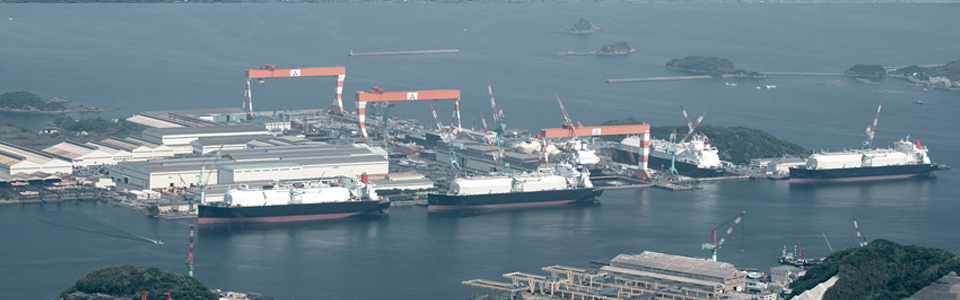
Japan’s ambitious plan to double its shipbuilding capacity by 2035 faces a critical obstacle: a severe shortage of skilled workers. Despite a $6.5 billion government investment and tax incentives, the industry’s growth is threatened by a shrinking workforce and record-low birthrates.
The Japanese government, led by Prime Minister Sanae Takaichi, aims to revitalize the country’s shipbuilding sector as part of a broader strategy to strengthen national security and economic resilience. The initiative targets a doubling of domestic capacity within the next decade, supported by direct funding and tax breaks. However, the industry’s current share of the global market stands at just 11%, far behind China’s 71% and South Korea’s 17%.
The plan and its challenges: Workers
While Japan has maintained a niche in high-value vessels, such as those requiring advanced compliance or technical specifications, its shipyards have struggled with declining orders over the past two decades. This year alone, orders have dropped by 15%, primarily due to a lack of skilled labor. The industry now requires an additional 12,000 workers to meet its expansion targets, a daunting task given the country’s aging population and record-low birthrate of 1.14 in 2025.
Natural Gas
Major shipbuilders are pressing forward with expansion plans despite the labor constraints. Namura Shipbuilding is constructing a new dry dock in Imari Bay, Kyushu, set for completion by 2035. Meanwhile, Imabari Shipbuilding and Kawasaki Heavy Industries are reviving production of LNG carriers, aiming to build three to five vessels annually. However, these projects are competing for the same limited pool of workers as defense contracts, including orders for Mogami-class frigates from the Royal Australian Navy and Japan’s Maritime Self-Defense Force.
Competing demands and future prospects
Industry leaders, such as Imabari Shipbuilding President Yukito Higaki, have warned that yards are struggling to meet even domestic replacement orders. The shortage has also hindered Japan’s ability to address a backlog of repair and refurbishment work for the U.S. Navy. To bridge the gap, companies are increasingly turning to labor-saving technologies and recruiting skilled workers from overseas, though these measures may not be enough to offset the demographic decline.
The government’s strategy hinges on reversing decades of industry contraction, but without a significant influx of workers, the goal of doubling shipbuilding capacity by 2035 remains in jeopardy.


Sign up free to ask CAMAL AI for a summary, the key points or anything else about this story.
Related stories
CAMAL AI
 Financial Ports Newsletter
The maritime economy, every morning
Ports, shipping and freight markets in one short email. Free.



