

Iran’s Hormuz Threat: 80 Attacks, 22 Dead as Tankers Burn
IRGC claims it set ablaze a 7,119 dwt tanker and warns of "destruction" for unauthorised transits.
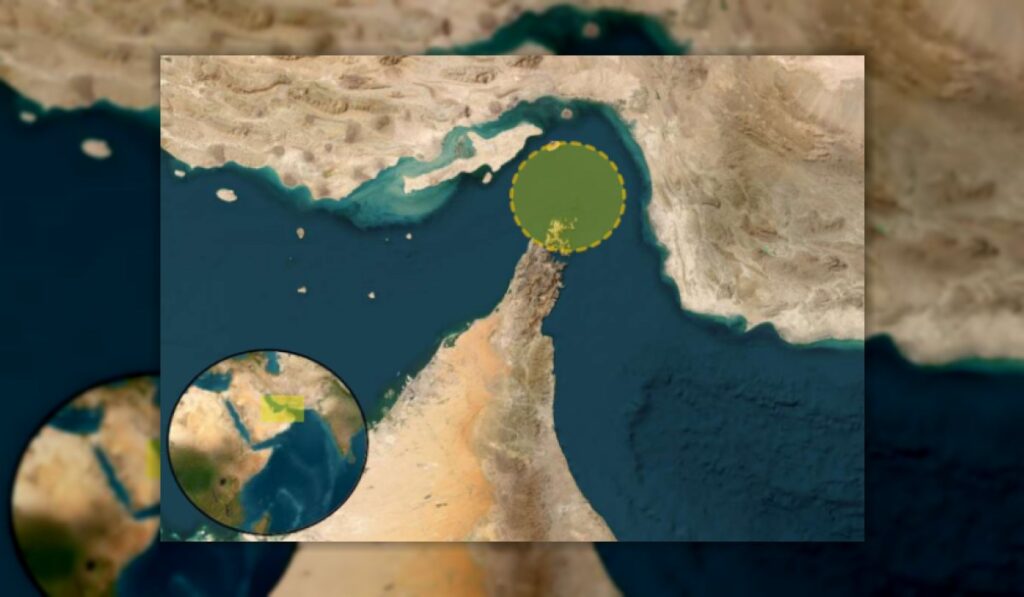
Iran’s Islamic Revolutionary Guard Corps (IRGC) Navy has escalated its campaign of intimidation in the Strait of Hormuz, warning that vessels attempting to transit without “explicit authorization” will be destroyed. The latest threat follows an attack on the Togo-flagged product tanker Trend, which the IRGC claims to have set ablaze and stopped for an “illegal passage”.
Rear Admiral Ali Ozmaei, a senior IRGC Navy commander, announced the attack on the Trend and used the incident to reinforce Iran’s claim of control over the waterway.
The Trend, a small product tanker of 7,119 dwt, was built in 2008 and has been managed from the UAE in recent years. Its last known AIS position was anchored off the UAE on September 15, just days before the reported attack. While the IRGC’s claims are difficult to verify, most vessels now transit the strait “dark,” without transmitting their positions, UK Maritime Trade Operations (UKMTO) confirmed receiving reports of a tanker struck by a projectile on September 18.
Natural Gas
The vessel, located 16 nautical miles northwest of the Omani coast near Khasab, suffered a fire that was later extinguished, with no reported injuries to the crew.
UKMTO also acknowledged a delayed report of another attack on September 16, though details remain scarce. Oman’s government later confirmed assisting in the evacuation of a tanker crew several days after an attack, underscoring the lag in information and the challenges of tracking incidents in the region.
IRGC’s Growing Threats and the Reality of Transits: Iran
The IRGC’s threats and attacks have had a tangible effect on shipping patterns. Data from Kpler, a maritime analytics firm, showed that only four vessels transited the Strait of Hormuz on September 17, three of them inbound.
Martin Kelly, Head of Advisory at EOS Risk Group, described Iran’s strategy as a mix of kinetic and non-kinetic tactics. “Iran’s kinetic activities are not sufficient to stop shipping from transiting via the Omani route, with 10-20 ships transiting per day,” Kelly noted. “However, Iran is using misinformation as a non-kinetic fire to achieve the same effect, scaremongering shipping into believing mines are present and deterring transits.”
Kelly’s assessment aligns with observations from Vortexa, another maritime data provider, which reported that three LNG carriers loaded in Qatar “reappeared” outside the Strait of Hormuz after disappearing from tracking systems. Two resumed transmissions in the Gulf of Oman, while a third was identified as arriving in India.
The use of ship-to-ship (STS) transfers has also increased, with Saudi Arabia and other Gulf states rerouting vessels to meet tankers in the Gulf of Oman to avoid the strait entirely. Reuters cited Vortexa data showing a Qatari Energy vessel conducting an STS transfer off Oman’s coast, a workaround that highlights the growing risks of direct transits.
The Impact on Global Shipping and Energy Markets
The U.S. Central Command (CENTCOM) has countered Iran’s actions by maintaining a blockade of Iranian shipping, redirecting 105 commercial vessels since the operation resumed. However, the blockade has done little to curb the IRGC’s activities, which continue to disrupt global energy flows.
The IMO’s Secretary-General, Arsenio Dominguez, warned of a dangerous precedent in a subcommittee meeting this week. “We are reaching a point where these conflicts are being used as a pretext to attack merchant vessels and innocent seafarers,” Dominguez said. His remarks come as the death toll from attacks in the region continues to rise. Peninsula Petroleum reported the death of a second crewmember from the tanker Hercules Star, which was attacked on September 9 while anchored off the UAE. The surviving crewmembers have since been repatriated.
For shipowners and operators, the risks in the Strait of Hormuz are now a daily consideration. Many are opting for alternative routes, such as the longer passage around the Arabian Peninsula, despite the added time and fuel costs. Others are relying on naval escorts or STS transfers to mitigate the threat. The IMO and industry groups have urged governments to increase patrols and provide clearer guidance to vessels, but with Iran’s rhetoric showing no signs of abating, the situation remains volatile.
The next steps for the international community are unclear. The UN Security Council has yet to take decisive action, and diplomatic efforts to de-escalate tensions have stalled. In the meantime, the Strait of Hormuz remains a flashpoint, with the IRGC’s threats and attacks casting a long shadow over global trade and energy security.


Sign up free to ask CAMAL AI for a summary, the key points or anything else about this story.
Related stories
CAMAL AI
 Financial Ports Newsletter
The maritime economy, every morning
Ports, shipping and freight markets in one short email. Free.
Financial Ports Newsletter
The maritime economy, every morning
Ports, shipping and freight markets in one short email. Free.