

Norfolk Southern’s 13.7% surge: Can rail finally outrun trucks?
US railroad bets on seamless service to capture $800bn trucking market after 13.7% weekly volume jump.
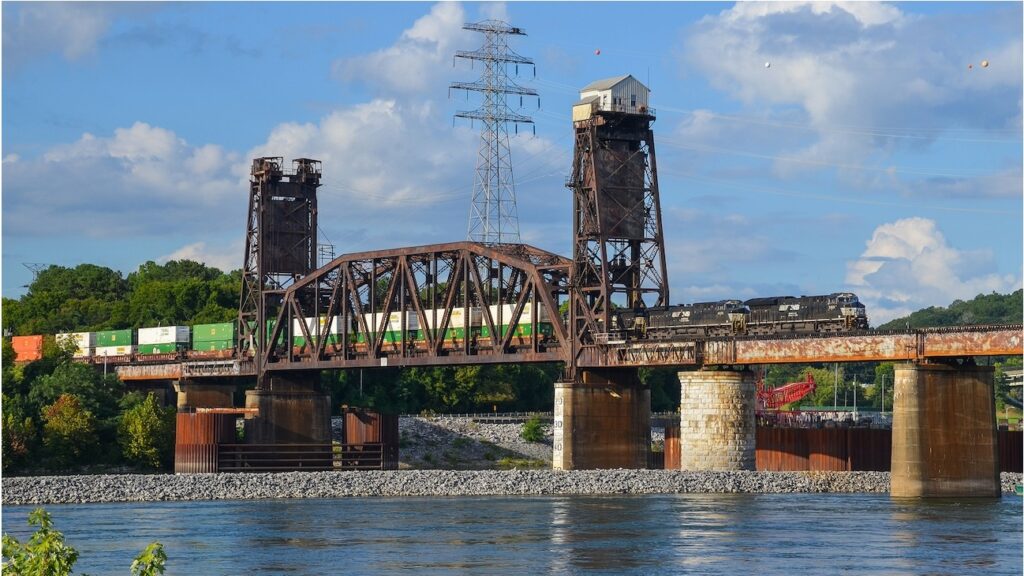
Norfolk Southern’s intermodal volumes surged 13.7% year-over-year last week, a sign that railroads may finally be closing the gap with trucking, not just on cost, but on simplicity and reliability. The jump comes as the company pushes a new strategy to eliminate the friction that has long kept shippers wedded to over-the-road transport.
Shawn Tureman, Norfolk Southern’s Vice President of Automotive & Intermodal Marketing, outlined the shift at the Intermodal Association of North America’s annual conference in Long Beach. After 23 years at the railroad, Tureman argued that the industry’s next growth phase hinges on making rail as easy to use as trucking. ‘Cost alone does not shift a supply chain,’ he said. ‘Customers need confidence.’
Why trucking still wins, and how rail plans to catch up: intermodal rail
Intermodal rail has long held advantages in scale, fuel efficiency, and sustainability, particularly on longer-haul lanes. Yet trucking remains the default choice for many shippers, thanks to its simplicity: one provider, one movement plan, and a single line of accountability. Norfolk Southern’s challenge is to replicate that ease while retaining rail’s ability to move freight at scale.
The railroad’s strategy is built on three eras of development. The first, in the late late 1990ss, focused on network construction, building terminals, double-stack routes, and port connections. The second, over the past 15 years, shifted to customer service, terminal performance, and consistency. Now, Norfolk Southern is entering its third era: removing friction to make rail a seamless alternative to trucking.
This evolution reflects broader trends in North America’s freight sector, where shippers increasingly demand not just lower costs but also greater predictability and transparency. The shift aligns with Norfolk Southern’s long-term investments in technology, such as real-time tracking and automated terminal operations, which aim to reduce delays and improve visibility across the supply chain. These tools are critical for competing with trucking’s inherent flexibility, where digital platforms have streamlined booking, tracking, and payment processes.
Terminals are central to this effort. ‘The terminal is our storefront,’ Tureman said, emphasizing that performance, capacity, staffing, processes, and technology must be flawless to attract and retain customers. The goal is to redesign the rail product so that complexity is absorbed by the railroad, not passed on to shippers. For example, Norfolk Southern has expanded intermodal access in Huntsville, Alabama, through a partnership with the South Carolina Ports Authority, creating a more efficient gateway for freight moving between the Southeast and Midwest.
A coast-to-coast merger to cut complexity
The proposed merger between Norfolk Southern and Union Pacific could accelerate this shift. The combination would create a single-line railroad connecting major West Coast markets with the Southeast and Northeast, reducing the need for interline transfers, particularly at congested gateways like Chicago. The merger is projected to shift about 10,000 existing lanes from interline to single-line service, eliminating roughly 2,400 railcar and container handlings and 60,000 car-miles per day.
For shippers, single-line service means fewer handoffs, fewer delays, and clearer accountability. It’s a direct challenge to trucking’s simplicity advantage, and Norfolk Southern is betting that predictability, transparency, and ease of execution will win over customers, even if rail can’t always match trucking’s speed.
The merger would also enhance Norfolk Southern’s ability to serve key markets, such as the Port of Long Beach, a critical hub for trans-Pacific trade. By integrating Union Pacific’s West Coast network with its own East Coast operations, the combined entity could offer more direct routes, reducing transit times and improving reliability for shippers moving goods between Asia and the U.S. interior.
The proposed combination is not without challenges. Regulatory approval remains a hurdle, and industry analysts have raised concerns about potential disruptions during the integration process. However, if successful, the merger could reshape North America’s freight landscape, offering shippers a more streamlined alternative to trucking. The elimination of interline transfers would also reduce the risk of delays and damage, which have historically been pain points for rail customers.
The recent 13.7% volume increase suggests the strategy may be working. But the real test will be whether Norfolk Southern can sustain this momentum and turn intermodal into a preferred option for moving the country’s freight. As Tureman put it: ‘It can become a preferred option for moving the country’s freight.’
For now, the railroad is focused on refining its terminal operations, expanding single-line service, and proving that rail can compete not just on cost, but on the intangibles that matter most to shippers: reliability, simplicity, and confidence. The company has also emphasized sustainability as a key differentiator, highlighting rail’s lower carbon emissions compared to trucking. This appeal could resonate with shippers under pressure to meet environmental, social, and governance (ESG) targets, particularly in industries like retail and manufacturing.
Looking ahead, Norfolk Southern’s ability to deliver on its promises will depend on continued investment in infrastructure, technology, and workforce training. The railroad has already made strides in improving terminal efficiency, but further upgrades will be needed to handle growing volumes and meet customer expectations. Shippers, meanwhile, will be watching closely to see whether the proposed Union Pacific merger delivers the promised benefits or introduces new complexities.
For businesses reliant on freight transport, the shift toward rail intermodal offers both opportunities and challenges. While rail’s cost and sustainability advantages are well-documented, its ability to match trucking’s flexibility and reliability remains a work in progress. However, with Norfolk Southern’s recent volume growth and the potential for a coast-to-coast merger, the industry may be on the cusp of a transformation that could redefine how goods move across North America.
Those interested in tracking Norfolk Southern’s progress can follow updates on the company’s official website or through industry reports from the Intermodal Association of North America, which provides insights into trends and developments in the sector.


Sign up free to ask CAMAL AI for a summary, the key points or anything else about this story.
Related stories
CAMAL AI
 Financial Ports Newsletter
The maritime economy, every morning
Ports, shipping and freight markets in one short email. Free.
Financial Ports Newsletter
The maritime economy, every morning
Ports, shipping and freight markets in one short email. Free.