

Transito’s one-contract freight service cuts delays for European shippers
Dutch charterer Transito launches Total Freight, bundling sea and inland legs under a single €/tonne price to shield.
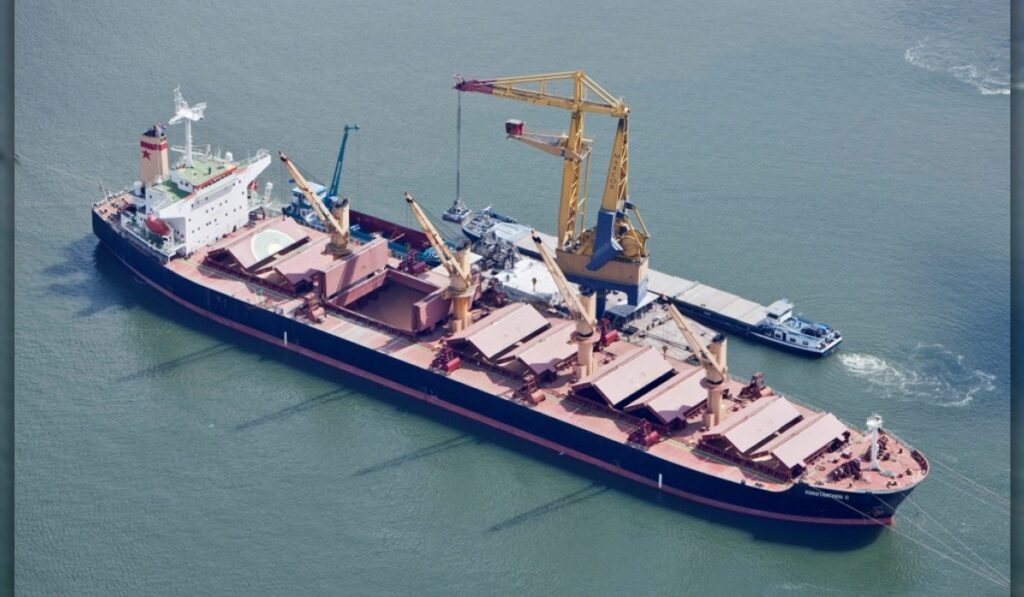
Dutch chartering firm Transito has introduced a new logistics solution to streamline cargo transport between European seaports and inland destinations. The service, called Total Freight, consolidates sea and inland shipping under a single contract amid growing disruptions caused by low water levels and other operational challenges.
The offering covers the entire transport chain—from the sea voyage and port handling to transshipment and onward movement by inland vessels. Customers receive a single price per tonne, one contract, and one invoice for the complete journey. Transito also assumes responsibility for waiting times between the seagoing and inland vessels within an agreed margin.
Addressing logistical bottlenecks: Transito
Recent disruptions, including low water levels in key European rivers, have complicated connections between maritime and inland transport. When delays occur—whether due to port congestion, vessel scheduling issues, or missing documentation—cargo owners typically bear the costs. Transito’s service aims to eliminate this burden by managing both legs of the journey internally.
Bas Weinberg, a Transito representative, explained the advantage: “When a seagoing vessel waits for an inland vessel, or a terminal is held up by paperwork, the delays fall on the cargo owner. By coordinating both vessels ourselves, we can adjust schedules if one runs late, keeping the entire operation aligned.”
Weinberg added that the real challenge lies not in securing vessels but in ensuring seamless connections between them. “If conditions change at sea, in port, or on the river, we can adapt the schedule rather than leaving the cargo owner to juggle multiple parties.”
Target customers and market conditions
Total Freight is designed for industrial buyers and mid-sized traders without dedicated freight departments. The service supports a variety of cargo types, including agribulk, building materials, fertilizers, minerals, recycling goods, and project cargo. It operates in both directions, covering shipments from the European hinterland to overseas destinations as well.
Low water levels have become a pressing issue this summer, particularly along the Rhine and Danube rivers. The Rhine is nearing a point where it could effectively split into two navigable sections, while the Danube faces record-low levels, severely impacting Germany, Romania, the Netherlands, Poland, and Bulgaria.


Sign up free to ask CAMAL AI for a summary, the key points or anything else about this story.
Related stories
CAMAL AI
 Financial Ports Newsletter
The maritime economy, every morning
Ports, shipping and freight markets in one short email. Free.
Financial Ports Newsletter
The maritime economy, every morning
Ports, shipping and freight markets in one short email. Free.



