

India Makes Waves at SMM 2026 with First-Ever National Pavilion
India’s Ministry of Ports, Shipping and Waterways unveils its Maritime Amrit Kaal Vision 2047 at Hamburg’s SMM 2026.
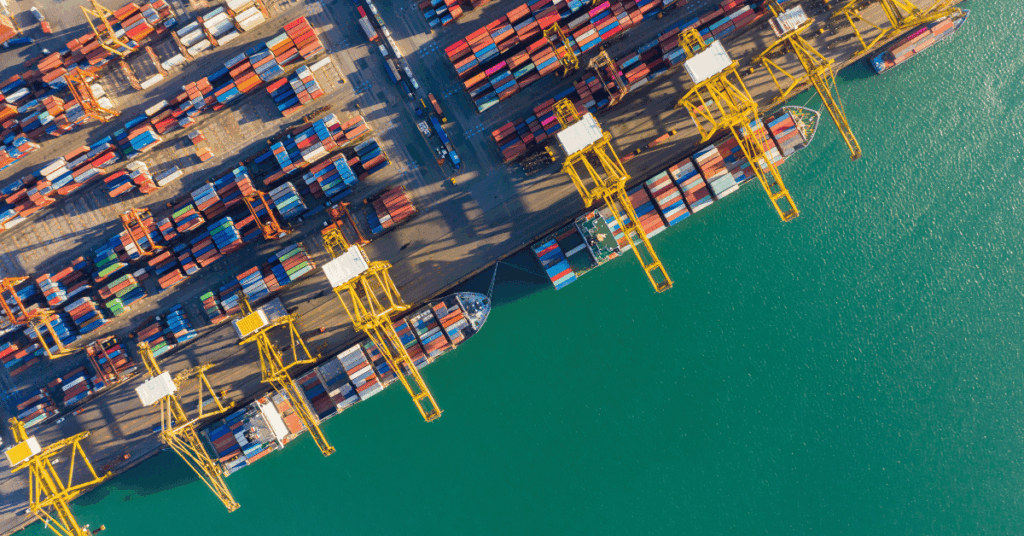
India has made its boldest entry yet into Europe’s maritime sector, launching its first national pavilion at SMM 2026 in Hamburg to showcase its ambitious Maritime Amrit Kaal Vision 2047. The move, unveiled by Shri Vijay Kumar, Secretary at India’s Ministry of Ports, Shipping and Waterways, marks a strategic effort to deepen collaboration with European shipping and port industries amid a shifting global trade landscape.
SMM 2026, the world’s leading maritime trade fair, has drawn 2,300 exhibitors from 70 countries, filling 90,000 m² of exhibition space across twelve halls. With 50,000 participants expected from 120 nations, the event serves as a critical platform for industry leaders to address pressing challenges, from decarbonisation to geopolitical uncertainty. India’s presence, however, stands out as a first, reflecting its growing influence in global maritime trade.
India’s Maritime Vision 2047: A Blueprint for Growth
At the heart of India’s pavilion is the Maritime Amrit Kaal Vision 2047, a long-term strategy aimed at transforming the country into a maritime powerhouse. Shri Vijay Kumar outlined the plan’s key pillars during his keynote address, emphasising investments in port infrastructure, digitalisation, and sustainable shipping. The vision aligns with India’s broader economic goals, positioning the maritime sector as a cornerstone of its trade and logistics ambitions.
“India is not just participating in SMM 2026; we are here to engage, collaborate, and lead,” Kumar stated. While the full text of his speech was not released, his remarks underscored India’s intent to attract European partners for joint ventures in shipbuilding, port modernisation, and green fuel adoption. The pavilion itself serves as a hub for Indian companies to showcase their capabilities, from shipyards to logistics providers, and to forge connections with European counterparts.
The timing of India’s debut at SMM is no coincidence. With global supply chains facing disruptions and Europe seeking alternative trade routes, India’s strategic location and expanding port capacity make it an attractive partner. The Maritime Amrit Kaal Vision 2047 includes plans to develop 12 major ports and 234 minor ports by 2047, alongside initiatives to boost shipbuilding and maritime education. These efforts are designed to position India as a key player in the Indian Ocean and beyond, offering a viable alternative to traditional shipping hubs.
SMM 2026: Navigating Uncertainty in a Changing World
Beyond India’s pavilion, SMM 2026 has placed a spotlight on the maritime industry’s most pressing challenges. Security and resilience have taken centre stage, with a new Naval Hall B8 dedicated to maritime defence and the protection of critical infrastructure. The hall features the Naval Stage and the MS&D Conference & Expo, where experts are discussing joint responses to emerging threats, from cyberattacks to piracy.
Christian Hirte, Parliamentary State Secretary at Germany’s Federal Ministry of Transport of Transport, and Emma Salisbury, Senior Fellow at the Foreign Policy Research Institute, highlighted the need for international cooperation in safeguarding maritime trade routes. “The protection of critical infrastructure is no longer a national issue; it’s a global one,” Hirte noted. Salisbury added that Europe’s strategic dependencies, particularly in energy and trade, require a unified approach to maritime security.
The focus on resilience extends to the industry’s energy transition. Knut Ørbeck-Nilssen, Group President and CEO at DNV and CEO of DNV, warned that shipping faces a period of “significant uncertainty,” with technology, regulation, and geopolitics evolving simultaneously. “The companies that succeed will be those that remain adaptable,” he said, pointing to Small Modular Reactors (SMRs) as a potential game-changer for maritime decarbonisation. The involvement of technology companies in SMR development signals a growing convergence between the energy and shipping sectors.
Decarbonisation remains a critical theme at SMM 2026, with the International Maritime Organization’s (IMO) net-zero target by 2050 looming large. Dr Uwe Lauber, CEO of engine manufacturer Everllence, stressed the urgency of political action. “The technology is ready. What we need now is a credible IMO Net-Zero Framework that creates certainty for investment and rewards decarbonisation,” he said. Lauber’s remarks reflect a broader industry consensus: without clear regulatory pathways, the transition to green fuels risks stalling.
Parallel to SMM 2026, the ALL ABOUT PORTS and LogiNext Germany events are taking place at the CCH, Congress Center Hamburg. These gatherings complement the main trade fair, offering specialised forums for port operators, logistics providers, and policymakers. The integration of these events underscores Hamburg’s role as a maritime hub, bridging Europe’s shipping and logistics sectors.
Heiko M. Stutzinger, CEO of Hamburg Messe und Congress, emphasised SMM’s unique position as a catalyst for innovation. “Internationality, innovation and an unparalleled wealth of information: SMM is and remains the driving force shaping the maritime future,” he said. His words were echoed by Hamburg’s Senator for Economic Affairs, Dr Melanie Leonhard, who highlighted the city’s responsibility in maintaining secure and resilient maritime infrastructure. “As a European gateway for trade, energy, and data, Hamburg must lead by example,” she noted.
The presence of high-profile speakers, including IMO Secretary-General Arsenio Dominguez and Dr Gaby Bornheim, President of the German Shipowners’ Association (VDR), has further elevated the event’s profile. Dominguez’s call to protect seafarers, “Secure sea lanes are essential for global trade, but first and foremost this is about protecting people”, resonated with attendees, many of whom are grappling with the human cost of geopolitical instability.
For India, SMM 2026 represents more than just a trade fair; it is a statement of intent. By launching its first national pavilion, the country is signalling its readiness to play a larger role in global maritime trade. The Maritime Amrit Kaal Vision 2047, with its focus on infrastructure and sustainability, offers a roadmap for collaboration with Europe. As the maritime industry navigates a period of unprecedented change, partnerships like these could redefine the future of global shipping.


Sign up free to ask CAMAL AI for a summary, the key points or anything else about this story.
Related stories
CAMAL AI
 Financial Ports Newsletter
The maritime economy, every morning
Ports, shipping and freight markets in one short email. Free.
Financial Ports Newsletter
The maritime economy, every morning
Ports, shipping and freight markets in one short email. Free.



