

Hapag-Lloyd exit reshapes Asia–South America shipping lanes
MSC and ONE to jointly operate weekly Asia–South America service from April 2027 after Hapag-Lloyd withdraws
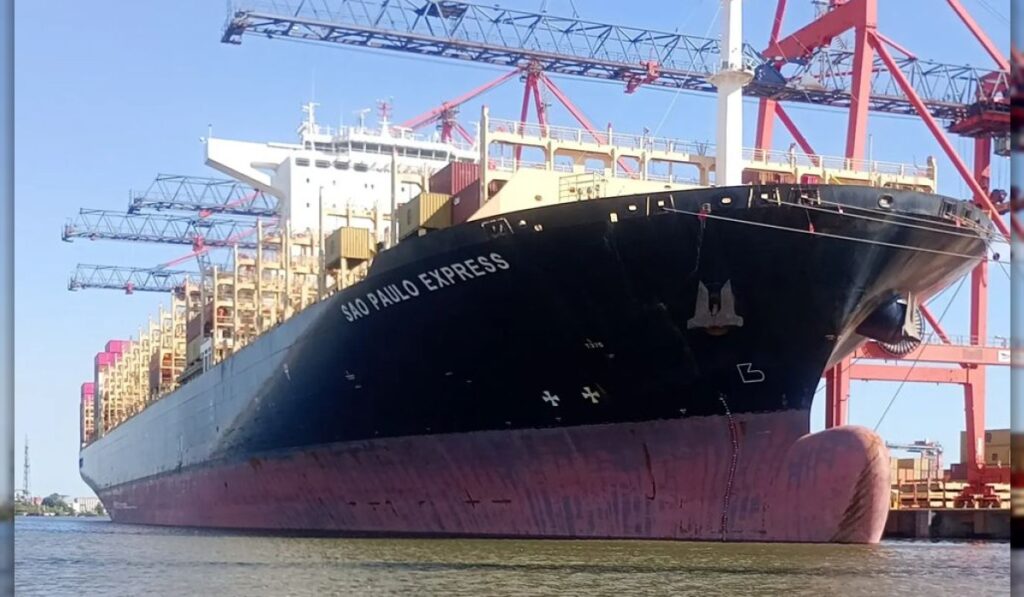
Mediterranean Shipping Company (MSC) and Ocean Network Express (ONE) are restructuring their vessel-sharing agreement for the Asia–South America east coast route after Hapag-Lloyd announced its withdrawal from the existing three-carrier partnership. The current arrangement, which has operated since late 2018, will dissolve in its present form, leaving MSC and ONE to continue the service jointly.
The revised agreement will take effect in April 2027, with the first sailing under the new setup scheduled to depart from Shanghai on 3 April. MSC and ONE will maintain the weekly frequency of the service, which connects key Asian export hubs with major South American ports. The route will include stops at Ningbo, Shekou, Hong Kong, and Singapore in Asia, and Santos, Paranaguá, Navegantes, Rio Grande, Montevideo, and Buenos Aires in South America.
Changes to the service structure: South America
While the final rotation remains subject to operational review, the carriers have committed to improving schedule reliability and preserving direct coverage between the two regions. ONE will continue to market the service under its East Coast South America Express 1 (SX1) brand, while MSC will retain the Ipanema name for its operations.
Hapag-Lloyd
To compensate for Hapag-Lloyd’s exit, MSC will deploy additional vessels, though the company has not disclosed the number or capacity of the ships being added. The move aims to sustain the service’s current capacity levels, though industry analysts suggest the total slot count may still fall short of the previous three-carrier arrangement.
The restructuring reflects a broader trend in the container shipping industry, where carriers are increasingly favoring two-party agreements over multi-carrier partnerships. The MSC-ONE collaboration on this route could serve as a model for future vessel-sharing arrangements in other trades, offering greater operational flexibility and control.
Implications for the trade lane
For Hapag-Lloyd, the withdrawal allows the German carrier to reallocate its vessels to other strategic routes. While the company has not revealed its plans for the freed-up capacity, industry observers speculate it may prioritize strengthening its presence in the transpacific or Europe-Asia trades.
Shippers and forwarders are advised to monitor updates from MSC and ONE regarding any adjustments to the service rotation or capacity. The partners have indicated that further operational reviews will be conducted to ensure the service aligns with market demands.


Sign up free to ask CAMAL AI for a summary, the key points or anything else about this story.
Related stories
CAMAL AI
 Financial Ports Newsletter
The maritime economy, every morning
Ports, shipping and freight markets in one short email. Free.



