

Fuel Surcharge Leaks: How Truckers Lose $1,000 Per Load Unnoticed
Magnus Technologies reveals fleets recover only 60% of fuel costs due to outdated tracking systems.
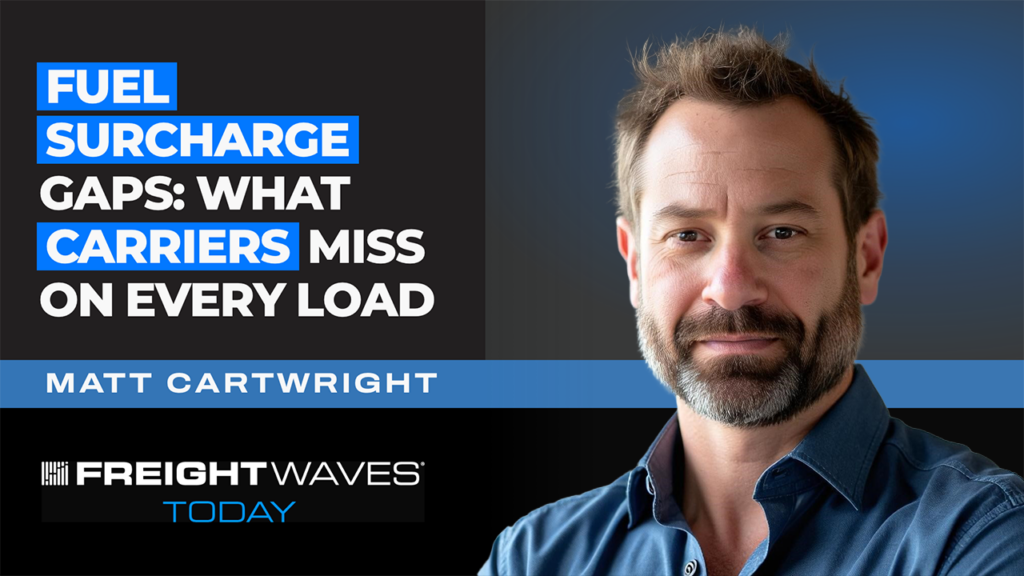
Matt Cartwright, CEO and founder of Magnus Technologies, told FreightWaves that the issue stems from a lack of real-time visibility into fuel consumption. “A lot of times there’s an education consideration for their customers where if you think about the point of fuel surcharge, it was to really neutralise for everybody so that we didn’t, or the carriers didn’t have to shoulder that burden alone,” he said.
The problem is particularly acute for smaller operators. About 90% of U.S. fleets run 10 trucks or fewer, a segment historically underserved by enterprise-grade tools. Magnus Technologies, which originated in the automotive transport sector in 2001, has built a platform that integrates granular operational data, truck location, pickup and delivery points, miles driven, and idle time, with fuel indexes like the EIA to produce load-level reports. These reports highlight the discrepancy between actual fuel burned and what is recovered via surcharges.
Magnus Technologies traces its roots back to United Road, a company established in 2001. The platform’s ability to ingest data from fuel cards, EDI integrations, and operational metrics allows fleets to compare real-time consumption against published indexes, such as those from the U.S.
“We found a lot of folks don’t have systems in place that can dynamically recalculate the fuel surcharge that should be charged based on how they’re running the freight that’s there,” Cartwright added. Magnus’ diesel fuel snapshot, a benchmarking tool, helps carriers identify these gaps and adjust invoicing accordingly.
The software, described as a quote-to-cash enterprise SaaS system, consolidates order management, EDI integrations, fuel card ingestion, and invoicing into a single environment. This streamlines operations for fleets, particularly those in the automotive sector, where Magnus remains the largest software provider.
However, the company is now expanding into the for-hire dry van and general freight markets, targeting the vast majority of fleets that lack such tools. For smaller operators, this expansion could mean access to enterprise-level analytics previously reserved for larger carriers, potentially transforming their ability to compete in a tight-margin industry.
no aplica: Fuel Surcharge
“Having the Magnus app is just a facilitation of the work. It does not assert control or agency,” Cartwright clarified.
Magnus’ approach, using a single, company-branded app, reflects a broader industry trend toward minimising legal exposure while maintaining operational efficiency.
Customer concentration risk in the automotive vertical has also driven Magnus’ diversification. Publicly traded carriers like PAM Transportation have faced pressure from over-reliance on a single sector, prompting Magnus to broaden its reach. The automotive industry, while lucrative, is highly cyclical, with demand fluctuating based on economic conditions, consumer spending, and supply chain disruptions. By expanding into general freight, Magnus aims to reduce its exposure to these risks while tapping into a broader market.
The company’s push into the for-hire dry van and general freight markets is not just a strategic move but a response to the needs of smaller fleets. These operators, which make up the majority of the U.S. trucking industry, often lack the resources to invest in sophisticated fuel tracking systems.
Magnus’ platform levels the playing field by providing tools that were once the preserve of larger carriers, such as real-time fuel cost benchmarking and dynamic surcharge recalculation. For fleets operating on razor-thin margins, these tools can mean the difference between profitability and financial strain.
What This Means for Fleets and the Road Ahead
For carriers, the implications of unclaimed fuel surcharges are stark. Without dynamic tracking tools, fleets risk leaving significant revenue on the table, particularly in an era of volatile diesel prices. The U.S. trucking industry, which moves roughly 72% of the nation’s freight by weight, is highly sensitive to fuel cost fluctuations. A single spike in diesel prices can wipe out margins for smaller operators, making real-time visibility into fuel consumption a critical competitive advantage.
Magnus Technologies’ expansion into general freight could reshape how smaller fleets approach fuel cost management. By offering a platform that integrates operational data with fuel indexes, the company provides a solution to a problem that has long plagued the industry.
Fleets that adopt such tools can expect to see improved profitability, reduced legal exposure, and a stronger position in negotiations with shippers. However, adoption remains a hurdle. Many smaller operators, accustomed to manual processes or outdated software, may be hesitant to invest in new technology, particularly in an industry where cash flow is often tight.
Looking ahead, the industry’s ability to adapt to these challenges will determine its long-term sustainability. As diesel prices remain unpredictable and regulatory pressures mount, fleets that fail to modernise their fuel tracking systems risk falling behind. For those willing to invest, tools like Magnus’ platform offer a path to greater efficiency and resilience. Carriers can start by benchmarking their fuel costs against industry indexes, such as those published by the EIA, and exploring software solutions that provide real-time visibility into consumption and surcharge recovery.
The alternative, continuing to absorb the cost of unclaimed fuel surcharges, is unsustainable. In an industry where margins are already tight, every penny counts. For fleets looking to plug these leaks, the time to act is now. Those who do may find themselves better positioned to weather the next fuel price shock or economic downturn, while those who don’t risk being left behind.
For more information on how to benchmark fuel costs and explore software solutions, carriers can visit the U.S. Energy Information Administration or consult with providers like Magnus Technologies, which offer tools tailored to the needs of smaller fleets.


Sign up free to ask CAMAL AI for a summary, the key points or anything else about this story.
Related stories
CAMAL AI
 Financial Ports Newsletter
The maritime economy, every morning
Ports, shipping and freight markets in one short email. Free.



