

U.S. Navy Doubles Down on Drone Boats: 100 More Devil Rays Annually
MARTAC partners with SOLACE Boats to ramp up production of its Devil Ray unmanned surface vessels by 100 units per year.
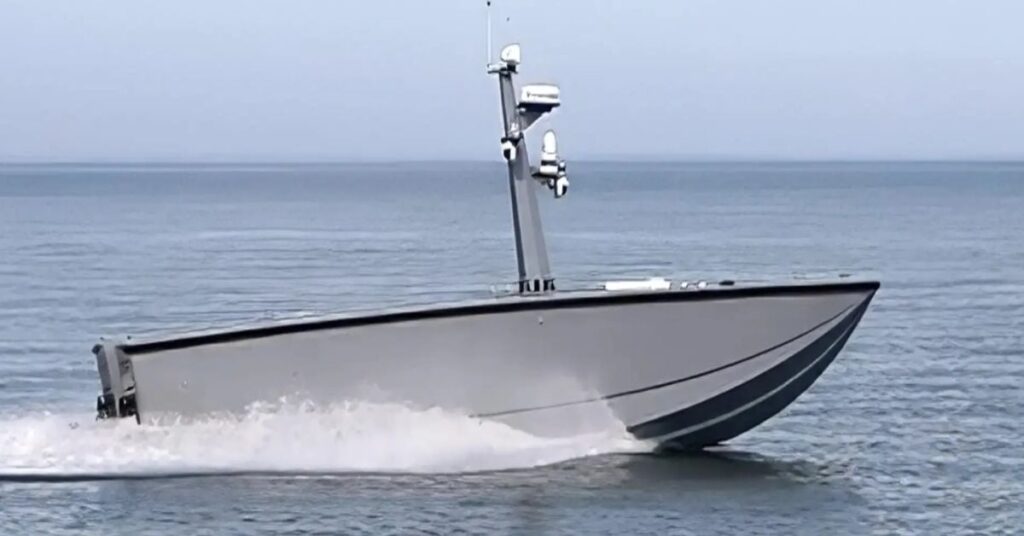
The deal, announced on September 15, will see SOLACE’s 200,000-square-foot facility in Edgewater, Florida, manufacture the high-strength, AI-enabled vessels for naval and allied operations.
The Devil Ray T24, launched in 2023, has become a cornerstone of the US Navy’s autonomous strategy, capable of operating in both coastal shallow waters and open ocean. The vessels serve as motherships for smaller MANTAS T12 USVs, underwater drones, and aerial systems, integrating collision-avoidance data and AI without requiring system redesign.
SOLACE Boats, known for its luxury center console boats, brings expertise in high-performance manufacturing, complementing MARTAC’s autonomous systems. MARTAC’s expansion is not limited to this partnership.
The Devil Ray USVs are part of a broader shift in naval doctrine, where unmanned systems are increasingly viewed as force multipliers.
The vessels’ AI-driven autonomy reduces the need for constant human oversight, lowering operational costs while increasing mission endurance. This versatility positions MARTAC as a key player not only in defence but also in emerging maritime industries.
The strategic significance of Florida’s manufacturing hub: devil ray usv
SOLACE Boats’ 4.59-acre facility in Edgewater, Florida, is strategically located along the Intracoastal Waterway, a 3,000-mile inland water route that stretches from Texas to Maine. This location provides direct access to both the Atlantic Ocean and the Gulf of Mexico, facilitating efficient logistics for naval and commercial clients. The facility’s 200,000 square feet of production space enables high-volume manufacturing while maintaining the precision required for military-grade vessels.
Florida has emerged as a critical hub for maritime innovation, hosting a concentration of defence contractors, shipbuilders, and technology firms. The state’s proximity to major naval bases, such as Naval Station Mayport and Naval Air Station Jacksonville, further enhances its appeal as a manufacturing centre for unmanned systems. MARTAC’s partnership with SOLACE leverages this ecosystem, ensuring that production remains agile and responsive to the US Navy’s evolving requirements.
SOLACE’s expertise in vacuum infusion, a process that enhances hull strength while reducing weight, aligns with MARTAC’s focus on performance and durability. The company’s luxury center console boats, ranging from 28 to 42 feet, are built using similar techniques, demonstrating its capability to meet the exacting standards of both commercial and military clients. This synergy between SOLACE’s manufacturing prowess and MARTAC’s autonomous technology underscores the potential of regional partnerships to drive innovation in the maritime sector.
What the partnership means for stakeholders
For the US Navy and its allies, the expanded production of Devil Ray USVs offers a scalable solution to modernise fleets without the logistical complexities of traditional manned vessels. The vessels’ autonomous capabilities reduce crew requirements, lowering operational costs and mitigating risks in high-threat environments. Their modular payload systems allow for rapid reconfiguration, ensuring adaptability across a range of missions, from anti-submarine warfare to humanitarian assistance.
Industry analysts note that MARTAC’s production ramp-up reflects a broader trend in defence procurement, where unmanned systems are increasingly prioritised over legacy platforms. The company’s forecasted 500% revenue growth in 2026 highlights the accelerating demand for autonomous maritime solutions. For investors and defence contractors, this growth trajectory signals opportunities in the unmanned systems market, particularly in regions like Florida, where manufacturing infrastructure is already well-established.
Commercially, the Devil Ray platform’s adaptability opens doors for applications in offshore energy, fisheries management, and maritime security. Companies operating in these sectors could leverage the vessels for tasks such as pipeline inspection, illegal fishing monitoring, and port security, reducing reliance on manned patrols. The partnership between MARTAC and SOLACE positions both firms to capitalise on these emerging markets, offering a template for how defence-focused innovations can transition into civilian industries.
With SOLACE’s 16-acre manufacturing operation along Florida’s Intracoastal Waterway now part of its production network, MARTAC is positioning itself as a leader in autonomous maritime systems. The company’s current fleet includes the MANTAS-X and Devil Ray Expeditionary Classes, catering to naval, military, commercial, and scientific applications. The partnership with SOLACE is expected to accelerate delivery timelines, ensuring the US Navy and its allies receive the vessels needed to maintain a technological edge.
Looking ahead, MARTAC’s focus remains on innovation and scalability. The integration of AI and collision-avoidance systems into its USVs underscores the company’s commitment to advancing autonomous maritime technology. As global demand for unmanned systems grows, MARTAC’s production ramp-up could set a new standard for the industry, offering a blueprint for how manufacturers can meet the needs of modern navies.
The next phase of MARTAC’s expansion may involve further partnerships with international manufacturers, particularly in regions with strong naval traditions, such as Europe and Asia. The company’s Devil Ray USVs have already attracted interest from allied navies, and collaborations with overseas shipbuilders could facilitate localised production, reducing lead times and enhancing supply chain resilience. Such moves would align with the US Navy’s goal of fostering a global network of unmanned systems providers.
For stakeholders tracking the evolution of naval warfare, MARTAC’s trajectory offers insights into the future of maritime operations. The shift toward autonomous platforms is not merely a technological trend but a fundamental reimagining of how navies project power, conduct surveillance, and respond to threats. With production capacity set to expand dramatically, the Devil Ray USVs are poised to play a central role in this transformation, bridging the gap between traditional fleet operations and the unmanned systems of tomorrow.
For those seeking further information, MARTAC’s official website and the US Navy’s Unmanned Campaign Framework provide detailed insights into the capabilities and strategic vision behind the Devil Ray USV programme. SOLACE Boats’ manufacturing processes and product range can be explored on its corporate portal, offering a glimpse into the technology underpinning this partnership.
“We’re proud to partner with SŌLACE, given their reputation, in-depth experience, and prowess in producing high-strength, lightweight hulls that can traverse high sea states.”
Tony Smeraglinolo·MARTAC CEO
“Our partnership with SŌLACE demonstrates MARTAC’s ability to rapidly scale by harnessing the talent and capacity of world-class marine manufacturers in our region.”
Tony Smeraglinolo·MARTAC CEO


Sign up free to ask CAMAL AI for a summary, the key points or anything else about this story.
Related stories
CAMAL AI
 Financial Ports Newsletter
The maritime economy, every morning
Ports, shipping and freight markets in one short email. Free.
Financial Ports Newsletter
The maritime economy, every morning
Ports, shipping and freight markets in one short email. Free.



